

Share
Start here
Mesothelioma at a glance
Mesothelioma is a cancer of the thin tissue lining certain parts of the body. It most often starts in the lining around the lungs, called the pleura. It can also start in the lining of the abdomen (tummy), called the peritoneum. These two forms need different assessments and may have different treatments.
- Mesothelioma of the chest lining is different from lung cancer. Peritoneal mesothelioma is different from bowel cancer and ovarian cancer.
- A tissue sample, taken during a biopsy, usually confirms the diagnosis. Specialist review matters because other cancers and non-cancerous conditions can look similar.
- Where the cancer starts, its cell type, how far it has spread and your overall health help guide treatment.
- Treatment may include medicines, procedures to control fluid or pain, and surgery in carefully selected situations.
- A treatment that helps pleural mesothelioma may not have the same benefit or approval for peritoneal mesothelioma.
- Symptom control and supportive care belong alongside cancer treatment from the start.
Your first practical steps
Ask for copies of your tissue test (pathology) report, scan reports and scan images. For a specialist opinion, the team may also need your tissue samples, stored on slides or in blocks. Bring a list of your medicines and a short record of symptoms, other illnesses and any possible past asbestos exposure.
Ask who coordinates your care, how soon treatment decisions are needed and whom to contact if symptoms worsen. Include someone you trust in discussions if you would find this helpful.
Symptoms to recognise
Pleural mesothelioma may cause breathlessness, chest or shoulder pain, a persistent cough, tiredness and weight loss. Fluid can collect between the lung and chest wall, making breathing harder.
Peritoneal mesothelioma may cause abdominal swelling or pain, feeling full quickly, changes in bowel habits, reduced appetite and weight loss. Fluid can collect in the abdomen. These symptoms have many other causes, so investigations are needed.
Seek urgent help for severe or rapidly worsening breathlessness, chest pain, coughing up significant blood, fainting, or a painful swollen leg. Severe abdominal pain with vomiting, increasing swelling or inability to pass stool or wind may indicate a blocked bowel and needs urgent assessment.
Understand
Where mesothelioma begins
The pleura has two thin layers: one covers the lung and the other lines the inside of the chest. A small amount of fluid between them normally allows smooth movement as you breathe. Mesothelioma may thicken this lining and cause extra fluid, called a pleural effusion.
The peritoneum lines the inside of the abdomen and covers many of its organs. Peritoneal mesothelioma may form small areas of tumour, called deposits, across this lining. It can also cause a build-up of fluid called ascites. This may affect bowel movements and make eating uncomfortable.
Much rarer forms of mesothelioma start in the lining around the heart or a testicle. These need separate specialist advice.
Pleural mesothelioma
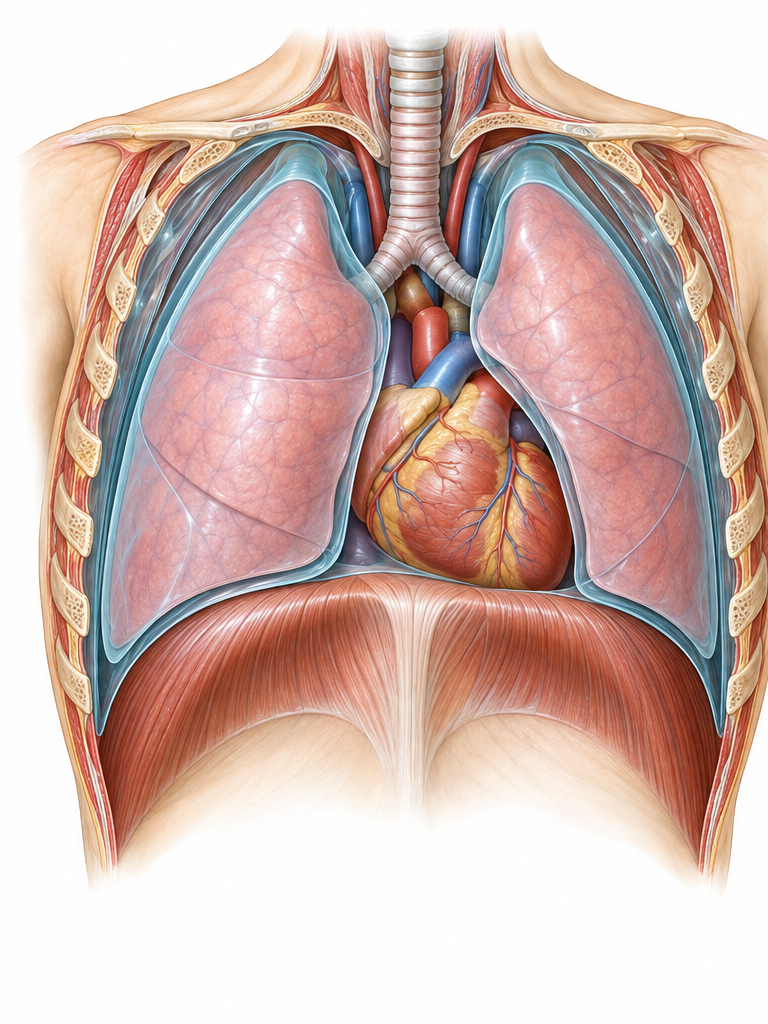
Pleura: the thin lining around the lung and inside the chest.
Peritoneal mesothelioma
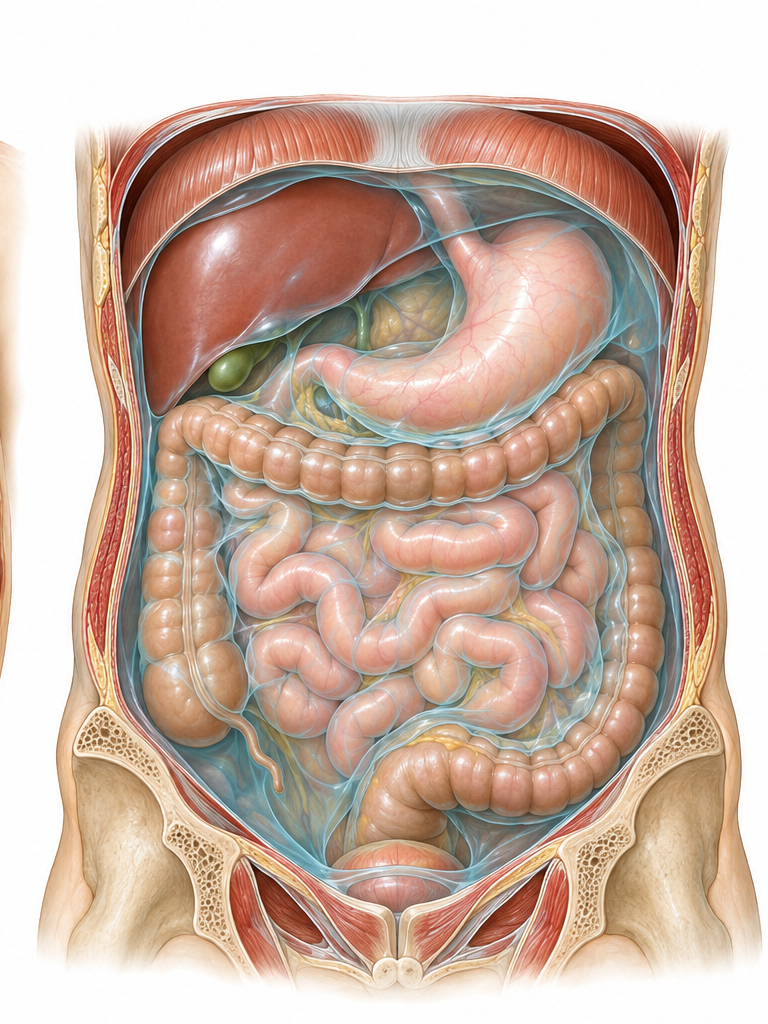
Peritoneum: the abdominal lining and covering of many abdominal organs.
The cell type matters
| Type on the tissue report | What it means |
|---|---|
| Epithelioid | The most common cell pattern. It generally has a more favourable outlook than the other main patterns, although individual outcomes vary. |
| Sarcomatoid | Cells have a more spindle-shaped appearance. This form often behaves more aggressively. |
| Biphasic | The sample contains both epithelioid and sarcomatoid areas. |
Histology means how the tissue looks under a microscope. A small biopsy may not show every cell type in a mixed tumour. The tissue findings help the team decide which treatments may be most useful, particularly for pleural mesothelioma.
Asbestos and other risk factors
Asbestos is a material that was widely used in building and industry. Breathing in its fibres can increase the risk of mesothelioma, often decades later. Exposure may happen at work, during building renovation or through fibres brought home on clothing. The link is strongest for pleural mesothelioma. Not everyone with this cancer remembers being exposed to asbestos.
Mesothelioma is not contagious. Smoking is not an established cause, although stopping smoking helps lung health and reduces other cancer risks. Rare inherited gene changes can also contribute. Developing this cancer is not your fault. If you may still be exposed to asbestos, seek professional advice about safety at work or at home. Do not disturb or remove suspected asbestos yourself.
Tests and diagnosis
Imaging and fluid tests
| Investigation | Why it may be used |
|---|---|
| Chest X-ray or ultrasound | Can identify fluid around the lung. Ultrasound also helps guide safe drainage. |
| Computed tomography, or CT | Detailed X-ray pictures show the chest and abdomen, the lining and any possible spread. They also show lymph nodes, small structures that are part of the immune system. A contrast dye may make the pictures clearer. |
| Magnetic resonance imaging, or MRI | Uses magnets to make detailed pictures. It may help show whether cancer affects the chest wall or diaphragm, the breathing muscle below the lungs, when this would change treatment. |
| Positron emission tomography combined with CT, or PET–CT | Uses a small amount of a radioactive tracer to help find cancer elsewhere or check an unclear scan finding. Inflammation can also show on the scan, including after a talc procedure used to stop fluid returning around the lung. |
| Fluid sampling | Fluid from the chest or abdomen is examined for cells and other clues. A negative fluid test does not rule out mesothelioma. |
You may not need every test. Your team chooses those that will help with your diagnosis or treatment plan. Before a scan, tell them about kidney disease, previous reactions to contrast dye, pregnancy or any implanted medical devices.
Why a tissue biopsy is often needed
A biopsy takes a small piece of tissue for examination. A scan may guide the biopsy needle to the right place.
For pleural mesothelioma, a camera passed through a small opening in the chest wall can help take larger samples. This is called thoracoscopy. A similar camera procedure in the abdomen is called laparoscopy. It can help take samples and show where peritoneal mesothelioma is present.
A pathologist is a doctor who examines tissue to diagnose disease. Special stains and, sometimes, tests for proteins or gene changes help them distinguish mesothelioma from other conditions. These results need expert interpretation. Finding a gene change does not necessarily mean that a targeted medicine will work.
Ask whether an experienced mesothelioma pathologist has reviewed the sample if the findings are uncertain or major surgery is being considered. Blood markers alone cannot reliably confirm or exclude this cancer.
Assessing your general health
Blood tests check your blood cells, kidneys, liver and signs of poor nutrition. You may also need breathing or heart tests before some treatments. The team will ask about walking, washing, dressing and other daily activities. This helps them judge how you might cope with treatment; it is not a judgement about how hard you are trying.
Inherited gene testing
Germline testing looks for gene changes you were born with, usually using blood or saliva. It is different from testing only the tumour. The American Society of Clinical Oncology (ASCO) recommends offering this testing to everyone with mesothelioma. Genetic counselling can help you understand the test and its results.
The test may check several genes. One is called BAP1, which helps control cell growth. Testing may also check other genes linked to cancer risk.
A BAP1 change found in the tumour does not automatically mean it is inherited. If inherited testing confirms a change, it may affect your follow-up and whether relatives are offered testing. Before testing, discuss what the possible results could mean, how they will be kept private and the cost.
Planning your treatment
Staging pleural mesothelioma
Stage describes how far cancer has grown or spread. Pleural mesothelioma uses the tumour, node and metastasis (TNM) system:
- T — tumour: how much of the pleura and nearby structures are affected.
- N — nodes: whether nearby lymph nodes contain cancer.
- M — metastasis: whether cancer has spread to distant parts of the body.
These findings are combined into a stage group. A clinical stage is based on examinations and tests. A pathological stage includes findings from tissue removed during surgery. Your team can explain the stage on your report and what it means for your treatment.
Assessing peritoneal mesothelioma
Peritoneal mesothelioma is assessed separately from pleural mesothelioma. Specialists look at how much of the abdominal lining is affected, whether the small bowel is involved, the cell type, lymph nodes and any spread outside the abdomen.
The peritoneal cancer index (PCI) describes how much tumour is present and where it is. The team scores 13 regions from 0 to 3, then adds the scores to give a total from 0 to 39. A higher score means more extensive tumour deposits.
PCI is not the same as a stage number. It cannot, on its own, decide whether surgery is possible. Scans may miss small deposits, so looking inside the abdomen during a procedure may give more information.
How the peritoneal cancer index is calculated
Your specialist assesses 13 regions: nine across the abdomen and pelvis, plus four along the small bowel. Each region receives one score from 0 to 3.
9 abdominal and pelvic regions
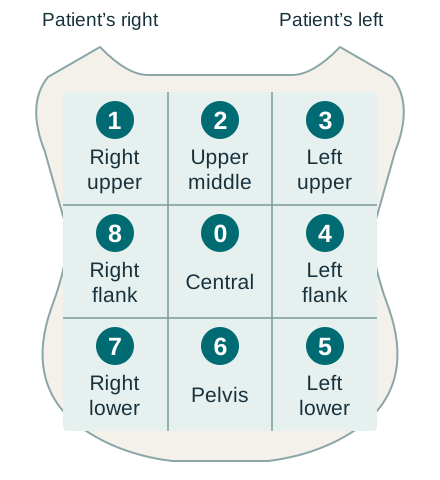
Region names
- 0 Central
- 1 Right upper
- 2 Epigastric (upper middle)
- 3 Left upper
- 4 Left flank
- 5 Left lower
- 6 Pelvis
- 7 Right lower
- 8 Right flank
4 small-bowel regions
- 9 Upper jejunum
- 10 Lower jejunum
- 11 Upper ileum
- 12 Lower ileum
Jejunum and ileum are parts of the small bowel. These four regions are assessed in addition to regions 0–8.
Score the largest deposit in each region
The team measures the largest visible tumour deposit in each region, rather than counting every deposit. Deposits that have joined together into a mass, called confluent deposits, receive a score of 3.
No visible tumour
Up to 0.5 cm
(up to 5 mm)
More than 0.5 cm,
up to 5 cm
More than 5 cm,
or joined-up deposits
Deposit sizes in these drawings are illustrative, not to scale.
Add all 13 scores
Worked example: three regions score 2, two regions score 1, and the other eight score 0.
(3 × 2) + (2 × 1) + (8 × 0) = PCI 8
The possible total is 0–39. The numbers on the body map identify regions; they are not the scores.
Building a plan with a specialist team
A multidisciplinary team brings together professionals with different skills. It may include cancer specialists, chest or abdominal surgeons, chest physicians, specialists who interpret scans and tissue samples, nurses and supportive-care professionals.
Together, they consider the possible benefits and harms of each treatment, your symptoms, other illnesses and what matters to you. Discuss travel and treatment costs early. A second opinion can be useful before major surgery or when the diagnosis is uncertain.
Questions worth asking your doctor
- Is this pleural or peritoneal mesothelioma, and what is the cell type?
- What is the aim of treatment: controlling the cancer, easing symptoms or trying to achieve a lasting remission, when signs of cancer are reduced or no longer detectable?
- What evidence supports this option for my exact type of mesothelioma?
- What are the likely benefits, serious risks and alternatives?
- If surgery is proposed, how much cancer could be removed, and what evidence suggests it would help me?
- How will we assess benefit, and what happens if the cancer grows?
Understanding the outlook
Mesothelioma is a serious illness, but its course varies. Where it starts, its cell type, how far it has spread, your general health and how it responds to treatment all matter.
Some people with peritoneal mesothelioma have long periods of cancer control after specialist surgery and hyperthermic intraperitoneal chemotherapy (HIPEC) — heated chemotherapy given inside the abdomen. Most treatment for pleural mesothelioma aims to control the cancer, help people live longer and ease symptoms. Survival figures for groups cannot tell you exactly what will happen to you.
Treatment options
Pleural disease: immunotherapy and chemotherapy
Immunotherapy helps the immune system recognise and attack cancer. Chemotherapy uses medicines that damage cancer cells.
When pleural mesothelioma cannot be removed by surgery, it is called unresectable. For adults, the first treatment, also called first-line treatment, may include the options below. Cisplatin and carboplatin are chemotherapy medicines in a group called platinum medicines.
| Option | Points to discuss |
|---|---|
| Nivolumab with ipilimumab | Two immunotherapy medicines. In a trial, people receiving this combination lived longer on average than those receiving chemotherapy. ASCO particularly recommends it for sarcomatoid or biphasic pleural mesothelioma when immunotherapy is suitable. |
| Pembrolizumab with pemetrexed and a platinum medicine | Immunotherapy combined with chemotherapy. The types of pleural mesothelioma covered by its approval differ between the United States and the European Union; see the explanation below. |
| Pemetrexed with cisplatin or, when appropriate, carboplatin | Chemotherapy alone remains an option for epithelioid mesothelioma. For sarcomatoid or biphasic mesothelioma, treatment that includes immunotherapy is generally preferred. Chemotherapy alone may be considered if immunotherapy is not medically suitable. Kidney function, hearing and general health help determine which platinum medicine to use. |
For some people, bevacizumab, a medicine that reduces tumour blood-vessel growth, may be added to pemetrexed and a platinum medicine. The team checks for risks such as bleeding, blood clots and high blood pressure. A treatment can be supported by clinical guidelines without being officially approved for mesothelioma in every country.
Before recommending immunotherapy, the team checks your medical history and medicines, including steroid treatment and any organ transplant. Tell them about autoimmune conditions, in which the immune system attacks the body’s own tissues.
Drug approvals: United States and European Union
In the United States, the Food and Drug Administration (FDA) has approved pembrolizumab with pemetrexed and platinum chemotherapy as a first treatment for adults with advanced pleural mesothelioma that cannot be removed by surgery. This includes cancer that has spread to distant parts of the body (metastatic disease).
In the European Union, this combination is approved for adults with unresectable non-epithelioid pleural mesothelioma. This means sarcomatoid or biphasic disease. The European Medicines Agency (EMA) publishes the product information.
These approvals concern pleural mesothelioma; they do not automatically cover peritoneal mesothelioma or establish approval and access in India.
What drug treatment involves
Most drug treatment is given in a day-care unit, so you usually go home the same day. A cycle includes treatment followed by time to recover. Pemetrexed with a platinum medicine is commonly given every three weeks. Immunotherapy schedules vary.
Before treatment, the team reviews your symptoms and blood tests. Scans and changes in symptoms help show how well treatment is working. Ask for a written schedule, the expected treatment duration and a 24-hour contact number.
Pleural surgery needs careful selection
Pleurectomy–decortication is an operation to remove affected pleural tissue while keeping the lung. An extended operation may also remove affected parts of the diaphragm or the lining around the heart. Even if surgery can remove the visible tumour, this does not necessarily mean it will help you live longer.
A study called Mesothelioma and Radical Surgery 2 (MARS 2) compared extended pleurectomy–decortication plus chemotherapy with chemotherapy alone. Treatment groups were chosen by chance. In this study, the group having surgery had shorter survival and more serious complications.
The role of surgery remains debated. It may be considered for a small, carefully selected group, particularly people with epithelioid mesothelioma, limited spread and enough fitness for a major operation. This needs review at a centre experienced in mesothelioma. If offered, surgery should be part of a combined treatment plan, preferably within a clinical trial. These findings about pleural surgery should not be applied directly to peritoneal surgery.
Radiotherapy for pleural mesothelioma
Radiotherapy uses carefully planned radiation to treat a particular area. It can ease pain from cancer in the chest wall or another troublesome site. Treating a wider area has a limited, specialist role because the nearby lungs and other organs need protection. Radiotherapy is not routinely given to every biopsy or drain site to prevent tumour growth there.
If pleural mesothelioma grows after treatment
The next treatment depends on what you have already received, how well it worked and your current health. Options may include a different chemotherapy, immunotherapy in selected situations, treatment to ease a particular symptom, or a clinical trial. A medicine may be used outside its official licence when evidence supports that use; your team should explain this.
Peritoneal disease: surgery and heated chemotherapy
Cytoreductive surgery aims to remove all visible tumour from the abdomen. In selected patients, it may be followed during the same operation by HIPEC, the heated chemotherapy described above. The chemotherapy is circulated inside the abdomen to treat cancer cells too small to see.
This is major treatment offered in specialist centres. The team considers where the cancer is, how much can be removed, its cell type, your overall health and the risks of surgery. Extensive cancer on the small bowel, spread elsewhere or other serious illness may make the operation unsuitable.
Possible complications include infection, bleeding, leakage from a join in the bowel and kidney injury. Recovery can take a long time.
Expert guidance supports this approach for carefully selected patients. However, much of the evidence comes from studies where treatment was chosen for each person rather than assigned by chance. Differences between the groups make it harder to know how much benefit came from the treatment.
Ask what the team expects surgery to achieve for you, what recovery may involve and whether you may need bowel surgery or a stoma. A stoma is an opening on the abdomen through which bowel contents pass into a bag.
Peritoneal disease: medicines and other options
Some people receive medicines before or after peritoneal surgery. The best timing is not clear for every situation and needs specialist discussion. Medicines may also be used when surgery is unsuitable or the cancer returns.
Pemetrexed with a platinum medicine is a commonly used approach, based partly on experience with pleural mesothelioma. Immunotherapy or other combinations may be considered by specialist teams or in clinical trials. The evidence and medicine approvals are different from those for pleural mesothelioma.
Ask whether a proposed treatment is a usual treatment for your situation, is being used outside its official licence, or is part of a study. Other procedures, such as spraying chemotherapy under pressure inside the abdomen, are specialist or experimental treatments in many settings. They should not be described as an established cure.
Clinical trials
Clinical trials are studies that test new medicines, combinations or ways of using treatment. Taking part is your choice. Ask about the aim of the study, alternatives, extra visits, costs, side effects and what happens if you stop. Promising early results do not prove that a treatment works or mean it has been approved.
Managing side effects
Fluid, breathing and pain
Draining fluid from around the lung can ease breathlessness. If it keeps returning, the team may suggest pleurodesis, a procedure that helps the two pleural layers stick together so fluid cannot easily collect. Another option is an indwelling pleural catheter, a soft tube left in place for repeated drainage. The choice depends partly on whether the lung can expand again.
Fluid in the abdomen (ascites) can also be drained if it causes discomfort or makes eating difficult. The team will advise when drainage may help and how to maintain enough food and fluid intake. Report any change in breathlessness, because fluid is not always the cause.
Pain medicines, radiotherapy, specialist procedures, breathing techniques and rehabilitation can all help with comfort and daily activities. Palliative care provides expert help with symptoms, practical concerns and quality of life. It can be given alongside cancer treatment and is not only for the last days of life.
Chemotherapy precautions
Chemotherapy may cause tiredness, nausea, reduced appetite and low blood counts. Cisplatin can affect the kidneys, hearing and nerves. Carboplatin has a different pattern of side effects.
With pemetrexed, you need prescribed folic acid, vitamin B12 and usually a short course of steroid medicine to reduce some side effects. Follow your team’s instructions about when and how much to take. Do not start these medicines or supplements on your own.
Ask for anti-sickness medicines, mouth-care advice and a written emergency contact plan. Tell the team about all medicines and supplements. Do not start herbal or alternative treatments without checking for interactions.
Immunotherapy precautions
Immunotherapy can cause inflammation in healthy organs, including the lungs, bowel, liver, skin and glands that make hormones. Problems can start during treatment or after it has stopped.
Contact your team promptly for a new cough or breathlessness, new diarrhoea or more bowel movements than usual, yellowing of the skin, severe headache, marked weakness or unusual thirst. Some reactions need steroids or other treatment, so do not wait for them to pass.
Keep your immunotherapy alert card with you and show it to any clinician treating you, even after treatment has finished.
Contact your oncology team urgently for a temperature of 38°C (100.4°F) or higher during chemotherapy, or any lower threshold they have given you. Also call for shaking chills, repeated vomiting, severe diarrhoea, unusual bleeding or passing much less urine.
Do not wait for a fever if you suddenly feel very unwell or confused. Serious infection can occur with a normal temperature. Severe breathlessness, collapse or chest pain needs emergency assessment.
Live well
Follow-up and recovery
At follow-up visits, the team checks your symptoms, activity and weight, and arranges blood tests or scans as needed. Ask who will arrange appointments and how you will get the results. Report new symptoms between visits. After major surgery, you may need help with nutrition, breathing exercises, physiotherapy and care at home.
Eat small, frequent meals if breathlessness or abdominal fullness makes large meals difficult. Include protein and seek dietitian advice if you are losing weight. Gentle movement can help preserve strength, with rest and adjustments for symptoms. No special diet or supplement has been proved to cure mesothelioma.
Emotional and practical support
Uncertainty, money worries and changes in family roles can be hard. Ask about counselling, symptom relief, help with recovery and social-work support. Tell the team what matters most to you and how treatment affects daily life. Your priorities may change over time.
Caregivers can help keep records, organise visits and notice changes, but they need rest and support too. Agree on the help the person with cancer wants. Our caregiver toolkit offers practical guidance and charts for use at home.
If relevant to you, discuss fertility, contraception and pregnancy before treatment. Surgery and medicines can affect these choices.
Frequently asked questions
Is mesothelioma a type of lung cancer?
No. Pleural mesothelioma starts in the lining around the lung. Lung cancer starts within lung tissue and follows a different treatment pathway.
Can I have mesothelioma without known asbestos exposure?
Yes. Exposure may be unrecognised, and some cases have other contributing factors. Lack of a remembered exposure does not rule it out.
Can other people catch it from me?
No. Mesothelioma does not spread from person to person.
Why was the fluid test inconclusive?
Fluid may contain too few useful cells, and some findings overlap with other conditions. A tissue biopsy often provides more reliable information.
Are pleural and peritoneal treatments the same?
No. There is some overlap in medicines, but the evidence, surgical approaches and drug approvals differ.
Does early-stage pleural disease automatically mean surgery?
No. Stage is only one part of the decision. The likely benefit, risks and current evidence need careful specialist discussion.
Is HIPEC suitable for every peritoneal mesothelioma?
No. HIPEC, heated chemotherapy inside the abdomen, is usually considered alongside surgery for selected people. The team needs to judge whether enough tumour can be removed and whether you can safely cope with the treatment.
Does immunotherapy work for everyone?
No. Some people benefit and some do not. Immunotherapy can also cause serious side effects. The cell type, your health, previous treatment and the medicines used all matter.
Does a BAP1 change mean my children are at risk?
A change in the BAP1 gene found only in the tumour does not show whether it is inherited. Genetic counselling and, when appropriate, inherited testing can help clarify whether relatives need advice.
Can treatment help if a cure is unlikely?
Yes. Treatment may slow the cancer, ease symptoms, make daily life easier or help you live longer. Ask which goals are realistic for the treatment being suggested.
Does palliative care mean stopping cancer treatment?
No. It can work alongside cancer treatment at any stage and help both patients and caregivers.
Does approval in the United States or Europe guarantee access in India?
No. Approval, availability, cost and insurance or other financial cover in India need to be checked separately. Ask how you will be able to access the treatment before it starts.
Sources and further reading
These patient resources, research papers and official medicine information support this guide. The linked organisations have not reviewed or endorsed the CTI text. Your care team can explain how the information applies to you.
Information for patients and caregivers
- Macmillan Cancer Support — Mesothelioma.
- Cancer Research UK — Mesothelioma.
- Cancer Council Australia — Understanding mesothelioma.
- Cancer Council Australia — Peritoneal mesothelioma guide to best cancer care.
- Cancer Council Australia — Diagnosing mesothelioma.
- Cancer Council NSW — Staging and prognosis for peritoneal mesothelioma.
- Macmillan — Treating mesothelioma symptoms.
- Macmillan — Chemotherapy for mesothelioma.
- Macmillan Cancer Support — Nivolumab and ipilimumab.
- Macmillan Cancer Support — Pemetrexed.
Clinical guidance and research
- Kindler and colleagues — American Society of Clinical Oncology (ASCO) pleural mesothelioma guideline update, 2025.
- National Comprehensive Cancer Network (NCCN) — Pleural Mesothelioma, Version 3.2026, published guideline.
- National Comprehensive Cancer Network — Peritoneal mesothelioma guideline, version 2.2023.
- Kusamura and colleagues — International expert guideline for peritoneal mesothelioma, 2021.
- Baas and colleagues — CheckMate 743 randomised trial, 2021.
- Chu and colleagues — IND.227/KEYNOTE-483 randomised trial, 2023.
- Lim and colleagues — MARS 2 randomised trial, 2024.
- Multisocietal consensus on cytoreductive surgery and HIPEC in peritoneal mesothelioma, 2025.
- Society of Thoracic Surgeons — Expert consensus on multimodal therapy for pleural mesothelioma, 2026.
- Brown and colleagues — Updated consensus guideline for peritoneal mesothelioma, 2025.
- International Association for the Study of Lung Cancer — Ninth-edition staging cards for pleural mesothelioma.
- Radiologic and surgical peritoneal cancer index in patients with low grade serous ovarian carcinoma, 2025 — PCI scoring method.
- Dresen and colleagues — Whole-body magnetic resonance imaging for assessing whether surgery is possible, 2019: PCI regions 0–12.
Medicine approval and prescribing information
- United States Food and Drug Administration — Pembrolizumab with chemotherapy for pleural mesothelioma.
- European Medicines Agency — Keytruda (pembrolizumab) product information.
- United States Food and Drug Administration — Opdivo (nivolumab) prescribing information, 2026.
- European Medicines Agency — Opdivo (nivolumab) product information.
- United States Food and Drug Administration — Keytruda (pembrolizumab) prescribing information, June 2026.
Medically reviewed and approved by Dr (Prof) Vijay Agarwal
Professor and Lead Consultant – Medical Oncology
Related care
Meet our doctors



Where to get care