Share
Start here
Primary bone cancer at a glance
Primary bone cancer starts in bone. It is uncommon and includes several different diseases, especially osteosarcoma, Ewing sarcoma and chondrosarcoma. Chordoma is another rare tumour that starts along the spine or at the base of the skull. These cancers need different treatments, so identifying the exact type is the first step in planning care.
Cancer that has spread to bone from breast, prostate, lung or another organ is called a bone metastasis and is treated according to the original cancer. In adults, cancer that spreads to bone is much more common than cancer that starts there. For cancers starting in muscles, fat or other supporting tissues, see our soft-tissue sarcoma guide. Myeloma and lymphoma can also affect bone but need different treatment. This guide focuses on cancers that start in bone.
The most important first step
Most primary bone cancers are sarcomas, cancers of bone or other supporting tissues. If scans suggest a bone sarcoma, a specialist bone tumour team should plan the biopsy (removing a small tissue sample for testing) and any operation.
The biopsy route needs to fit the plan for later surgery. A cut or a procedure to fix a weakened bone that passes through the tumour without this planning can make later treatment more difficult. It may also reduce the options for keeping the arm or leg.
This does not mean leaving severe pain or a fracture untreated. The team can provide pain relief, support to keep a weakened bone still and urgent assessment while planning the appropriate procedure. Ask whether the proposed biopsy has been discussed with the surgeon who would perform the cancer operation.
Symptoms and warning signs
Persistent localised bone pain, swelling, a growing lump, reduced movement or an unexplained fracture should be assessed. Pain may be worse at night but does not have to be. Many aches and injuries are not cancer. Symptoms that persist or worsen instead of improving should be checked again, especially if an X-ray or scan is abnormal.
Sudden severe pain or inability to bear weight may indicate a fracture. New back pain with weakness, numbness, difficulty walking or bladder or bowel changes can indicate spinal cord or nerve compression and is an emergency. Avoid forcing movement through a painful or weakened bone while awaiting advice.
Making this information useful to you
A cancer diagnosis can arrive before you have had time to understand the tests. You do not need to learn every treatment name at once. Begin with the exact diagnosis, where the cancer is, and what the team recommends next. A relative or friend can join the appointment if you would find that helpful. Ask for an interpreter when language makes a discussion harder; important decisions should not depend on guessing unfamiliar words.
This guide explains possibilities, not a prescription for your situation. Your tissue-test results, scan findings, general health, previous treatment and priorities determine which possibilities apply. Two people with the same cancer name may appropriately receive different treatment. If a recommendation differs from something you have read, ask the team to explain the reason and the evidence behind it.
Keep a list of medicines, allergies and other health conditions, including non-prescription products, vitamins and herbal remedies. Tell the team about previous cancer treatment, pregnancy or breastfeeding, and anything that could affect attending appointments. Do not stop an established medicine without advice. Bring your questions in the order that matters most to you, so that the most important concern is discussed first.
Understand
The main bone cancer types
- Osteosarcoma: cancer in which tumour cells produce abnormal bone material. High-grade cancers, whose cells look more abnormal and tend to behave more aggressively, usually need chemotherapy and surgery. Some low-grade forms need a different approach.
- Ewing sarcoma: a cancer identified by particular gene fusions, where parts of different genes join together in tumour cells. It may start in bone or soft tissue. Treatment usually combines several chemotherapy medicines with surgery, radiotherapy or both.
- Chondrosarcoma: cancer that produces tissue resembling cartilage, the firm, flexible tissue found at joints. The most common form, called conventional chondrosarcoma, is usually treated mainly with surgery. The exact subtype and grade affect the treatment plan.
- Chordoma: a tumour usually arising at the skull base or along the spine, including the sacrum, the bone at the back of the pelvis. Its location makes specialist surgery and radiotherapy planning important.
A giant cell tumour of bone is usually not cancer, but it can damage nearby bone and tissue. Occasionally it can spread or become cancerous. It needs its own treatment plan. If a report only says “bone tumour”, ask the specialist to explain the exact diagnosis before treatment is chosen.
Age, site and risk factors
Osteosarcoma and Ewing sarcoma often affect children, teenagers or young adults, but can occur later. Chondrosarcoma is more common in adults. Tumour type cannot be diagnosed from age alone. Bone cancers can arise in limbs, pelvis, ribs, spine or other sites, and the location affects both function and treatment options.
Most patients have no clear preventable cause. Previous radiotherapy, some inherited conditions that increase cancer risk, and certain bone conditions can raise the risk for a small number of people. An injury may draw attention to a tumour but is not generally the cause of it. Genetic counselling is considered when age, personal history or family history suggests an inherited syndrome.
Grade, stage and response
Grade describes how abnormal the tumour cells look under the microscope and helps indicate how aggressively the cancer may behave. Stage describes how far it has grown or spread.
High-grade cancers may need systemic treatment—medicines that travel through the bloodstream—even when scans show no spread. For some bone cancers, examining the tumour after chemotherapy given before surgery also helps the team assess how well treatment has worked and the risk of the cancer returning.
These findings help estimate risk, but cannot predict exactly what will happen to one person. A low-grade tumour may need less treatment than a high-grade tumour. A tumour in a difficult location, such as the pelvis, may need more complex surgery or radiotherapy planning. Ask which features of your diagnosis matter most for you.
Tests and diagnosis
Scans before biopsy
An X-ray is often the first test. Magnetic resonance imaging (MRI) shows the tumour within the bone and nearby soft tissues. It helps the team plan the biopsy and surgery. The scans need to cover the full area being assessed.
Computed tomography (CT) of the chest checks the lungs, where several types of bone sarcoma can spread. Positron emission tomography combined with CT (PET-CT), a bone scan or other tests to check the rest of the body may also be needed, depending on the tumour type.
Not every abnormal spot is a metastasis. Some findings need comparison with earlier imaging, follow-up or additional testing. For Ewing sarcoma, a sample of bone marrow (the blood-forming tissue inside bones) is needed only in some situations. The team decides this using the scan results and the tests recommended for that cancer. The team coordinates these tests to avoid unnecessary delays or procedures.
Biopsy and your pathology report
A core needle biopsy removes a small cylinder of tissue through a needle. The bone tumour team should choose where the needle enters because its path through the tissues may need to be removed with the tumour later.
A specialist pathologist, a doctor who diagnoses disease by examining tissue, studies the sample. Molecular testing may also look for changes in the tumour’s genes. A sample that is too small or taken from the wrong area may not give a clear diagnosis.
Some rare sarcomas can look like Ewing sarcoma under the microscope but are different diseases. These include CIC-rearranged and BCOR-associated sarcomas. CIC and BCOR are names of genes; changes involving these genes in the tumour cells help identify these sarcomas. Molecular testing of the biopsy looks for these changes. Getting the exact diagnosis matters because these tumours can behave differently and may respond differently to treatment.
Chondrosarcoma also has several subtypes. Your report may use names such as conventional, dedifferentiated or mesenchymal. These names help the specialist choose the treatment. Expert review of the tissue is valuable before a major operation or intensive chemotherapy.
Checks before treatment
Blood tests check blood-cell levels and how well organs are working. Depending on the chemotherapy planned, you may need checks of your heart, kidneys or hearing. Discuss fertility—the ability to have children—before treatment starts. Checking movement, pain and nutrition also helps the team plan your recovery. Tell the team about existing hearing, kidney or heart problems, and about previous chemotherapy or radiotherapy.
Children and adolescents need care that addresses growth, education, family life and future fertility. Treatment plans and medicine doses differ for children and adults. A sarcoma team experienced in caring for your age group should coordinate treatment.
Preparing for your appointment
For your consultation or a second opinion, bring a CD containing your scan images (DICOM format) and the software needed to view them, along with the written scan reports. DICOM is the standard format used to store medical scan images. Bring your biopsy report and ask whether the pathology slides or tissue blocks are needed for specialist review or additional tests. Keep originals safe and agree how borrowed material will be returned. Having the actual images allows the team to compare changes and plan treatment accurately.
A repeat test is sometimes needed because an earlier sample was too small, a scan did not cover the necessary area, or a new result will change treatment. Ask what question the test will answer, how it may affect the plan, and when you should expect the result. A result described as uncertain does not automatically mean the cancer is worse. Sometimes discussion between the radiologist, pathologist and treating specialists resolves the uncertainty without another procedure.
Before a scan or procedure, mention kidney problems, previous reactions to contrast dye used for scans, implanted medical devices, diabetes medicines, blood-thinning medicines and the possibility of pregnancy. Follow the testing centre's instructions about food, drink and medicines. If you have not received those instructions, contact the centre rather than making changes yourself.
Planning your treatment
Understanding your stage
AJCC staging for primary bone cancers
This American Joint Committee on Cancer (AJCC) eighth-edition outline applies to many primary cancers of the limb bones, body wall, skull and facial bones. These numbered stage groups do not apply to tumours in the pelvis or spine. Cancer that started elsewhere and spread to bone uses the staging system for its original site. Nearby soft-tissue growth can occur in stages I–III.
Lymph nodes are small immune-system structures. Regional nodes are those near or draining the cancer’s starting area; distant spread means cancer has reached a site outside that regional area. Stages describe findings, not a sequence that everyone will pass through.
Purple represents cancer. Grade describes how abnormal the tumour cells look under the microscope.
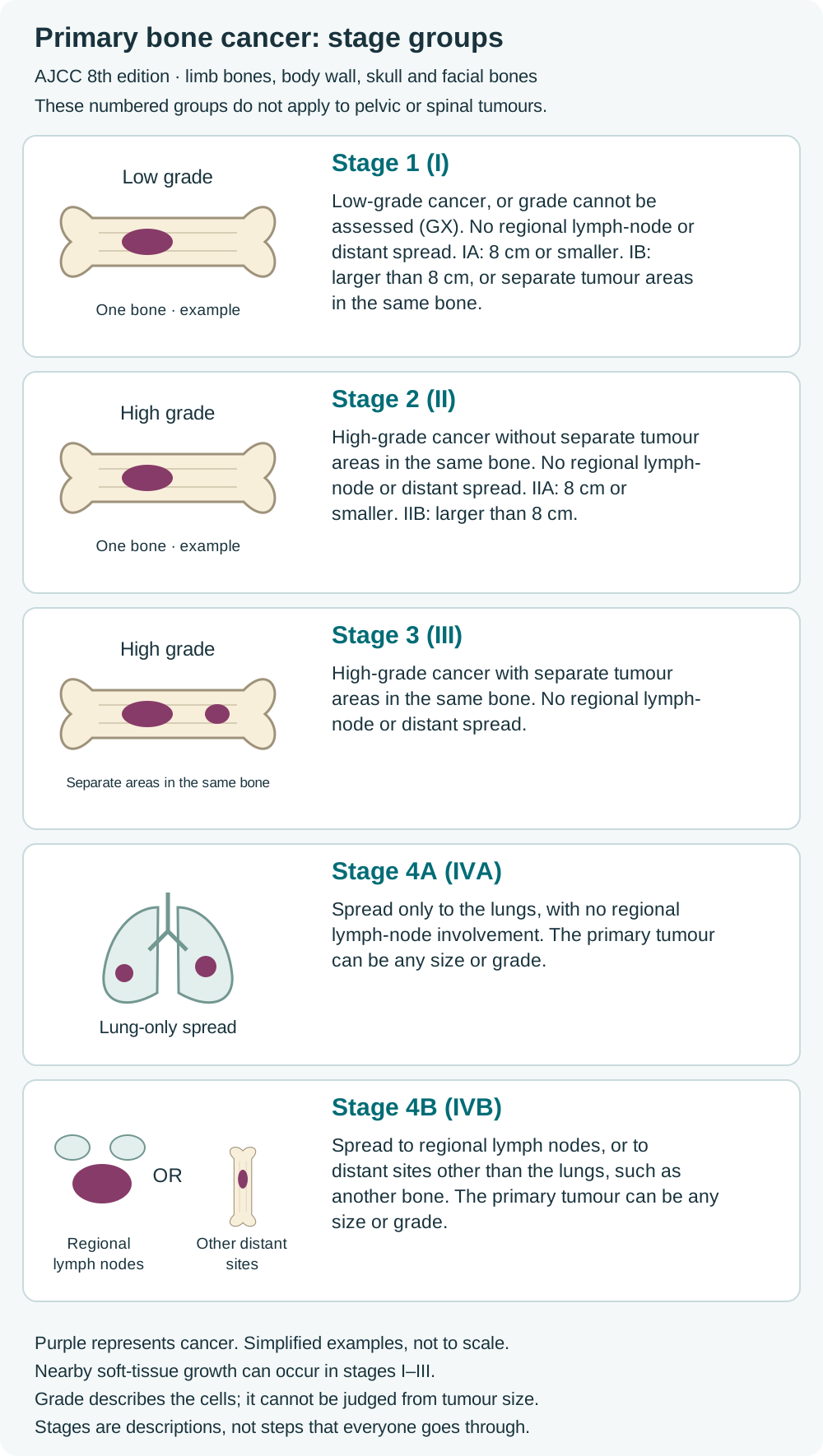
Stage 1 (I)
Low-grade cancer, or grade cannot be assessed (GX). No regional lymph-node or distant spread. IA: 8 cm or smaller. IB: larger than 8 cm, or separate tumour areas in the same bone.
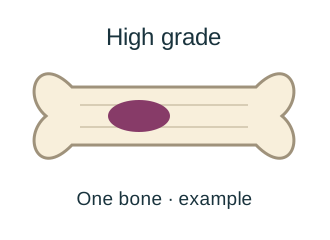
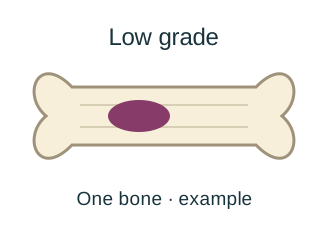
Stage 2 (II)
High-grade cancer without separate tumour areas in the same bone. No regional lymph-node or distant spread. IIA: 8 cm or smaller. IIB: larger than 8 cm.
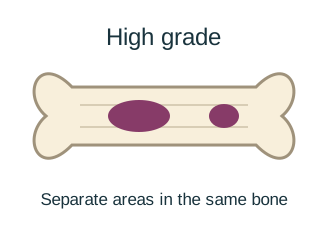
Stage 3 (III)
High-grade cancer with separate tumour areas in the same bone. No regional lymph-node or distant spread.
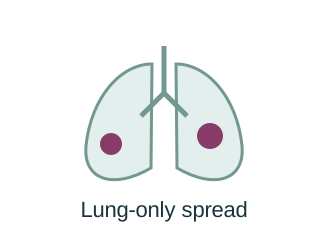
Stage 4A (IVA)
Spread only to the lungs, with no regional lymph-node involvement. The primary tumour can be any size or grade.
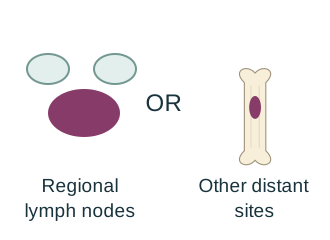
Stage 4B (IVB)
Spread to regional lymph nodes, or to distant sites other than the lungs, such as another bone. The primary tumour can be any size or grade.
CTI illustration. Enlarge the staging overview.
Another staging system is called Enneking or the Musculoskeletal Tumor Society (MSTS) system. It uses stage 1 for low-grade local disease, stage 2 for high-grade local disease and stage 3 for disease that has spread. Its numbers have different meanings from the AJCC numbers above. For osteosarcoma and Ewing sarcoma, the team often uses the simpler terms localised (no distant spread found) or metastatic (spread to other parts of the body). Response to chemotherapy also helps guide care.
Clinical stage is based on examinations, biopsies and scans. Examining tissue removed during surgery can add information, called the pathological stage. If your report has the letters yp before the stage, the tissue was assessed after treatment. A more complete assessment does not necessarily mean the cancer has grown while you were waiting.
How your treatment plan is chosen
Your plan depends on the exact tumour type, grade, stage, location and response to treatment. The team also considers how to preserve movement and everyday function.
It usually includes a surgeon specialising in bone tumours; a cancer doctor who treats adults or children with medicines; a radiotherapy specialist; doctors who interpret scans and tissue samples; and rehabilitation specialists who help with recovery and movement. Tumours of the spine or skull base may need additional specialist expertise.
The sequence may include chemotherapy before surgery, surgery, then further chemotherapy. Other tumours need surgery alone or surgery with radiotherapy. The aim is to control the cancer while achieving the best possible long-term function and quality of life.
Limb preservation and amputation
Limb-sparing surgery removes the cancer while keeping the arm or leg. Many patients can have this operation, but it is not always the safest option or the one that gives the best function.
Amputation means removing part or all of an arm or leg. It may be recommended if the cancer cannot be completely removed while leaving a useful limb, if important nerves or blood vessels are involved, or if serious complications occur. A well-fitted artificial limb, called a prosthesis, can help some people regain good function. The decision should include your preferences and a realistic discussion of recovery.
Ask how the area will be rebuilt after surgery (reconstruction), what strength and movement to expect, and whether further operations may be needed. Discuss infection risk and any restrictions on sport or work. In growing children, a reconstruction may need adjustment over time.
Rotationplasty is an option for selected tumours around the knee. After the tumour and knee are removed, the lower leg is rotated and reattached so the ankle can act as a knee within an artificial limb. If this is an option for you, the team should explain the operation, appearance and expected function.
Questions specific to bone cancer
Ask whether the diagnosis has had specialist review, whether the needle path from the biopsy is included in the surgical plan, and whether the bone is safe to bear weight. Discuss the expected chemotherapy benefit for the exact subtype, the role of radiotherapy and what the response after surgery may change. Ask early about fertility and long-term heart, kidney or hearing monitoring.
Questions to ask your care team
- What is the exact cancer type and stage, and are any important results still pending?
- Is the aim to cure the cancer, reduce the chance of recurrence, control it, or relieve a particular symptom?
- What benefit do you expect from this option, and what are the reasonable alternatives for me?
- How will treatment affect everyday activities, fertility, sexual health and the things I most value?
- How will we know whether it is working, and when will we review the plan?
- Who should I contact between visits, including at night or over a weekend?
Clinical trials and newer treatments
A clinical trial can be worth considering at diagnosis or when treatment needs to change. Trials ask a defined question; some compare established treatments and others study a newer approach. Eligibility depends on the cancer, previous treatment, test results and health. Taking part is voluntary, and choosing not to participate does not remove your right to standard care. Ask about extra visits, whether treatment is assigned by chance (randomisation), costs, travel, side effects and what happens when the study ends.
The team considers newer treatments using evidence from studies and clinical guidelines, your exact cancer type and previous treatment. Tests for markers in the tumour or blood may help identify suitable options. Some treatments have less evidence than others. Ask what is known, what remains uncertain and whether a clinical trial would be appropriate.
Your priorities and supportive care
Tell the team what you are hoping treatment will make possible: returning to work, caring for family, keeping independence, reducing pain or attending an important event. These priorities can influence a choice between reasonable options. If the likely benefit is small and the burden is substantial, discussing a less intensive approach is appropriate. Decisions can be revisited when your health or circumstances change.
Supportive and palliative care help with symptoms, sleep, mood, family concerns and planning. They can be provided alongside treatment intended to cure or control cancer. A referral does not mean that active treatment is ending. If the cancer cannot be cured, ask what treatments may help you live longer or more comfortably and how their burdens compare with their likely benefits.
Treatment options
Osteosarcoma
High-grade osteosarcoma is usually treated with chemotherapy and complete surgical removal. In children and many young adults, a combination including high-dose methotrexate, doxorubicin and cisplatin is commonly used. Older adults or people with specific health limitations may need a different combination. High-dose methotrexate requires specialist monitoring and rescue treatment.
After surgery, the pathology report describes the surgical margins (the edges of the removed tissue) and the proportion of the tumour killed by chemotherapy, called tumour necrosis, expressed as a percentage.
Mifamurtide may be added to chemotherapy after surgery for eligible patients aged 2–30 whose high-grade osteosarcoma has been completely removed and has not spread to distant sites. It is not a treatment for everyone whose cancer has spread. The specialist team can explain the expected benefit and the evidence for using it.
Metastatic or recurrent osteosarcoma
Metastatic cancer has spread to another part of the body. Recurrent cancer has come back after treatment. Treatment may include medicines and surgery to remove the original tumour and areas of spread, when complete removal is possible.
Surgery to remove cancer deposits in the lungs is called lung metastasectomy. It can help selected patients. The decision depends on how many deposits there are, where they are, how the cancer has behaved and whether all relevant disease can be removed. A spot on a lung scan does not automatically mean surgery is needed immediately.
If the cancer returns, options may include further surgery, chemotherapy, selected targeted medicines called kinase inhibitors, or a clinical trial. Kinase inhibitors block certain signals that help cancer cells grow. The evidence for medicines used after earlier treatments varies. Ask the specialist team what benefit is expected and how strong the evidence is. Treatment to relieve pain or reduce the risk of a fracture remains important even when cure is not possible.
Ewing sarcoma
Ewing sarcoma usually needs chemotherapy even when scans show cancer only at its starting site (localised disease). This is because small numbers of cancer cells may have spread without being visible on a scan.
Treatment commonly alternates combinations such as vincristine, doxorubicin and cyclophosphamide with ifosfamide and etoposide, according to the chosen protocol. The specialist team carefully plans the doses, timing and care needed to prevent or manage side effects.
Treatment at the tumour site uses surgery, radiotherapy or both. The choice depends on the location, surgical margins, response to chemotherapy and expected function after treatment. Ewing sarcoma usually responds better to radiotherapy than many other bone sarcomas, but radiotherapy still has long-term risks, especially in growing tissues. Chemotherapy usually continues after local treatment. Ewing sarcoma that starts in soft tissue still needs an Ewing-specific treatment plan.
Some patients whose Ewing sarcoma has spread may still receive intensive treatment. The likely benefit and side effects depend on the situation. Spread only to the lungs is different from spread to many bones or the bone marrow.
If the cancer returns, the team reviews when and where it has returned, previous treatment and suitable clinical trials. High-dose treatment or a stem cell transplant is not standard care for every patient.
Chondrosarcoma
Surgery is the main treatment for most conventional chondrosarcomas. The operation is tailored to grade and site. Some low-grade cartilage lesions in limb bones can be managed with less extensive surgery or observation in carefully selected cases, while higher-grade tumours or those in the central skeleton, such as the pelvis or spine, may need removal with a wider rim of surrounding tissue.
The names “atypical cartilaginous tumour” and “grade 1 chondrosarcoma” are used differently depending on where the tumour is. Ask the specialist what the wording in your report means for your treatment.
Conventional chondrosarcoma often responds poorly to standard chemotherapy. Less common subtypes, including dedifferentiated and mesenchymal chondrosarcoma, behave differently and may need treatment with cancer medicines.
Radiotherapy may help when surgery is not possible, cancer remains at the edges of removed tissue, or symptoms need relief. Specialised radiotherapy techniques may be considered. For advanced cancer, the team may discuss clinical trials or treatments guided by gene changes in the tumour. These options do not suit every chondrosarcoma.
Chordoma
Chordoma often grows slowly but can invade critical structures and recur locally. Planning should occur at a centre experienced with skull-base or spinal chordoma before surgery. The aim is to control as much of the tumour as safely possible while protecting nerve function, bowel and bladder control, and the strength of the spine. An operation without specialist planning can make later treatment more difficult.
Precisely shaped, high-dose radiotherapy may be used with surgery or when surgery is unsuitable. This sometimes uses protons or other particles. The team chooses a technique that treats the tumour while protecting nearby organs.
Standard chemotherapy has limited benefit for most chordomas. Selected targeted treatments or clinical trials may be considered if advanced cancer continues to grow.
Giant cell tumour and other uncommon diagnoses
Surgery for a giant cell tumour of bone may involve curettage, which means scraping the tumour out of the bone, or another type of operation. Denosumab may be used in selected adults or adolescents whose bones have finished growing, when the tumour cannot be removed or surgery would cause major harm.
Denosumab is not suitable for every type of bone tumour. Treatment needs dental checks, monitoring of calcium levels and a clear plan for how long to continue and how to stop, especially in younger patients.
Other uncommon bone tumours need individual pathways. A rare name on a report is a reason for expert pathology review, not for assuming the most intensive chemotherapy is appropriate. Ask whether the evidence comes from that exact subtype or from a related but different disease.
Radiotherapy, pain and structural protection
Radiotherapy is a main part of treatment for some bone tumours. For others, it is used in selected situations to control a tumour in one area or relieve symptoms. A painful, weakened bone may need support or surgery to strengthen it as well as radiotherapy. Treatment should consider whether the bone can safely support weight and whether a fracture would cause major harm. Pain relief alone does not make a weakened bone structurally safe.
Physiotherapy and occupational therapy can help with transfers, walking aids, home adaptations and return to activity. Follow the surgical team’s advice about how much weight you can safely put through the affected arm or leg. New severe pain in a treated limb, a fall, or loss of function needs review rather than trying to exercise through it.
Managing side effects
Surgery and rehabilitation
Rehabilitation helps you recover movement, strength and independence. It begins with safe movement and realistic goals. Wound problems, infection, stiffness, weakness and swelling may affect recovery. Reconstruction can involve metal implants, transplanted bone (bone grafts) or other techniques, each with particular long-term risks. Ask which symptoms should prompt urgent contact and which activities may damage the reconstruction.
After amputation, the team helps you care for the remaining part of the limb and, when appropriate, fit and learn to use an artificial limb.
Some people feel sensations or pain in the part that has been removed. This is called phantom sensation or phantom pain. The pain is real, and treatment can help. Psychological support and peer contact may help with body image and adapting daily activities. Progress varies and should not be judged against another person's recovery.
Chemotherapy safety
Checks depend on the medicines you receive:
- Doxorubicin can affect the heart.
- Cisplatin can affect the kidneys, hearing and nerves.
- Ifosfamide can affect the bladder and nervous system, sometimes causing confusion.
- High-dose methotrexate needs blood tests to check that the medicine is leaving the body safely.
Protective medicines, fluids and blood tests are part of treatment, not optional additions. Tell the team about all other medicines, including painkillers and supplements, because interactions can be important.
Report reduced urine, confusion, hearing change, severe mouth ulcers, persistent vomiting or unusual bleeding promptly. Treatment can affect fertility, so discuss ways to protect the chance of having children before treatment starts, when possible. Younger patients need long-term checks for side effects that can appear months or years later, as well as for the cancer returning.
Emotional and developmental needs
Treatment can interrupt education, work, sport and independence. Teenagers and young adults may need support that respects privacy while involving family appropriately. School or workplace adjustments, rehabilitation and counselling can be part of cancer care. Ask about managing examinations, travel and accessibility before difficulties become a crisis.
Keeping treatment manageable
Keep the team's contact details available and know where to go outside clinic hours. Report side effects early rather than waiting until the next appointment. A short record of symptoms, temperature, fluid intake and medicines can help the team decide what is needed. Do not change cancer medicine doses, restart a stopped treatment, or use leftover antibiotics without instructions. A planned delay or dose adjustment can be an important part of safe treatment.
If you receive treatment that can lower white blood cells, a temperature of 38°C (100.4°F) or higher needs urgent advice. Follow any lower threshold or additional instructions your team gives you. Chills, sudden weakness, confusion or feeling very unwell also need urgent assessment, even without a fever. Do not wait for a blood test appointment or try to hide the fever with medicine before speaking to the team.
Severe breathlessness, chest pain, a new seizure, sudden weakness, heavy bleeding or collapse require emergency care. New severe back pain with leg weakness, numbness around the bottom, or loss of bladder or bowel control also needs immediate assessment. Contact the nearest emergency service when necessary; a website contact form or routine messaging service is not an emergency pathway.
Eating, drinking and energy
Treatment may change appetite, taste, bowel habits and energy. Small, frequent meals and foods containing protein can be easier than large meals. Ask for dietitian support if weight is falling, swallowing is difficult, or you are avoiding many foods. There is no single diet that treats cancer, and severe restriction or prolonged fasting can make it harder to tolerate treatment. Check supplements with your team because some interact with medicines.
Take anti-sickness medicine as prescribed and report vomiting that prevents you keeping down fluids or essential medicines. Seek advice for persistent diarrhoea, dizziness, very little urine or increasing weakness. Fluid recommendations may need adjustment if you have heart or kidney disease. Mouth ulcers, pain or infection that interferes with eating should be treated promptly rather than accepted as unavoidable.
Gentle movement, short walks and planned rest may help fatigue, but activity should match your condition and any surgical or bone-safety restrictions. Fatigue can also reflect anaemia (a low red-blood-cell level), infection, hormone changes, pain, poor sleep or low mood. Let the team assess a marked or persistent change. Accepting help with shopping, transport or meals can conserve energy for the activities that matter to you.
Live well
Follow-up after treatment
Follow-up usually includes examination of the treated area and chest imaging, with local scans and other tests selected by tumour type and risk. These cancers can return in different ways and at different times, so the follow-up schedule should match your tumour type. Chordoma and some other tumours can recur late, making longer-term follow-up important.
Visits should also address reconstruction, growth, mobility, heart and kidney health, hearing and fertility where relevant. New local pain, swelling, a lump, persistent cough or breathlessness should be reported. A new symptom is not necessarily recurrence, but it deserves assessment. Keep a record of major treatments so future clinicians can plan appropriate long-term care.
Returning to daily activities
Ask for a clear plan for walking, lifting, driving and sport. Some activities remain unsuitable after particular reconstructions, while others can be adapted. Bone health and fall prevention matter, but supplements or exercise programmes should fit your treatment and kidney function. Rehabilitation aims to help you do meaningful activities safely, not simply to achieve a scan or strength target.
Emotional and practical support
Feeling frightened, angry, sad or uncertain is understandable. You do not have to appear positive all the time. Ask about counselling, psychological support from the cancer team, support groups or a social worker if worry is affecting sleep, relationships or daily life. Persistent depression, panic or thoughts of self-harm need prompt professional help. Caregivers may need their own support and breaks; one person should not have to manage every appointment and household task alone.
It can help to agree who will update relatives and how much information you want shared. Children usually benefit from honest, age-appropriate explanations and reassurance about who will care for them. Ask permission before discussing private medical information with others. If concentration or memory is difficult, use reminders, a calendar and a trusted companion at important consultations.
Relationships, fertility and sexual health
Cancer and treatment can affect desire, comfort, fertility, body image and confidence. These are valid medical concerns. Raise fertility questions before treatment when possible, because some protective options need to be arranged early. The right approach depends on age, the treatment and how urgently it must start. Do not assume that absent periods or reduced fertility means pregnancy is impossible. Ask about contraception and the safe timing of pregnancy for your specific medicines.
Explain any pain, dryness, erection difficulties or changes in intimacy to the team. Appropriate treatments, rehabilitation and counselling can help. You can choose how much to involve a partner. Advice about hormone-containing treatments needs to take the cancer type and treatment into account; do not start them without discussing suitability.
Planning ahead while living well
Ask for a clear follow-up plan and know which symptoms should be reported between visits. Continue care for other conditions and discuss vaccinations with your oncology team; the timing and suitability of live vaccines can change during treatment. Avoid tobacco and ask for practical cessation support if needed. Activity, food and sleep plans should be realistic for your health rather than another source of pressure.
If treatment is long term, arrange periodic discussions about what is helping, what is difficult and what you want next. Planning for future care can protect your preferences and reduce uncertainty for family. You can discuss who should help with decisions if you become too unwell to speak for yourself, while continuing treatment and everyday life now.
Sources and further reading
For more information, explore these resources from the National Cancer Institute (NCI) and other medical organisations. The linked organisations have not reviewed or endorsed this CTI guide. Your care team can explain how the information applies to you.
- NCI: Primary Bone Cancer
- ASCO guideline collection and update status
- ESMO–EURACAN bone sarcoma guideline
Staging and risk-group references
AJCC 8th edition: these stage groups apply to limb bones, body wall, skull and facial bones, not the pelvis or spine. The separate Enneking/MSTS system is also explained.
Medicine approval and prescribing references
These official records describe licensed uses and prescribing information for the medicines named in this guide. Approval depends on the cancer type, biomarkers, previous treatment, combination and formulation. Some uses discussed in the guide are off-label: outside the medicine’s licence, with evidence from clinical guidelines or studies. FDA or EMA approval does not establish approval or availability in India.
- Cisplatin — FDA prescribing information · Approval history
- Cyclophosphamide — FDA prescribing information · Approval history
- Denosumab — FDA prescribing information · Approval history
- Doxorubicin — FDA prescribing information · Approval history
- Etoposide — FDA prescribing information · Approval history
- Ifosfamide — FDA prescribing information · Approval history
- Methotrexate — FDA prescribing information · Approval history
- Mifamurtide — EMA approval record
- Vincristine — FDA approval record
Additional medicine approval notices
These records explain the specific medicine uses and eligibility requirements discussed in this guide.
Related care
Meet our doctors



Where to get care