Share
Start here
Prostate cancer starts in the prostate, a small gland below the bladder. Some prostate cancers grow very slowly and can be monitored safely. Others need treatment to remove the cancer, control its growth or relieve symptoms.
You do not need to learn every treatment name at once. Begin with three questions: where is the cancer, how likely is it to cause problems, and what does the team recommend next?
Your first steps
- Gather your results. Keep your biopsy report, blood-test results and written scan reports. A biopsy is a test on a small tissue sample. Keep the date with each result.
- Get the scan images as well as the reports. Ask for a compact disc (CD) containing your scan images in Digital Imaging and Communications in Medicine (DICOM) format and the software needed to view them. This is the standard format for medical images.
- Ask for a plain-language diagnosis. Your team will explain the cancer type, its grade, stage and risk group. Each describes something different; this guide explains them in that order.
- Discuss your options. A urologist treats conditions of the urinary system and performs prostate surgery. A radiation oncologist plans radiation treatment. A medical oncologist treats cancer with medicines. More than one of these specialists may help plan your care.
- Compare benefits and daily-life effects. Ask how each option may affect cancer control, urination, bowel function, sex and your usual activities.
- Know whom to contact. Save the team's daytime and urgent-contact numbers. Ask when you should expect the next result or appointment.
How soon do I need treatment?
Many cancers confined to the prostate allow time to understand the results, compare treatments and seek a second opinion. A cancer that is growing quickly or causing symptoms may need a faster plan. Ask your team how much time is safe for your situation.
Your general health, previous treatment and priorities matter alongside the cancer results. Two people with prostate cancer may reasonably choose different care plans.
Understand
What does the prostate do?
The prostate makes some of the fluid in semen, which carries sperm out of the body during ejaculation. It sits below the bladder, which stores urine, and in front of the rectum, the last part of the bowel. The urethra, the tube that carries urine out of the body, passes through it.
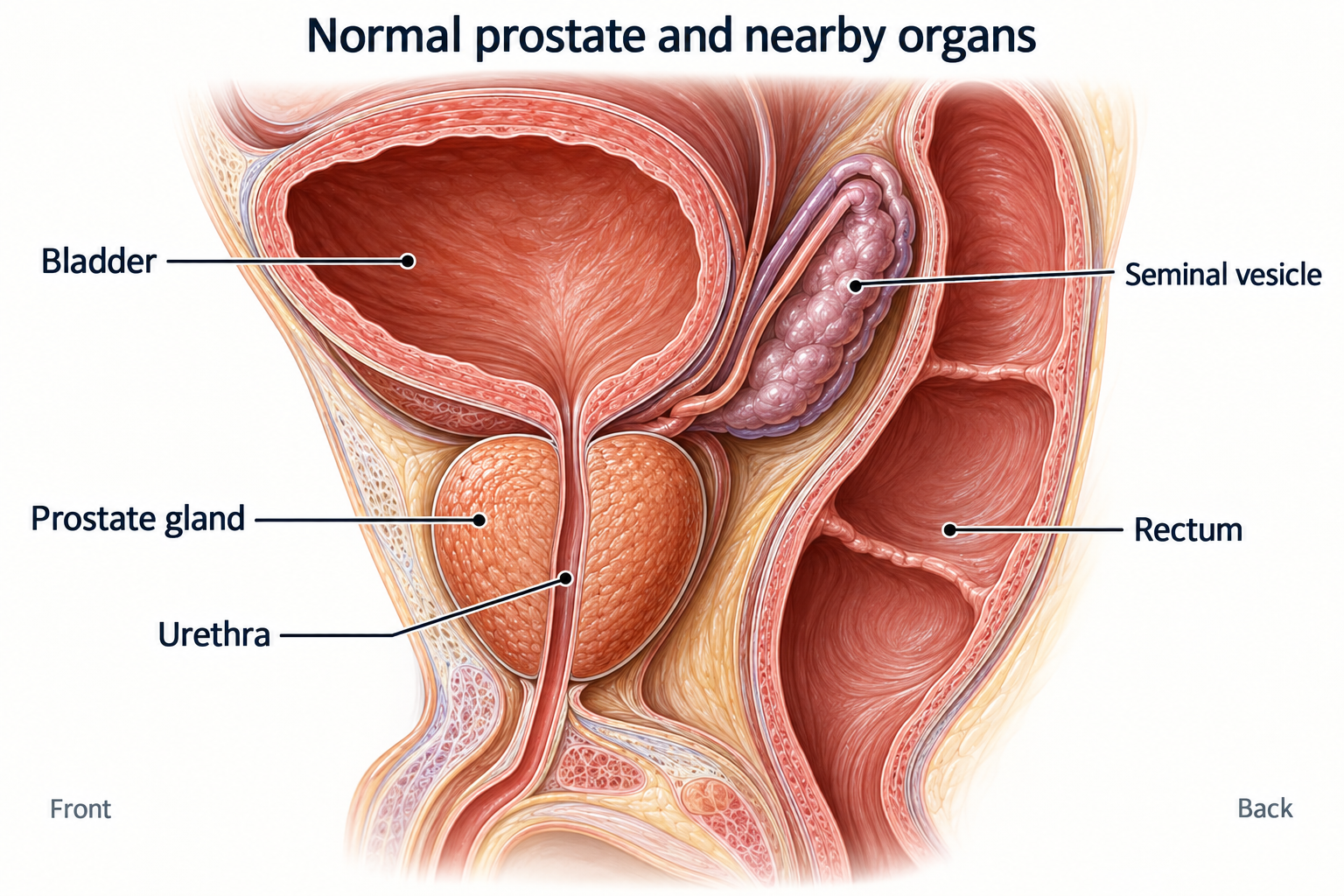
Small glands behind the bladder, called seminal vesicles, also add fluid to semen. Nearby nerves help with erections, and muscles help control urine. This explains why prostate treatment can affect urination, erections or the bowel.
The prostate and testicles are different organs. The testicles make sperm and most of the body's testosterone, a hormone that helps many prostate cancers grow.
Which type of prostate cancer do I have?
Most prostate cancers are adenocarcinomas. This means they start in cells that make gland fluid. This guide mainly describes that type.
Rare types, such as small-cell or other neuroendocrine cancers, have features of cells that release hormones or receive nerve signals. They behave differently and may need different medicines. Ask the team to explain your exact type if one of these terms appears in your report.
What symptoms can occur?
Early prostate cancer often causes no symptoms. A weak urine stream, getting up at night to pass urine or difficulty starting can also come from a non-cancerous enlarged prostate or an infection. Symptoms alone cannot tell the difference.
Blood in the urine, unexplained weight loss or persistent bone pain should be assessed. New or worsening symptoms matter even if a recent blood test was reassuring.
Why does it happen, and what about screening?
The chance of prostate cancer increases with age. A close family history, some inherited gene changes and Black ancestry can also increase risk. A diagnosis does not mean you caused the cancer. It is not contagious.
Screening means testing someone who has no symptoms. The usual blood test measures prostate-specific antigen (PSA), a protein made by prostate cells. Screening can find a cancer earlier, but it can also find a slow-growing cancer that would never have caused harm. Discuss the possible benefits, further tests and harms with your doctor before deciding about screening.
Tests and diagnosis
What do the first tests show?
A raised prostate-specific antigen (PSA) result does not by itself diagnose cancer. A non-cancerous enlarged prostate, infection and other factors can also raise it. Your doctor considers the level, changes over time, symptoms and examination together.
- Examination: a doctor may feel the prostate through the rectum with a gloved finger to check its size and for an unusual firm area.
- Magnetic resonance imaging (MRI): this scan gives detailed pictures of the prostate and helps identify areas that may need a biopsy. The report may use PI-RADS, short for Prostate Imaging Reporting and Data System. Its score describes how suspicious an area looks; it is not the cancer stage.
- Biopsy: a doctor removes small tissue samples for examination under a microscope. Samples may come from areas that look suspicious on MRI and from several other parts of the prostate. These samples establish whether cancer is present and help assess its grade.
Preparing for a biopsy
A transperineal biopsy takes samples through the skin between the scrotum (the sac holding the testicles) and the anus (the bowel opening). It generally has a lower infection risk than a transrectal biopsy, which passes through the rectum. Ask which route is planned, how the area will be numbed and whether you need antibiotics.
Tell the team about blood-thinning medicines. Do not stop them yourself. After the biopsy, some blood in urine or semen can occur. Follow the team's advice about activity and recovery, and ask when and how you will receive the results.
Understanding your pathology report
A pathologist is a doctor who examines tissue under a microscope. The report describes the cancer type, its grade and how much cancer is in the samples, often called biopsy cores. Grade describes how abnormal the cancer's structure looks and helps estimate how it may behave.
What do the numbers 3, 4 and 5 mean?
Normal prostate cells form tiny glands that make fluid. The pathologist looks at how much of that gland structure the cancer keeps and gives it a Gleason pattern:
- Pattern 3: the cancer still forms separate, recognisable glands.
- Pattern 4: the glands are less well formed or have joined together.
- Pattern 5: the cancer has largely lost the normal gland structure. Cells may form solid groups or lie separately.
A higher pattern generally means a greater chance of faster growth and spread. It does not describe how much cancer is present. Patterns 1 and 2 are no longer routinely used to grade prostate cancer.
How are the two numbers added?
When a biopsy contains two patterns, the first number is usually the most common pattern and the second is the other pattern. The numbers are added to give the Gleason score. If there is only one pattern, that number is used twice.
For example, cancer made entirely of pattern 3 is written as 3 + 3 = 6. Six is the lowest Gleason score normally assigned to prostate cancer today; it does not mean “six out of ten” on a simple severity scale.
If a biopsy has three patterns, the most common and the highest pattern are used. This is why even a small amount of a higher pattern can matter.
Why is 3 + 4 different from 4 + 3?
Both add up to 7, but they describe different findings:
- 3 + 4: there is more pattern 3 than pattern 4.
- 4 + 3: there is more pattern 4 than pattern 3. This generally has a higher risk of growth or spread than 3 + 4.
What is a Grade Group?
Grade Groups put the Gleason results into five categories, from 1 to 5. This makes the difference between 3 + 4 and 4 + 3 clearer.
| Grade Group | Gleason score | Meaning |
|---|---|---|
| 1 | 3 + 3 = 6 | Lowest usual grade; only pattern 3. |
| 2 | 3 + 4 = 7 | Mostly pattern 3, with some pattern 4. |
| 3 | 4 + 3 = 7 | Mostly pattern 4, with some pattern 3. |
| 4 | 8: 4 + 4, 3 + 5 or 5 + 3 | Higher-grade cancer. |
| 5 | 9 or 10: 4 + 5, 5 + 4 or 5 + 5 | Highest grade group. |
The number of samples containing cancer and the amount of pattern 4 also matter. Two other terms may appear in the report:
- Cribriform cancer: cancer arranged in glands with many small holes, rather like a sieve.
- Intraductal cancer: cancer growing inside the prostate’s existing ducts, the small channels that carry fluid.
These findings can affect whether monitoring is suitable. If different samples have different grades, ask which findings guide your plan.
Do I need scans to look for spread?
Not everyone needs the same scans. Someone with a low-risk cancer may not need scans of the rest of the body. Higher-risk findings or symptoms can make these tests useful.
- Computed tomography (CT): an X-ray scan that creates pictures inside the body.
- Bone scan: a scan that looks for changes in bones.
- Prostate-specific membrane antigen (PSMA) scan: a scan that looks for a protein found on many prostate cancer cells. It uses positron emission tomography (PET), usually combined with CT. Your report may call it a PSMA PET-CT scan.
PSMA scans can detect spread that other scans miss. However, very small deposits can still be missed, and not every area that lights up is cancer. Many studies used CT and bone scans to define a small or large amount of spread. A finding on a more sensitive PSMA scan does not automatically place you in the same study category.
Can gene or tumour tests change treatment?
Some tests look for features of the cancer that may help select a medicine. These features are called biomarkers. Two kinds of genetic test answer different questions:
- Inherited, or germline, testing usually uses blood or saliva to look for gene changes you were born with. A finding may also matter for relatives.
- Tumour, or somatic, testing looks for changes in the cancer. It uses tumour tissue or sometimes blood containing genetic material released by the cancer.
These tests should be discussed when prostate cancer has spread to distant parts of the body. They may also be useful earlier, depending on the cancer's features and family history.
Genes are instructions inside cells, written in a material called DNA (deoxyribonucleic acid). Genes such as BRCA1 and BRCA2 help cells repair damage to DNA. Certain changes in these genes can make a medicine aimed at that weakness useful. A finding described as a variant of uncertain significance has an unclear meaning and should not be treated as a confirmed harmful change.
A tumour result may need a separate inherited test to find out whether relatives could share the change. Ask about counselling, privacy and what a result would change for you.
Some tests look at proteins in the cancer cells. For example, a laboratory stain can check for PTEN, a protein that helps keep cell growth under control. A protein test and an inherited gene test answer different questions. The treatment section explains how these results may help choose a medicine.
Planning your treatment
Your team uses three pieces of information together: the grade, the stage and the risk group. Your general health and what matters to you then help shape the treatment plan.
Understanding your stage
How location, PSA and grade make up the stage
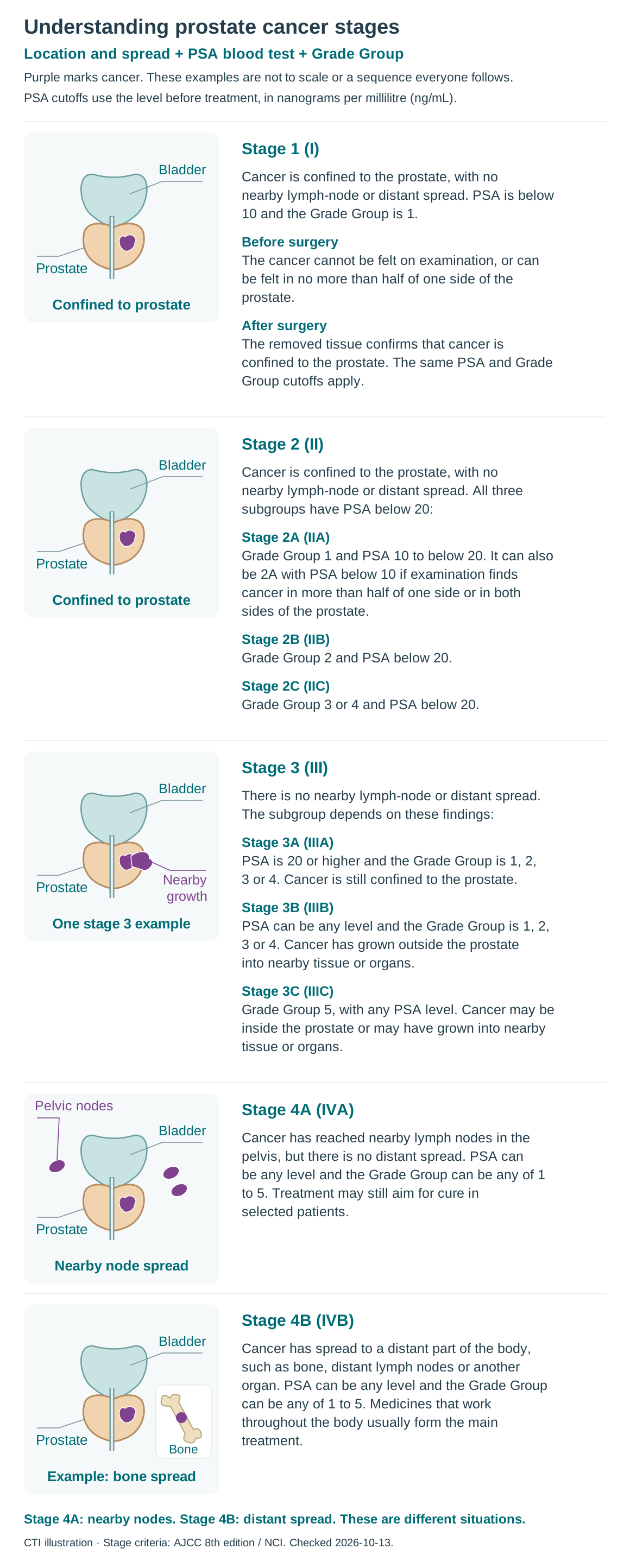
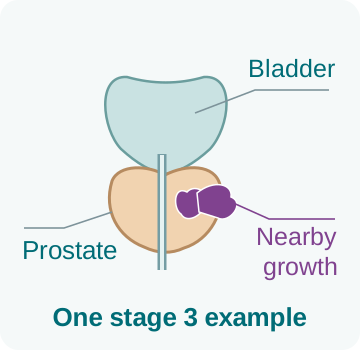
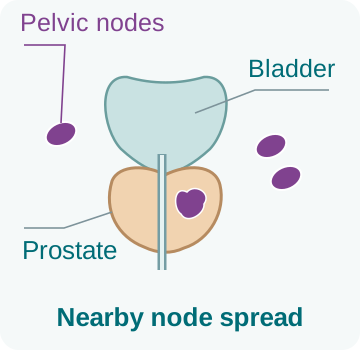
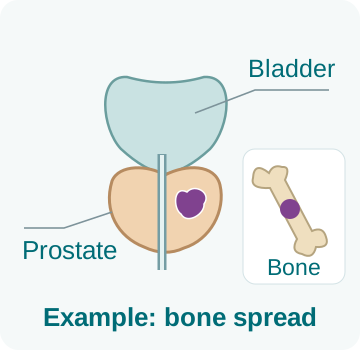
The stage brings together where the cancer is with the PSA blood-test level and Grade Group. Cancer confined to the prostate can therefore have different stage numbers. The pictures below show examples; the written explanation gives the other findings that matter.
Lymph nodes are small structures that help the immune system. The pelvic lymph nodes are in the lower part of the body between the hip bones, near the prostate.
Reports may also use the letters TNM: T describes growth in and around the prostate; N describes nearby lymph-node involvement; and M describes distant spread. The overall prostate stage combines these findings with PSA and Grade Group.
The PSA cutoffs below use the level before treatment, measured in nanograms per millilitre (ng/mL), the usual blood-test unit. “Below 10” does not include 10; “10 to below 20” includes 10 but not 20. Your team combines these numbers with the examination, biopsy and scan findings.
Purple marks cancer. Pictures are simplified examples, not to scale. Stages describe findings, not steps that everyone passes through.
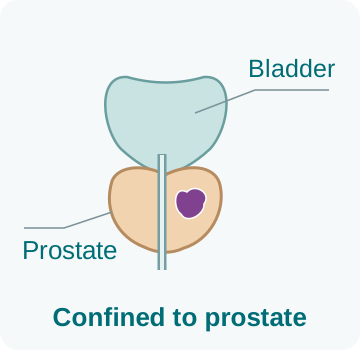
Stage 1 (I)
Cancer is confined to the prostate, with no nearby lymph-node or distant spread. PSA is below 10 and the Grade Group is 1.
- Before surgery: The cancer cannot be felt on examination, or can be felt in no more than half of one side of the prostate.
- After surgery: The removed tissue confirms that cancer is confined to the prostate. The same PSA and Grade Group cutoffs apply.
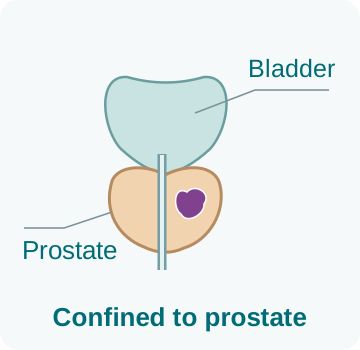
Stage 2 (II)
Cancer is confined to the prostate, with no nearby lymph-node or distant spread. All three subgroups have PSA below 20:
- Stage 2A (IIA): Grade Group 1 and PSA 10 to below 20. It can also be 2A with PSA below 10 if examination finds cancer in more than half of one side or in both sides of the prostate.
- Stage 2B (IIB): Grade Group 2 and PSA below 20.
- Stage 2C (IIC): Grade Group 3 or 4 and PSA below 20.
Stage 3 (III)
There is no nearby lymph-node or distant spread. The subgroup depends on these findings:
- Stage 3A (IIIA): PSA is 20 or higher and the Grade Group is 1, 2, 3 or 4. Cancer is still confined to the prostate.
- Stage 3B (IIIB): PSA can be any level and the Grade Group is 1, 2, 3 or 4. Cancer has grown outside the prostate into nearby tissue or organs.
- Stage 3C (IIIC): Grade Group 5, with any PSA level. Cancer may be inside the prostate or may have grown into nearby tissue or organs.
Stage 4A (IVA)
Cancer has reached nearby lymph nodes in the pelvis, but there is no distant spread. PSA can be any level and the Grade Group can be any of 1 to 5. Treatment may still aim for cure in selected patients.
Stage 4B (IVB)
Cancer has spread to a distant part of the body, such as bone, distant lymph nodes or another organ. PSA can be any level and the Grade Group can be any of 1 to 5. Medicines that work throughout the body usually form the main treatment.
Clinical stage is the assessment before treatment, using examination, biopsy and scans. Examining tissue removed during surgery can add information, called the pathological stage. A more complete assessment does not necessarily mean the cancer has grown while you were waiting.
What do low, intermediate and high risk mean?
Here, risk means the likelihood that a diagnosed cancer will grow, spread or return after treatment. It is not your chance of developing cancer, and it is not a prediction of exactly what will happen to you.
For cancer that has not spread to distant parts of the body, doctors consider the PSA level, Grade Group and how far the cancer extends in or around the prostate. The amount of cancer in biopsy samples and other findings can refine the assessment.
| Risk group | What it means | How it may affect care |
|---|---|---|
| Low risk | The results suggest a lower chance of growth or spread. Typical findings include Grade Group 1, PSA below 10 and cancer confined to the prostate. | Careful monitoring, called active surveillance, is often suitable. Treatment remains available if the findings change. |
| Intermediate risk | Some findings are less reassuring than in low-risk cancer. These may include Grade Group 2 or 3, a PSA between 10 and 20, or cancer affecting more of the prostate. | Surgery or radiotherapy (radiation treatment) may be advised. Selected patients with more favourable findings may be offered active surveillance. |
| High risk | There is a higher chance of growth, spread or return after treatment. Findings such as Grade Group 4 or 5 or PSA above 20 can place a cancer in this group. Growth outside the prostate also makes the treatment plan more complex. | Treatment may combine radiotherapy with hormone treatment, which lowers testosterone or blocks its effects on cancer cells. Surgery, sometimes followed by additional treatment, is another option for selected patients. |
These are examples, not a way to calculate your own group. Guidelines use slightly different definitions. You may also hear very low risk, very high risk or locally advanced, which means cancer has grown beyond the prostate into nearby tissue. Your team should name the system it is using and explain which findings place you in your group.
Why is intermediate risk sometimes split into two groups?
Favourable intermediate risk means the findings are closer to the lower-risk end of this broad category. Unfavourable intermediate risk means there are more concerning findings, such as more pattern 4 cancer or several risk factors together. This distinction can change whether monitoring is reasonable and whether hormone treatment is added to radiotherapy.
How is a treatment plan chosen?
A multidisciplinary team is a group of specialists who review the results together. They consider the chance of benefit, your other health conditions, how well you manage daily activities and the effects treatment could have on your life. Age alone should not decide the plan.
The main choices are monitoring, treatment directed at the prostate, and medicines that work throughout the body. Some people need a combination. The next section explains when each approach may help.
- Is the aim to cure the cancer, control it, or mainly relieve symptoms?
- What is the likely benefit for someone with my results and health?
- How might the options affect urination, bowel function, sex and energy?
- How many visits are needed, and what help might I need at home?
- How soon do I need to decide, and would a second opinion help?
When surgery and radiotherapy are both reasonable, it can help to discuss each with the specialist who provides it. Bring your priorities into that conversation, including work, caring responsibilities, travel and cost.
Treatment options
Topics in this section
- When is monitoring a reasonable choice?
- What does prostate cancer surgery involve?
- How does radiotherapy work?
- What if the cancer is high risk or has reached nearby lymph nodes?
- What is hormone treatment?
- How is cancer treated when it has spread and still responds to hormone treatment?
- What if PSA rises after surgery or radiotherapy?
- What if the cancer grows despite low testosterone?
- Treatments selected by tumour tests
- Would a clinical trial be relevant?
Your treatment depends on where the cancer is, how it is behaving and your health. Start with the part that matches your situation. You do not need every treatment described here.
- Cancer confined to the prostate: monitoring, surgery or radiotherapy may be suitable.
- Cancer with higher-risk features or nearby spread: treatment may still aim for cure, often using more than one approach.
- Cancer that has spread to distant parts of the body: medicines usually form the main treatment. Other treatments can help control particular areas or relieve symptoms.
- Cancer that returns or grows during treatment: the next step depends on previous treatment, scans, blood tests and symptoms.
When is monitoring a reasonable choice?
Monitoring can protect you from treatment side effects when a cancer is unlikely to cause harm soon. There are two different approaches.
Active surveillance: treatment remains an option
Active surveillance is usually offered for low-risk cancer and sometimes for carefully selected favourable intermediate-risk cancer. You have planned PSA tests, regular appointments with the team and, when needed, MRI scans and repeat biopsies. The aim is to offer treatment with a chance of cure if the cancer develops more concerning features.
A rise in PSA does not always mean treatment must start immediately. It may prompt a repeat test or further assessment. Ask for your follow-up schedule and which changes would lead to treatment.
Watchful waiting: focus on comfort if problems develop
Watchful waiting may suit someone whose other health problems or limited life expectancy mean that the side effects and demands of treatment are likely to outweigh its benefits. Follow-up focuses on symptoms, and treatment is offered if needed to relieve them. It involves fewer routine tests than active surveillance and has a different aim.
What does prostate cancer surgery involve?
A radical prostatectomy removes the whole prostate and usually the seminal vesicles, the small glands behind the bladder. Nearby lymph nodes may also be removed to check for cancer. The operation can be done through one larger cut or through smaller cuts, sometimes with robotic assistance.
The most suitable approach depends on the cancer and the surgical team's experience. Ask about the expected hospital stay, the temporary urine-drainage tube called a catheter, pain control and when you can return to usual activities.
Effects on urine control, erections and fertility
Urine leakage is common early in recovery and often improves over time, although it can persist. A specialist physiotherapist can teach exercises for the pelvic-floor muscles that help control urine.
Erections may be affected. The surgeon may be able to preserve nearby nerves when this is safe for cancer removal, but this does not guarantee normal erections afterwards. Tablets, devices and other treatments can help.
After the prostate and seminal vesicles are removed, you will not release semen during orgasm. An orgasm may still be possible, but you will no longer be able to make a partner pregnant through sex. Discuss sperm storage before treatment if having children in future matters to you.
What happens after the operation?
The removed tissue is examined and PSA is checked during follow-up. Cancer at a cut edge of the specimen is called a positive surgical margin. It increases concern that cells may remain, but it does not automatically mean everyone needs immediate radiotherapy. The full report and PSA results guide that decision.
A different operation, transurethral resection of the prostate (TURP), removes tissue through the urine tube to relieve blockage. It does not remove the whole prostate and is not the same as surgery intended to cure prostate cancer.
How does radiotherapy work?
Radiotherapy uses radiation to damage cancer cells. It can treat the prostate without removing it, or treat the area where the prostate used to be after surgery.
- External beam radiotherapy: a machine directs radiation at the planned area. Treatment is given over a schedule of visits chosen for your situation.
- Brachytherapy: a radiation source is placed inside the prostate, either temporarily or as small seeds. It may be used on its own or with external beam treatment in selected patients.
Planning scans help protect the bladder, rectum and other nearby tissues. Small markers or a spacer between the prostate and rectum may be useful for some patients; they are not needed for everyone.
Treatment can cause tiredness, a need to pass urine more often, burning with urination or bowel changes. Later effects can include bleeding, narrowing of the urine passage or erection difficulties. Tell the team about symptoms so they can help.
Hormone treatment is often added for unfavourable intermediate-risk or higher-risk cancer. How long it continues depends on the overall plan; it is not routinely needed with radiotherapy for every low-risk cancer.
What if the cancer is high risk or has reached nearby lymph nodes?
Treatment may still aim for cure when cancer has grown just outside the prostate or reached nearby pelvic lymph nodes. More than one treatment is often needed because the chance of cancer cells being left behind or present elsewhere is higher.
A common plan combines radiotherapy with a longer course of hormone treatment. Selected patients with very-high-risk features or nearby lymph-node involvement may also receive abiraterone, a medicine that further reduces hormone production, for about two years. It is taken with a steroid medicine to help manage its effects on other hormones. The team should explain why this addition is appropriate for your particular findings.
Surgery is an option for some patients, with the understanding that radiotherapy or hormone treatment may be needed afterwards. The decision depends on how far the cancer extends and your health.
What is hormone treatment?
Many prostate cancers use testosterone to grow. Androgen deprivation therapy (ADT) lowers testosterone, mainly by stopping the testicles from making it. “Androgen” means a hormone such as testosterone.
ADT may be given for a set period alongside radiotherapy or continued long term when cancer has spread. It can be delivered by injections, a daily tablet or an operation:
- Injections such as leuprorelin or goserelin lower testosterone after a brief initial rise. A short course of another medicine may be needed to protect against symptoms from that rise.
- Degarelix injections or relugolix tablets lower testosterone without the same initial rise. Other medicines you take can affect which option is suitable.
- Removal of the testicles, called orchidectomy, lowers testosterone permanently. Discuss its lifelong and personal effects before deciding.
The team checks PSA and, when needed, testosterone to see whether treatment is working. Blood pressure, blood sugar, weight, heart health and bone strength also need attention. Hot flushes, tiredness, reduced sex drive and loss of muscle or bone strength can occur. Help with these effects is described below.
Planned breaks from hormone treatment are suitable only in selected situations. Do not stop or delay treatment without discussing the plan.
Why might I need another hormone medicine as well?
Lowering testosterone does not block every hormone signal reaching cancer cells. Medicines called androgen receptor pathway inhibitors (ARPIs) block these signals more strongly. The group includes abiraterone, enzalutamide, apalutamide and darolutamide. They are used in different settings and are not interchangeable in every treatment plan.
- Abiraterone is taken with a prescribed steroid, usually prednisone or prednisolone. Blood pressure, potassium and liver tests are monitored. Food instructions vary by product; follow your prescription.
- Enzalutamide, apalutamide and darolutamide can interact with other medicines. The team considers tiredness, falls and heart health. Particular concerns include rare seizures with enzalutamide and rash or thyroid changes with apalutamide.
Give the pharmacist a complete list of medicines and supplements. Ask what to do after a missed dose or vomiting; do not double a dose yourself. Do not suddenly stop a prescribed steroid.
How is cancer treated when it has spread and still responds to hormone treatment?
Cancer in distant lymph nodes, bones or other organs is called metastatic cancer. When hormone treatment can still slow or control it, doctors call it hormone-sensitive or castration-sensitive cancer. This includes cancer that has not yet been treated with hormone medicines. The word “castration” in this medical term refers to very low testosterone; it does not mean you must have an operation.
For many patients, the starting plan combines ADT with an additional hormone medicine. ADT alone may be chosen when other health problems, treatment burdens or personal priorities make a combination unsuitable.
Chemotherapy uses medicines to damage cancer cells. Some people who are fit enough may benefit from adding a chemotherapy medicine, usually docetaxel, to ADT and either darolutamide or abiraterone. This three-part plan is considered particularly when a substantial amount of cancer is found at the first diagnosis.
Radiotherapy to the prostate can also help selected patients with a small amount of spread at diagnosis. The evidence for this uses categories based mainly on CT and bone scans. Treating a few separate areas of spread may be discussed in selected situations, but it does not automatically replace treatment throughout the body.
Special tests can identify further options for some patients. These include niraparib with abiraterone for a harmful BRCA2 gene change, capivasertib with abiraterone for loss of the PTEN protein, and lutetium-177 treatment for cancer showing enough PSMA on a scan. Their eligibility and practical effects are explained under “Treatments selected by tumour tests” below.
What if PSA rises after surgery or radiotherapy?
A confirmed PSA rise after treatment may be the first sign that cancer remains or has returned. This is sometimes called biochemical recurrence. It does not by itself show where the cancer is or mean that it has spread widely.
The team considers the PSA trend, the original cancer findings and scans. PSA doubling time is an estimate of how long it takes the level to double, calculated from a series of dated blood tests.
After radiotherapy, a temporary PSA rise, called a bounce, can happen without the cancer returning.
After surgery, radiotherapy to the area where the prostate was removed can still offer a chance of cure for selected patients. It is often more effective while PSA remains low. A negative scan does not automatically mean this treatment should be delayed. Hormone treatment may be added according to risk.
After radiotherapy, further treatment directed at the prostate is possible for some patients with a confirmed local return of cancer. A biopsy and specialist review are usually needed because repeat local treatment can have substantial side effects.
For selected patients with a higher-risk PSA recurrence who are not suitable for treatment aimed at cure, enzalutamide, with or without ADT, may be discussed. Eligibility depends on the PSA pattern, previous treatment and other findings.
What if the cancer grows despite low testosterone?
This is called castration-resistant prostate cancer. It means cancer is growing even though testosterone is at a very low level. It does not mean there are no more treatments. The team checks testosterone and reviews PSA, scans and symptoms together. ADT usually continues while another treatment is added.
If standard scans show no distant spread but PSA is rising quickly, medicines such as apalutamide, darolutamide or enzalutamide may be added. These are generally considered when the PSA doubling time is ten months or less, along with the rest of the assessment.
If scans show distant spread, options may include:
- Chemotherapy: docetaxel, or cabazitaxel after appropriate previous treatment, including docetaxel and a hormone-pathway medicine.
- A treatment selected by tumour tests: a medicine that targets a weakness in the cancer’s DNA repair, radiation carried to cells with the PSMA protein, or, less commonly, immunotherapy. These options are explained below.
- Treatment for cancer in the bones: radiation to a painful area or radium-223 for selected patients.
- A clinical trial: a study testing a treatment or a new way of using established treatments.
The best sequence depends on medicines already used, side effects, symptoms, test results and your health. Switching between similar hormone medicines may give limited benefit because cancer can become resistant to both. A treatment that works in a different way may be more useful.
Why might another biopsy be needed?
If symptoms or scans worsen rapidly despite a relatively low PSA, the team may recommend another biopsy. Occasionally prostate cancer changes into small-cell prostate carcinoma, a type of neuroendocrine cancer. It can grow quickly without producing much PSA. A biopsy is needed to confirm this change; a low PSA alone cannot identify it.
This is still cancer that began in the prostate, but it may need different medicines. Treatment often includes platinum-based chemotherapy, such as carboplatin or cisplatin with etoposide. These combinations are also used for small-cell lung cancer. Your team chooses the approach according to the biopsy findings, previous treatment and your health.
Treatments selected by tumour tests
These treatments help particular groups of patients. A matching test result is only one part of the decision: previous treatment, the current cancer setting, general health and local availability also matter.
Medicines for cancers with certain DNA-repair changes
Some cancer cells have lost a way of repairing damaged DNA. Medicines called poly(ADP-ribose) polymerase (PARP) inhibitors block another repair route, making it harder for those cancer cells to survive. BRCA1 and BRCA2 are examples of repair genes, but not every repair-gene change predicts the same benefit.
For cancer that has spread and become resistant to hormone treatment, the team may consider one of these options:
- Olaparib on its own, after an appropriate hormone-pathway medicine.
- Olaparib with abiraterone.
- Talazoparib with enzalutamide.
- Niraparib with abiraterone.
- Rucaparib, after an appropriate hormone-pathway medicine.
Each option has its own gene-test and previous-treatment requirements. These are separate treatment choices. Your team will explain which, if any, fits your results and previous treatment.
Niraparib with abiraterone can be considered for hormone-resistant cancer that has spread when testing shows a harmful or probably harmful BRCA1 or BRCA2 change. A steroid medicine is also prescribed.
For cancer that has spread but is still hormone-sensitive, niraparib with abiraterone and a steroid may be an option when testing confirms a harmful or probably harmful BRCA2 change. This use specifically requires BRCA2; another DNA-repair gene change does not automatically qualify. ADT continues.
PARP inhibitors can reduce the number of blood cells and cause tiredness or nausea. Blood tests are needed. Rarely, they can cause serious problems in the bone marrow, the tissue inside bones that makes blood cells. Ask which exact gene result supports the medicine being proposed.
What if the cancer has lost the PTEN protein?
PTEN is a protein that helps restrain cell growth. A specific laboratory stain can show whether enough of this protein is missing from the cancer. A PTEN gene result alone is not automatically the same finding.
Capivasertib with abiraterone and prednisone may be an option when a specific test confirms loss of the PTEN protein in cancer that has spread and is still hormone-sensitive. ADT continues. Capivasertib blocks a growth signal inside cancer cells. High blood sugar, diarrhoea and skin reactions are important risks, so monitoring and early reporting of symptoms matter.
Radiation carried to PSMA-positive cancer cells
Lutetium-177 vipivotide tetraxetan, also called lutetium-177 PSMA therapy, combines a substance that attaches to PSMA with a radioactive medicine. A PSMA scan helps check whether enough of the target is present.
It can be used for selected patients whose cancer has spread and grown despite a hormone-pathway medicine. Whether you have already had chemotherapy, or can safely delay it, affects whether this treatment is suitable.
It may also be used with a hormone-pathway medicine for selected patients whose cancer has spread but is still hormone-sensitive. In both situations, the scan must show enough PSMA for the treatment to target.
Blood tests check the number of blood cells and how well the kidneys are working. Dry mouth, tiredness and low blood counts can occur. The specialist team gives temporary radiation-safety instructions for contact with others and handling urine at home.
Radium-223 for selected patients with bone spread
Radium-223 delivers radiation to areas of active bone change around cancer. It can be used for selected patients whose bone spread is causing symptoms, whose cancer is hormone-resistant, and who have no known spread to organs such as the liver or lungs.
It is not combined with abiraterone and prednisone or prednisolone because that combination increases harm. Blood counts and fracture risk need review, and bone-protecting treatment is important.
Can immunotherapy help?
Immunotherapy helps the immune system act against cancer. It is not a routine replacement for hormone treatment in most prostate cancers.
Pembrolizumab may be suitable after previous treatment when tests show one of these uncommon features:
- Mismatch repair deficiency (dMMR): a fault in a system that normally repairs mistakes in DNA.
- High microsatellite instability (MSI-high): changes in repeated sections of DNA that can result from this repair fault.
- High tumour mutational burden (TMB-high): a large number of DNA changes in the cancer.
The team checks the exact result, previous treatment and other requirements before recommending pembrolizumab.
Sipuleucel-T, an immune treatment made using a patient's own cells, may be an option for selected patients whose cancer has spread, is hormone-resistant and causes few or no symptoms. Ask whether it is suitable and available for you.
Would a clinical trial be relevant?
A trial may be worth discussing at different points in care, especially when choosing the next treatment. Ask what is already known, what remains uncertain, which established options you could have instead, and what extra visits or tests are involved. A promising research result does not automatically mean a treatment is approved or right for everyone.
Managing side effects
Side effects depend on the treatment, dose, duration and your health. Tell the team early about symptoms; many can be eased, and a treatment adjustment may prevent them from becoming more serious.
Urine and bowel problems
After surgery, urine leakage often improves gradually. Ask for pelvic-floor training and advice about pads or other support. Do not repeatedly practise the exercises by stopping your urine stream. If leakage continues, specialist treatments may help.
If you go home with a catheter, ask how to care for it and whom to call if urine stops draining. Do not remove or flush it unless the team has taught you to do so.
Radiotherapy can cause frequent or urgent urination, burning, loose stools or soreness around the rectum. The team can advise on medicines, fluids and diet. Report blood in the urine or bowel movements, particularly if it is persistent, heavy or accompanied by clots. Do not assume that all bleeding is an expected treatment effect.
Sexual health and fertility
Treatment can affect erections, sex drive, ejaculation and how you feel about your body. These are common concerns and can be discussed privately with the team. Recovery varies, and help is available even if a problem persists.
Erection tablets, vacuum devices, injections or other specialist treatments may help. Erection tablets must not be combined with nitrate medicines used for some heart conditions. Tell the prescriber about your heart medicines before using them.
Intimacy can continue even if erections or ejaculation change. You may find it helpful to involve your partner in discussions about recovery. Ask about sperm storage before treatment if you may want children, and follow advice about contraception during and after drug treatment.
Do not start testosterone or “testosterone-boosting” products without a discussion with your cancer specialist.
Looking after your health during hormone treatment
Lower testosterone can cause hot flushes, tiredness, reduced sexual interest, changes in mood, muscle loss and weaker bones. It can also affect weight, blood sugar and heart health.
- Ask for a plan to check blood pressure, blood sugar, cholesterol and weight.
- Build up regular activity and strength exercises within your ability. Ask for adapted advice if cancer has affected your bones.
- Discuss troublesome hot flushes, poor sleep or low mood; practical measures and medicines can help.
- Ask whether you need a bone-density scan, which measures bone strength, and treatment to prevent broken bones (fractures).
Bone strength and cancer in the bones
Bone thinning from hormone treatment and cancer spreading to bone are different problems. Both can increase fracture risk, but their treatments are not always the same.
For osteoporosis, meaning weakened bones, treatment depends on your bone density and overall fracture risk. In selected patients with hormone-resistant cancer in the bones, medicines such as denosumab or zoledronic acid can reduce problems such as fractures. The higher-dose schedules used for cancer in bone are not routinely needed for everyone starting hormone treatment.
Before these medicines, dental health, calcium levels and kidney function may need review. The team will advise on calcium and vitamin D. Report jaw pain or a slow-healing dental wound. Do not stop denosumab without a plan, because bone loss can increase after it is stopped.
New or worsening bone pain deserves assessment. Pain medicines, radiotherapy to a painful area and, sometimes, surgery to support a weakened bone can help. Persistent new back pain needs prompt advice even before weakness develops.
Side effects of cancer medicines
Chemotherapy and some targeted medicines can reduce the number of blood cells. A blood-count test checks these cells:
- White blood cells help fight infection. Low levels can make infections more likely.
- Red blood cells carry oxygen. Too few can cause tiredness or breathlessness; this is called anaemia.
- Platelets help stop bleeding. Low levels can make bruising or bleeding easier.
Blood tests help the team decide whether to continue, delay or adjust treatment.
Tell the team about numbness in hands or feet, diarrhoea, vomiting, mouth sores, a new rash or difficulty eating and drinking. Ask which symptoms need a same-day call and which medicines you can take at home.
Immunotherapy can sometimes make the immune system attack healthy organs, causing inflammation and damage. New diarrhoea, cough, breathlessness, unusual weakness or other unexplained symptoms need advice, even after treatment has ended.
Live well
What happens at follow-up?
Follow-up checks how the cancer is behaving and how you are recovering. The schedule depends on whether you are on active surveillance, have finished treatment or are continuing treatment. Ask for a written plan covering blood tests, scans and the next appointment.
PSA behaves differently after different treatments:
- After prostate removal: PSA is expected to fall to a very low or undetectable level, meaning too low for the test to measure. A confirmed rise needs review.
- After radiotherapy: the prostate remains in place, so PSA may fall slowly and may still be measurable. A temporary bounce can occur. Doctors commonly use a rise of 2 nanograms per millilitre (ng/mL) above your lowest PSA level to define recurrence. Symptoms or a concerning trend may need assessment sooner.
- During medicines for advanced cancer: PSA is considered with scans, symptoms and sometimes testosterone. One number alone does not tell the whole story.
Keep a dated record of results and bring new symptoms to the team's attention. A planned follow-up schedule does not mean you should wait if something changes.
Eating well and staying active
A varied diet with enough protein and energy helps recovery and muscle strength. No special diet has been shown to replace prostate cancer treatment. Ask for a dietitian if you are losing weight, struggling to eat or unsure how to manage treatment-related changes.
Check vitamins, herbal products and supplements with the pharmacist because they can interact with cancer medicines. Avoid major food restrictions unless the team has advised them.
Gentle activity, built up gradually, can help energy, mood and strength. Include strength and balance exercises if suitable. If cancer has weakened a bone, get advice before lifting, twisting or doing high-impact exercise.
Emotional and practical support
Worry, sadness, changes in confidence and uncertainty about the future are understandable. Speak with your team if these feelings persist or interfere with sleep and daily life. Counselling, peer support and treatment for anxiety or depression can help.
Caregivers also need rest, practical help and someone to talk to. Discuss transport, work, costs and help at home before these become difficult to manage.
Support alongside cancer treatment
Supportive care helps with symptoms, side effects and daily-life needs at every stage. Palliative care specialises in relieving problems such as pain, breathlessness, tiredness and emotional distress. It can be provided alongside treatment intended to control cancer.
Tell the team what matters most to you and what burdens you would find difficult. Planning ahead can include choosing who should help with decisions and discussing where you would prefer to receive care if your health changes.
Sources and further reading
For more information, explore these resources from the National Cancer Institute (NCI) and other medical organisations. The linked organisations have not reviewed or endorsed this CTI guide. Your care team can explain how the information applies to you.
- NCI: Prostate Cancer Treatment (PDQ®)–Patient Version
- Cancer Council Australia: prostate cancer
- ESMO: advanced and metastatic prostate cancer guideline
- ASCO: systemic therapy for metastatic castration-resistant prostate cancer
- EAU: prostate cancer classification and Gleason grading
- American Cancer Society: understanding a prostate cancer pathology report
- EAU: Prostate cancer treatment
- FDA: Niraparib with abiraterone for BRCA2-mutated hormone-sensitive prostate cancer
- DailyMed: Current lutetium-177 vipivotide tetraxetan prescribing information
- NCI: Hormone therapy for prostate cancer
Staging and risk-group references
AJCC 8th edition prognostic staging.
Medicine approval and prescribing references
These official records describe licensed uses and prescribing information for the medicines named in this guide. Approval depends on the cancer type, biomarkers, previous treatment, combination and formulation. Some uses discussed in the guide are off-label: outside the medicine’s licence, with evidence from clinical guidelines or studies. FDA or EMA approval does not establish approval or availability in India.
- Abiraterone — FDA prescribing information · Approval history
- Apalutamide — FDA prescribing information · Approval history
- Cabazitaxel — FDA prescribing information · Approval history
- Capivasertib — FDA prescribing information · Approval history
- Darolutamide — FDA prescribing information · Approval history
- Degarelix — FDA prescribing information · Approval history
- Docetaxel — FDA prescribing information · Approval history
- Enzalutamide — FDA prescribing information · Approval history
- Goserelin — FDA prescribing information · Approval history
- Leuprorelin — FDA prescribing information · Approval history
- Lutetium-177 PSMA therapy (Pluvicto) — FDA prescribing information · Approval history
- Niraparib with abiraterone (Akeega) — FDA prescribing information · Approval history
- Olaparib — FDA prescribing information · Approval history
- Pembrolizumab — FDA prescribing information · Approval history
- Prednisolone — FDA prescribing information · Approval history
- Prednisone — FDA prescribing information · Approval history
- Radium 223 — FDA prescribing information · Approval history
- Relugolix — FDA prescribing information · Approval history
- Rucaparib — FDA prescribing information · Approval history
- Sipuleucel t — FDA approval record
- Talazoparib — FDA prescribing information · Approval history
Additional medicine approval notices
These records explain the specific medicine uses and eligibility requirements discussed in this guide.
Related care
Meet our doctors



Where to get care