Share
Start here
Oesophageal cancer at a glance
The oesophagus is the food pipe connecting the throat to the stomach. Cancer can develop in its inner lining and grow into deeper layers. The two main types are squamous cell carcinoma and adenocarcinoma. Their treatment overlaps in some situations but differs in others, so the biopsy result—the examination of a small tissue sample—matters as much as where the cancer starts. Oesophageal and esophageal are two spellings of the same word.
Many people first notice that food sticks, swallowing becomes uncomfortable, or they are losing weight. These problems deserve prompt assessment. Treatment can often improve swallowing, but nutrition and hydration need attention from the beginning rather than waiting for cancer treatment to work. Tell the team what you can actually eat and drink today, not only what you could manage last month.
Some early cancers can be removed through an endoscope, a thin flexible tube with a camera and treatment instruments, without a major operation. Cancer confined to the oesophagus and nearby lymph nodes (small structures in the immune system) may be treated with medicines, radiotherapy and surgery, or with chemotherapy and radiotherapy together (chemoradiotherapy) without surgery.
When cancer has spread to distant organs, it is called metastatic cancer. Medicines and treatments for symptoms aim to control it and help you live as well as possible.
The first things to clarify
- Exact diagnosis: Is this squamous cell carcinoma, adenocarcinoma, or a rarer tumour?
- Site: Does it start in the upper, middle or lower oesophagus, or at the junction with the stomach?
- Extent: Is it limited to the inner layers, growing deeper or into nearby areas, or present in distant parts of the body?
- Immediate needs: Is swallowing, bleeding, dehydration or weight loss making treatment harder?
- Next decision: Are more tests needed before choosing endoscopic treatment, surgery, chemoradiotherapy or medicines?
When to seek urgent help
Inability to swallow liquids or your own saliva, food that is completely stuck, vomiting blood, black tar-like stools with weakness, or sudden severe chest pain needs urgent medical assessment. Choking, breathlessness or coughing whenever you swallow may mean food or fluid is entering the airway. Seek prompt help rather than repeatedly trying to force food down. Major bleeding, collapse or severe breathing difficulty requires emergency care.
This guide covers the common cancers of the oesophagus and cancers at its junction with the stomach, called the gastro-oesophageal junction. A gastrointestinal stromal tumour (GIST), lymphoma or neuroendocrine cancer in this area needs a different treatment pathway. If the pathology names one of these, ask which guide and specialist team best match your diagnosis.
Making this information useful to you
A cancer diagnosis can arrive before you have had time to understand the tests. You do not need to learn every treatment name at once. Begin with the exact diagnosis, where the cancer is, and what the team recommends next. A relative or friend can join the appointment if you would find that helpful. Ask for an interpreter when language makes a discussion harder; important decisions should not depend on guessing unfamiliar words.
This guide explains possibilities, not a prescription for your situation. Your pathology, scan findings, general health, previous treatment and priorities determine which possibilities apply. Two people with the same cancer name may appropriately receive different treatment. If a recommendation differs from something you have read, ask the team to explain the reason and the evidence behind it.
Keep a list of medicines, allergies and other health conditions, including non-prescription products, vitamins and herbal remedies. Tell the team about previous cancer treatment, pregnancy or breastfeeding, and anything that could affect attending appointments. Do not stop an established medicine without advice. Bring your questions in the order that matters most to you, so that the most important concern is discussed first.
Understand
The oesophagus and the stomach junction
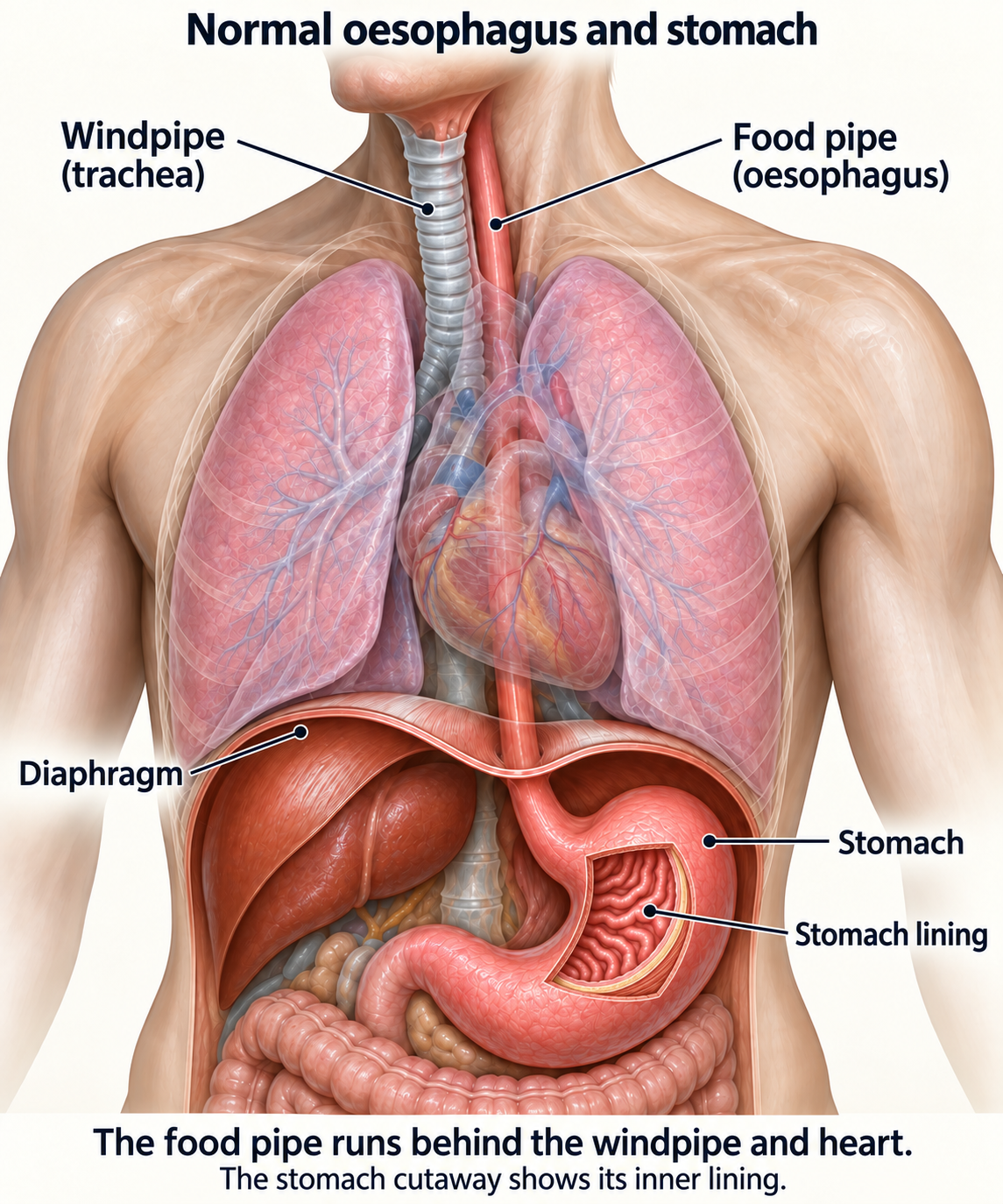
The oesophagus is a muscular tube behind the windpipe. Coordinated contractions push swallowed food towards the stomach. Its wall has several layers, and small lymphatic channels connect to nearby lymph nodes. A cancer can spread by growing through the wall, entering lymph nodes, or travelling to other organs. The size seen at endoscopy alone cannot tell the whole stage.
The gastro-oesophageal junction is where the food pipe meets the stomach. A cancer crossing this boundary may be managed using an oesophageal or gastric pathway according to its centre, extension and pathology. Ask the team to explain the classification. A treatment studied for a stomach or junctional cancer is not automatically suitable for a tumour higher up the oesophagus.
The main cancer types
Squamous cell carcinoma develops from the flat cells lining the oesophagus. It can occur at different levels, including the upper and middle food pipe. Radiotherapy combined with chemotherapy has an important role, sometimes as the main treatment intended to cure the cancer. A tumour in the neck portion of the oesophagus often needs a different surgical discussion from one lower in the chest.
Adenocarcinoma develops from gland-forming cells and commonly occurs near the lower oesophagus or junction. It may arise in Barrett’s oesophagus, a change in the lining associated with long-standing reflux, when stomach contents flow back into the food pipe. Barrett’s oesophagus is not itself cancer, and most people with Barrett’s do not develop cancer. Its monitoring and treatment depend on whether abnormal precancerous cells, called dysplasia, are present.
Symptoms and risk factors
Progressive difficulty swallowing, pain on swallowing, unexplained weight loss, persistent regurgitation (food or fluid coming back up), chest discomfort, hoarseness or bleeding can occur. Early disease may cause few symptoms. Reflux and swallowing problems also have many non-cancer causes, but a persistent or worsening change should be investigated rather than assumed to be ordinary acidity.
Tobacco and substantial alcohol exposure are important risks for squamous cell carcinoma. Long-standing reflux, Barrett’s oesophagus and excess body weight are associated with adenocarcinoma. Rare oesophageal conditions can also increase risk. Having a risk factor does not prove why an individual developed cancer; some people have none of the familiar risks. This is not a reason for blame.
Tests and diagnosis
How cancer is diagnosed
Upper gastrointestinal endoscopy allows a specialist to inspect the lining with a flexible camera passed through the mouth. Small biopsy samples are taken from abnormal areas. The procedure is usually performed with local throat anaesthetic, sedation, or both according to the centre and your needs. Follow the fasting instructions and arrange an escort if sedation is planned. Tell the team about blood thinners and breathing problems beforehand.
A pathologist, a doctor who examines tissue, checks the samples to establish the cancer type. If a sample is inconclusive, more tissue may be needed. A specialist pathology review is useful when the findings are unusual or do not fit the scans. For a growth limited to the inner layers, removal through an endoscope can give more information than a small biopsy. It shows how deeply the cancer has grown, how abnormal the cells look (grade), and whether cancer reaches the cut edges (margins).
Finding out where the cancer is
A computed tomography (CT) scan uses X-rays to make detailed pictures of the chest and abdomen, and other areas when needed. Contrast dye helps show tissues more clearly. Positron emission tomography combined with CT (PET-CT) can help find distant spread when treatment aims to cure the cancer.
Neither scan can detect every microscopic cancer deposit. Inflammation can also look abnormal, so a suspicious finding may need confirmation if it would change a major treatment decision.
Endoscopic ultrasound uses an ultrasound probe on an endoscope to examine the wall and nearby lymph nodes. It may help determine depth and obtain samples from selected nodes. It is not needed in every situation and may be difficult to perform when the oesophagus is very narrow.
For a tumour near the airway, a bronchoscopy uses a thin camera to examine the breathing tubes. Selected lower oesophageal or junctional adenocarcinomas may need laparoscopy, a keyhole examination of the abdomen, to look for spread not seen on scans.
Biomarkers that can guide medicines
Biomarkers are features of cancer cells that can help the team choose medicines. For advanced disease, enough tissue should be kept for the tests that may influence treatment. These commonly include programmed death-ligand 1 (PD-L1), mismatch repair (MMR) and microsatellite instability (MSI) testing. Adenocarcinoma is also assessed for human epidermal growth factor receptor 2 (HER2). Selected junctional adenocarcinomas may be tested for claudin 18.2 (CLDN18.2). Broader molecular profiling can identify uncommon changes that open a targeted treatment or clinical trial option.
- PD-L1: This protein helps guide immunotherapy choices. Immunotherapy helps the immune system attack cancer. The combined positive score (CPS), tumour-cell percentage and tumour area positivity (TAP) score use different methods. Ask which score was measured and which treatment it supports; the numbers are not interchangeable.
- Microsatellite instability-high (MSI-H) or deficient mismatch repair (dMMR): These results can show that the cancer’s system for repairing genetic mistakes is not working normally. They identify a group that may benefit particularly from immunotherapy. They are different from a PD-L1 result.
- HER2: An excess of this growth-related protein can support HER2-directed treatment in adenocarcinoma. Immunohistochemistry (IHC) measures protein staining. A borderline staining result (IHC 2+) may need in-situ hybridisation (ISH), which checks for extra copies of the HER2 gene.
- CLDN18.2: This can support a specific treatment in eligible advanced gastric or junctional adenocarcinoma. Its relevance depends on the tumour’s exact site and the testing criteria.
A tumour gene test looks at changes in the cancer and does not automatically mean the condition is inherited. Genetic counselling may be appropriate when personal or family history or a particular result suggests an inherited predisposition. A negative biomarker result still leaves established treatment options; it does not mean that nothing can help.
Assessing fitness and nutrition
Blood tests check blood counts and organ function. Your team will assess weight change, muscle loss, activity, heart and lung health, and ability to tolerate the proposed treatment.
A dietitian should be involved early when swallowing is limited or weight is falling. Some people need nutritional drinks, a temporary feeding tube or another feeding route. The route should be agreed with the treating surgeon and oncology team because it can affect later treatment. Feeding support is a way to protect strength, not a sign that treatment has failed.
Checking medicine safety
Before fluorouracil or capecitabine, discuss testing for dihydropyrimidine dehydrogenase (DPD) deficiency. DPD is an enzyme that helps break down fluorouracil, including the fluorouracil made from capecitabine. Low levels can increase the risk of severe side effects. Other checks depend on the medicines and operation planned.
Preparing for your appointment
For your consultation or a second opinion, bring a compact disc (CD) containing your scan images in Digital Imaging and Communications in Medicine (DICOM) format and the software needed to view them, along with the written scan reports. Bring your biopsy report and ask whether the preserved tissue samples (pathology slides or tissue blocks) are needed for specialist review or additional tests. Keep originals safe and agree how borrowed material will be returned. Having the actual images allows the team to compare changes and plan treatment accurately.
A repeat test is sometimes needed because an earlier sample was too small, a scan did not cover the necessary area, or a new result will change treatment. Ask what question the test will answer, how it may affect the plan, and when you should expect the result. A result described as uncertain does not automatically mean the cancer is worse. Sometimes discussion between the radiologist, pathologist and treating specialists resolves the uncertainty without another procedure.
Before a scan or procedure, mention kidney problems, previous contrast reactions, implanted devices, diabetes medicines, blood-thinning medicines and the possibility of pregnancy. Follow the testing centre's instructions about food, drink and medicines. If you have not received those instructions, contact the centre rather than making changes yourself.
Planning your treatment
Understanding your stage
Tumour, node and metastasis (TNM) staging for oesophageal cancer
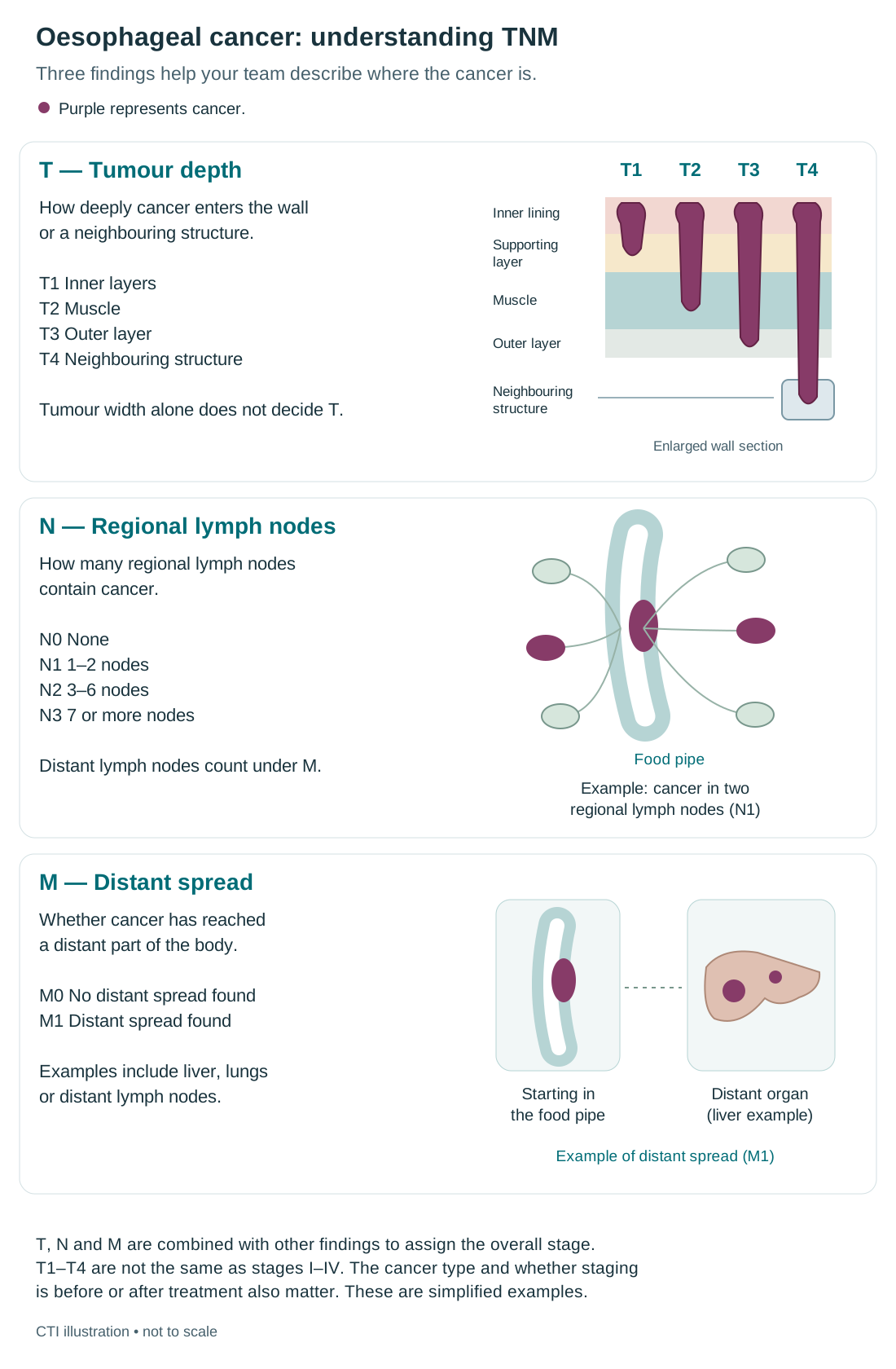
The oesophagus is the food pipe. Staging considers how deeply cancer enters its wall, regional nodes and distant spread. Squamous cancer and adenocarcinoma can have different stage groupings; clinical, surgical and post-treatment stages also use different rules.
Lymph nodes are small immune-system structures. Regional nodes are those near or draining the cancer’s starting area; distant spread means cancer has reached a site outside that regional area. Stages describe findings, not a sequence that everyone will pass through.
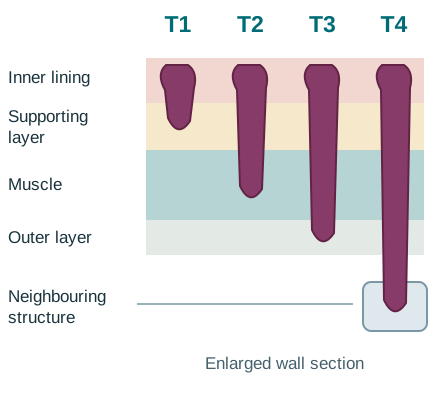
T — Tumour depth
How deeply cancer grows into the food-pipe wall or a neighbouring structure. T1: inner layers; T2: muscle; T3: outer layer; T4: a neighbouring structure. The width of the tumour alone does not determine T.
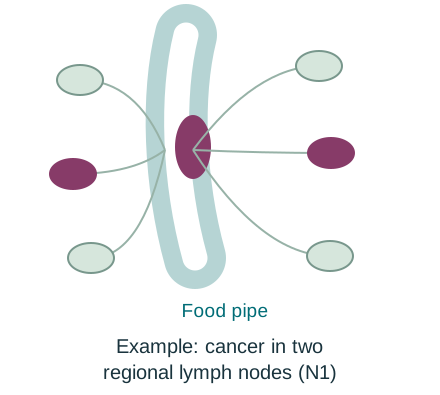
N — Regional lymph nodes
N records how many regional lymph nodes contain cancer. N0: none; N1: 1–2; N2: 3–6; N3: 7 or more. Regional nodes drain the area around the cancer. Distant nodes count under M.
M — Distant spread
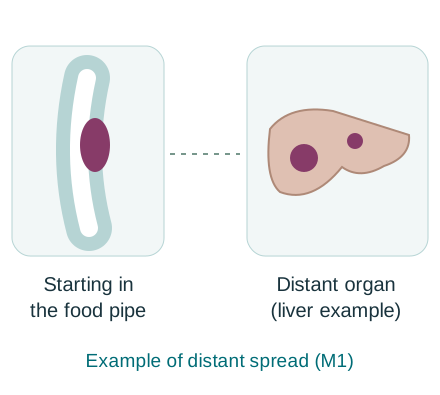
Whether cancer has reached a distant site, such as the liver, lungs or distant lymph nodes. M0: no distant spread found. M1: distant spread found.
CTI illustration. Enlarge the staging overview.
Stage 1 (I)
Cancer is relatively shallow, without extensive node involvement or distant spread. Some stage 1 groups can include growth into muscle; the precise meaning depends on cell type, grade and how the stage was established.
Stage 2 (II)
There is a greater combination of wall invasion or limited regional node involvement, but no distant spread.
Stage 3 (III)
Cancer has a more extensive combination of growth through the wall, nearby tissue involvement or regional nodes. There is no distant spread.
Stage 4 (IV)
IVA is very extensive local or regional disease, without distant metastases. IVB means spread to distant sites such as liver, lungs or distant nodes. These situations need different treatment discussions.
A T4 result is a description of local growth, not automatically stage IVB. Surgery depends on which structures are involved, not just the number. Ask the team to explain whether treatment aims to cure the cancer, control it or relieve a particular problem.
Clinical stage comes from examination, biopsies and scans. Pathological stage can add information from surgery; a prefix such as yp means the tissue was assessed after treatment. A revised assessment does not necessarily mean the cancer grew while you were waiting. Grade describes the cells’ behaviour and is different from stage.
Rather than memorising stage combinations, ask whether your cancer is suitable for local endoscopic treatment, can be treated with a curative combination, or needs treatment for advanced disease.
Your care team
Care usually involves a gastroenterologist, oncosurgeon (cancer surgeon), medical oncologist, radiation oncologist, radiologist, pathologist, specialist nurse and dietitian. Physiotherapy, swallowing assessment, psychological support and palliative care may also help. A multidisciplinary discussion brings the biopsy, scans, fitness and preferences together. Ask who is coordinating the plan and how decisions will be explained to you.
An oesophagectomy, surgery to remove part or all of the oesophagus, is a major operation best planned in an experienced centre. Before deciding, ask about the proposed reconstruction, expected recovery, nutrition support and the centre’s experience. Suitability depends on more than age. Frailty, heart and lung problems, nutrition and daily function can affect the balance of benefit and risk, and some of these can be improved before treatment.
How your treatment plan is chosen
Very superficial cancers may be suitable for endoscopic removal. Deeper localised cancers may require surgery, sometimes without preoperative treatment in carefully selected early cases. Most locally advanced cancers, which have grown deeper or into nearby tissues or lymph nodes, need combined treatment. The preferred combination depends particularly on whether the tumour is adenocarcinoma or squamous cell carcinoma.
For people well enough for combined treatment whose locally advanced oesophageal or junctional adenocarcinoma can be removed surgically (resectable cancer), a preferred approach is fluorouracil, leucovorin, oxaliplatin and docetaxel (FLOT) chemotherapy before and after surgery. Treatment around surgery is called perioperative treatment. Chemoradiotherapy before surgery remains an option when FLOT is unsuitable. The choice should account for your fitness and the expected benefits and risks.
For squamous cell carcinoma, chemoradiotherapy may be followed by surgery or used as the definitive treatment. Definitive means that the chemoradiotherapy itself is intended to provide lasting control or cure, without a planned operation. Tumour location, ability to tolerate surgery and your preferences all matter. If vital neighbouring structures are involved, the team must also assess bleeding and fistula risks before treatment. A fistula is an abnormal connection, for example between the food pipe and airway.
Agreeing the sequence
Ask which treatment comes first, when response will be checked, and what finding would change the next step. A good response on a scan is encouraging but does not reliably exclude microscopic cancer. Decisions about omitting a planned operation require a specialist assessment and a structured surveillance pathway, not simply a scan that looks clear.
Prehabilitation means preparing for treatment through appropriate exercise, nutrition, smoking cessation and management of other illnesses. It should be practical and tailored to what you can do. Support to stop tobacco and reduce alcohol-related harm can help recovery; if you may be dependent on alcohol, ask for medical help rather than stopping abruptly without a plan.
Questions to ask your care team
- What is the exact cancer type and stage, and are any important results still pending?
- Is the aim to cure the cancer, reduce the chance of recurrence, control it, or relieve a particular symptom?
- What benefit do you expect from this option, and what are the reasonable alternatives for me?
- How will treatment affect everyday activities, fertility, sexual health and the things I most value?
- How will we know whether it is working, and when will we review the plan?
- Who should I contact between visits, including at night or over a weekend?
Clinical trials and newer treatments
A clinical trial can be worth considering at diagnosis or when treatment needs to change. Trials ask a defined question; some compare established treatments and others study a newer approach. Eligibility depends on the cancer, previous treatment, test results and health. Taking part is voluntary, and choosing not to participate does not remove your right to standard care. Ask about extra visits, whether treatment is allocated by chance (randomisation), costs, travel, side effects and what happens when the study ends.
Newer treatments are considered using the clinical evidence, recognised guidelines and the exact cancer type, biomarkers and previous treatment. Some options have less mature evidence than established treatments. Ask what is known, what remains uncertain and whether a clinical trial would be appropriate.
Your priorities and supportive care
Tell the team what you are hoping treatment will make possible: returning to work, caring for family, keeping independence, reducing pain or attending an important event. These priorities can influence a choice between reasonable options. If the likely benefit is small and the burden is substantial, discussing a less intensive approach is appropriate. Decisions can be revisited when your health or circumstances change.
Supportive and palliative care help with symptoms, sleep, mood, family concerns and planning. They can be provided alongside treatment intended to cure or control cancer. A referral does not mean that active treatment is ending. If the cancer cannot be cured, ask what treatments may help you live longer or more comfortably and how their burdens compare with their likely benefits.
Treatment options
Endoscopic treatment for very early cancer
Endoscopic mucosal resection or submucosal dissection removes selected superficial cancers through the endoscope. The tissue is examined for depth, grade, cancer in small lymphatic channels or blood vessels, and clear edges. Treatment may then include ablation, which destroys remaining abnormal Barrett’s lining. The initial appearance is not enough to decide whether endoscopic treatment is complete.
If the removed tissue shows a higher risk of lymph-node spread, deeper invasion or an involved margin, further endoscopic treatment, surgery or chemoradiotherapy may be discussed. Endoscopic treatment avoids a major operation for suitable patients but still needs follow-up endoscopy. Bleeding, a tear in the food-pipe wall (perforation) and later narrowing are possible complications, and swallowing changes should be reported.
Surgery
An oesophagectomy removes the affected oesophagus and nearby lymph nodes. Part of the stomach is commonly shaped into a tube and brought up to restore the swallowing route. The exact operation depends on the tumour site and previous surgery. Open, minimally invasive and robotic approaches are options in selected circumstances; the most suitable approach depends on the operation and the team’s experience.
Recovery includes pain relief, breathing exercises, gradual movement and a planned return to eating and drinking. A feeding tube may be used while the join heals. Important risks include chest infection, leakage from the join, blood clots, heart-rhythm problems and narrowing of the new connection. Ask what symptoms should trigger an urgent call after discharge and how nutrition will be supported at home.
The operation specimen shows whether margins are clear, how many lymph nodes contain cancer and how much cancer remains after preoperative treatment. These findings guide further therapy. A clear margin means no cancer is seen at the cut edge; it does not guarantee that recurrence is impossible. Recovery and ability to tolerate further treatment also influence the next recommendation.
Medicines before and after surgery
FLOT is given in cycles before and, when recovery allows, after surgery. The purpose is to treat disease beyond what an operation can see and reduce recurrence risk. Not everyone can tolerate this combination, and dose adjustments or an alternative plan may be appropriate.
For eligible adults with resectable gastric (stomach) or gastro-oesophageal junction adenocarcinoma, durvalumab immunotherapy with FLOT before and after surgery, followed by durvalumab alone, is another established option following the MATTERHORN trial. That trial studied stage II to IVA gastric and junctional cancers suitable for surgery.
Your team should confirm the exact site, stage and fitness before recommending this plan. These findings do not make it routine treatment for every oesophageal adenocarcinoma.
Chemoradiotherapy
Chemoradiotherapy gives radiation to the tumour and relevant nearby areas while chemotherapy makes the cancer more sensitive to radiation. Examples include carboplatin with paclitaxel or a fluoropyrimidine, a type of chemotherapy that includes fluorouracil and capecitabine. The drugs, radiation dose and duration depend on whether surgery is planned afterwards or treatment is definitive. These schedules are not interchangeable.
A planning scan helps shape the radiation fields and protect surrounding organs. Treatment usually involves repeated outpatient visits. Swallowing soreness and fatigue may build up during treatment and can continue for a time afterwards. Dietitian input, pain relief, fluids and feeding support can help avoid interruptions. Tell the team early if you are struggling to swallow medicines or liquids.
Treatment after chemoradiotherapy and surgery
Nivolumab immunotherapy can be offered as additional treatment after surgery (adjuvant treatment) in a specific situation: chemoradiotherapy was given before surgery, the cancer was removed with clear margins, and living cancer cells were still found in the removed tumour or lymph nodes. This is the CheckMate 577 setting and includes both squamous cell carcinoma and adenocarcinoma.
Cancer cells found inside the removed tissue are different from cancer at its cut edge (a positive margin). PD-L1 positivity is not required for nivolumab in this setting.
This recommendation should not be automatically carried over to patients treated with chemotherapy alone before surgery, those with no cancer cells found in the removed tissue (a complete pathological response), or those who did not have an operation. Each situation has a different evidence base. Nivolumab is generally planned for up to a year in this setting if tolerated, with monitoring for immune-related side effects.
When cancer is advanced or returns
The choices below are for cancer that cannot be treated with a curative local approach or has spread to distant sites. Some cancers that return only in one area can still have local treatment. The team considers the cancer type, biomarkers, previous treatment, symptoms and your overall health before recommending medicines.
Unresectable means that surgery cannot remove the cancer; it does not mean that no treatment can help. First-line treatment means the first medicines used for advanced disease. Later-line treatment means a subsequent plan if the cancer grows or the first treatment cannot be continued.
Advanced squamous cell carcinoma
When curative local treatment is not possible, a platinum and fluoropyrimidine chemotherapy combination may be given with an immune checkpoint inhibitor, a type of immunotherapy, such as pembrolizumab, nivolumab or tislelizumab when the relevant criteria are met. PD-L1 testing matters: benefit is generally greater with higher expression, and the required score depends on the regimen. Immunotherapy is not an automatic addition for everyone. MSI-H or dMMR results can support an immunotherapy option even when PD-L1 is low; the team should assess this separately.
Nivolumab with ipilimumab is a chemotherapy-free option for selected PD-L1-positive advanced squamous cancers. It has its own risks and is not necessarily the best choice when rapid symptom control is needed. Chemotherapy alone, a less intensive regimen or symptom-focused care may be better for someone for whom immunotherapy is unsafe or intensive treatment would be too difficult.
If cancer progresses, the next choice depends on previous exposure, recovery from side effects and how much cancer is present and the symptoms it is causing. Chemotherapy such as a taxane (for example, paclitaxel) or irinotecan may be used. An immune checkpoint inhibitor may be an option if appropriate and not already used; routinely switching from one checkpoint inhibitor to another after progression is not an established solution.
Advanced adenocarcinoma and junctional cancer
A fluoropyrimidine and a platinum drug, such as oxaliplatin, commonly form the chemotherapy combination. Immunotherapy may be added for eligible PD-L1-positive HER2-negative disease. MSI-H or dMMR disease has a particularly important immunotherapy pathway, sometimes without chemotherapy. The decision should account for symptoms, speed of response needed, previous treatment and safety.
For advanced HER2-positive gastric or junctional adenocarcinoma, trastuzumab can be combined with chemotherapy. Pembrolizumab can be added as first-line treatment when the PD-L1 CPS is at least 1 and the person is suitable for immunotherapy. Trastuzumab deruxtecan is a later option after a trastuzumab-based treatment.
For cancer starting in the oesophagus itself, the team should explain the guideline basis and exact eligibility for these medicines. Evidence and treatment criteria for stomach and junctional cancers cannot always be applied unchanged.
Zanidatamab-based treatment is a newer first-line option for adults with unresectable locally advanced or metastatic HER2-positive gastric, junctional or oesophageal adenocarcinoma. With tislelizumab and platinum–fluoropyrimidine chemotherapy, the required HER2 result is IHC 3+ or IHC 2+ with extra HER2 gene copies confirmed by ISH. Zanidatamab with chemotherapy, without tislelizumab, is an option for IHC 3+ disease.
The team should also consider PD-L1 results, the expected benefit and side effects when deciding whether to include tislelizumab. These are alternative treatment plans; they are not medicines to add to an existing trastuzumab combination.
Zolbetuximab with fluoropyrimidine and platinum chemotherapy is a first-line option for adults with HER2-negative, CLDN18.2-positive gastric or junctional adenocarcinoma that is unresectable and locally advanced or metastatic. A specific tissue test must meet the required CLDN18.2 staining threshold. If both PD-L1 and CLDN18.2 are positive, treatment needs an individual discussion; combining all targeted drugs is not a standard default. This is not a general treatment for squamous oesophageal cancer.
Later choices may include paclitaxel with ramucirumab, irinotecan or another chemotherapy, depending on the cancer’s cell type and prior treatment. Rare molecular changes with a matching treatment may support a matched medicine or trial. Repeat tissue testing is sometimes useful because biomarkers, including HER2, can change. A biopsy should be requested when its result could meaningfully change the plan.
Improving swallowing and other symptoms
Radiotherapy, cancer medicines, endoscopic procedures or a stent can help relieve obstruction. A stent is a tube that holds the narrowed passage open and can provide relatively rapid relief in selected situations. It can also cause pain, reflux, movement out of position, bleeding or a fistula. It is not routinely the first choice before curative surgery or chemoradiotherapy; the whole treatment plan should guide the decision.
A feeding tube may be safer or more useful than a stent for some people. Airway involvement or a connection between the oesophagus and airway requires specialist assessment. Pain relief, treatment of bleeding and help with saliva or regurgitation are worthwhile even while decisions about anticancer therapy are being made. Supportive care should respond to your current needs.
Managing side effects
Swallowing, reflux and eating after treatment
After surgery, smaller portions eaten more often are usually easier. Eat slowly, chew well and follow the dietitian’s advice about texture. Staying upright after meals and raising the head of the bed may reduce reflux. Take prescribed acid suppression as directed. New or worsening difficulty swallowing needs assessment for narrowing, inflammation or recurrence rather than indefinite dietary restriction.
Some people develop dumping syndrome symptoms because food moves through the reconstructed digestive tract quickly. Sweating, a racing or pounding heartbeat, cramps or diarrhoea may occur soon after food, while low blood sugar can cause shakiness later. Smaller balanced meals and tailored changes to sugary foods and fluid timing can help. Report persistent symptoms so other causes are considered and treatment is individualised.
Weight, muscle strength and nutritional deficiencies may need monitoring for months. Persistent diarrhoea, greasy stools or food intolerance may have treatable causes. Ask for assessment rather than assuming all digestive symptoms are permanent. Before discharge, ask the team to show you and your caregiver how to manage the feeding tube, if you have one. Agree how feeds will be reviewed or reduced, and who to contact if the tube blocks or comes out.
Chemotherapy and targeted treatment effects
Chemotherapy can lower blood counts and increase infection risk, mouth soreness, nausea, diarrhoea, hair loss and fatigue. Oxaliplatin can cause cold sensitivity and nerve symptoms; report persistent tingling or difficulty using your hands. Cisplatin can affect kidneys or hearing. Severe early diarrhoea, mouth ulcers, confusion or unusual weakness after a fluoropyrimidine requires urgent advice. Chest pain during these medicines needs emergency assessment.
Trastuzumab and zanidatamab require heart-function assessment and monitoring. Zanidatamab can cause substantial diarrhoea and reactions during an infusion (a drip into a vein); report symptoms promptly and follow the team’s prevention and treatment plan.
Trastuzumab deruxtecan can cause lung inflammation: a new cough, breathlessness or fever needs prompt assessment. Zolbetuximab can cause significant nausea, vomiting and infusion reactions. Anti-sickness treatment and close monitoring during the drip help the team manage these effects.
Ramucirumab can affect blood pressure, wound healing and bleeding risk. Tell the team about planned procedures and blood-thinning medicines. Reporting symptoms early helps the team adjust treatment safely.
Immunotherapy side effects
Immunotherapy can inflame healthy organs, including bowel, lungs, liver, skin and hormone-producing glands. New diarrhoea, cough, breathlessness, yellowing of the eyes, severe headache, marked fatigue or unusual thirst needs prompt advice. Side effects can occur after treatment has stopped. Mention previous immunotherapy whenever you attend another clinic or emergency department, and carry the treatment alert information provided.
Steroids or other treatment may be needed to control inflammation; this does not mean the cancer treatment has necessarily failed. Do not start or stop steroids yourself. An autoimmune disease (where the immune system attacks healthy tissue), an organ transplant or treatment that suppresses the immune system needs careful discussion before immunotherapy because the balance of risk can be different.
Keeping treatment manageable
Keep the team's contact details available and know where to go outside clinic hours. Report side effects early rather than waiting until the next appointment. A short record of symptoms, temperature, fluid intake and medicines can help the team decide what is needed. Do not change cancer medicine doses, restart a stopped treatment, or use leftover antibiotics without instructions. A planned delay or dose adjustment can be an important part of safe treatment.
If you receive treatment that can lower white blood cells, a temperature of 38°C (100.4°F) or higher needs urgent advice. Follow any lower threshold or additional instructions your team gives you. Chills, sudden weakness, confusion or feeling very unwell also need urgent assessment, even without a fever. Do not wait for a blood test appointment or try to hide the fever with medicine before speaking to the team.
Severe breathlessness, chest pain, a new seizure, sudden weakness, heavy bleeding or collapse require emergency care. New severe back pain with leg weakness, numbness around the bottom, or loss of bladder or bowel control also needs immediate assessment. Contact the nearest emergency service when necessary; a website contact form or routine messaging service is not an emergency pathway.
Eating, drinking and energy
Treatment may change appetite, taste, bowel habits and energy. Small, frequent meals and foods containing protein can be easier than large meals. Ask for dietitian support if weight is falling, swallowing is difficult, or you are avoiding many foods. There is no single diet that treats cancer, and severe restriction or prolonged fasting can make it harder to tolerate treatment. Check supplements with your team because some interact with medicines.
Take anti-sickness medicine as prescribed and report vomiting that prevents you keeping down fluids or essential medicines. Seek advice for persistent diarrhoea, dizziness, very little urine or increasing weakness. Fluid recommendations may need adjustment if you have heart or kidney disease. Mouth ulcers, pain or infection that interferes with eating should be treated promptly rather than accepted as unavoidable.
Gentle movement, short walks and planned rest may help fatigue, but activity should match your condition and any surgical or bone-safety restrictions. Fatigue can also reflect anaemia (a low red blood cell level), infection, hormone changes, pain, poor sleep or low mood. Let the team assess a marked or persistent change. Accepting help with shopping, transport or meals can conserve energy for the activities that matter to you.
Live well
Follow-up after treatment
Follow-up depends on the original treatment, recurrence risk and current symptoms. It may include clinical review, nutritional assessment, scans and endoscopy. After endoscopic treatment, surveillance of the remaining lining is especially important. After definitive chemoradiotherapy, the team assesses for persistent or returning local disease. Surgery to treat persistent or returning cancer after chemoradiotherapy, called salvage surgery, is an option only for selected people and should be considered by an experienced team.
Structured active surveillance after a complete clinical response to preoperative chemoradiotherapy is an evolving option in selected specialist settings. A complete clinical response means that planned examinations, biopsies and scans find no remaining cancer; microscopic cancer may still be present.
This approach uses close monitoring with repeated endoscopy, biopsies and imaging, with the ability to offer surgery if needed. It is not the same as cancelling surgery and waiting for symptoms. Discuss the uncertainties and the centre’s protocol before choosing it.
Do not wait for a scheduled scan if swallowing deteriorates, weight keeps falling, pain changes or new symptoms persist. Equally, a symptom does not always mean recurrence; reflux, scar-related narrowing and treatment effects can be treated. Clear access to the team can make this period less uncertain.
Returning to everyday life
Recovery may be uneven. Plan smaller activities and build up gradually with advice about lifting, driving and exercise after surgery. Meals can take longer and social eating may feel different; explaining this to friends or colleagues can reduce pressure. Persistent anxiety around swallowing or recurrence deserves support alongside physical rehabilitation.
If cancer returns, new tests may be needed to distinguish a local recurrence from distant disease and review biomarkers. The next treatment depends on what you have already received and what you want it to achieve. Ask for a discussion of likely benefit, burden and symptom support. You can continue making choices that protect comfort, independence and time with the people who matter to you.
Emotional and practical support
Feeling frightened, angry, sad or uncertain is understandable. You do not have to appear positive all the time. Ask about counselling, specialist psychological support for people with cancer, support groups or a social worker if worry is affecting sleep, relationships or daily life. Persistent depression, panic or thoughts of self-harm need prompt professional help. Caregivers may need their own support and breaks; one person should not have to manage every appointment and household task alone.
It can help to agree who will update relatives and how much information you want shared. Children usually benefit from honest, age-appropriate explanations and reassurance about who will care for them. Ask permission before discussing private medical information with others. If concentration or memory is difficult, use reminders, a calendar and a trusted companion at important consultations.
Relationships, fertility and sexual health
Cancer and treatment can affect desire, comfort, fertility, body image and confidence. These are valid medical concerns. Raise fertility questions before treatment when possible, because some protective options need to be arranged early. The right approach depends on age, the treatment and how urgently it must start. Do not assume that absent periods or reduced fertility means pregnancy is impossible. Ask about contraception and the safe timing of pregnancy for your specific medicines.
Explain any pain, dryness, erection difficulties or changes in intimacy to the team. Appropriate treatments, rehabilitation and counselling can help. You can choose how much to involve a partner. Advice about hormone-containing treatments needs to take the cancer type and treatment into account; do not start them without discussing suitability.
Planning ahead while living well
Ask for a clear follow-up plan and know which symptoms should be reported between visits. Continue care for other conditions and discuss vaccinations with your oncology team; the timing and suitability of live vaccines can change during treatment. Avoid tobacco and ask for practical cessation support if needed. Activity, food and sleep plans should be realistic for your health rather than another source of pressure.
If treatment is long term, arrange periodic discussions about what is helping, what is difficult and what you want next. Planning for future care can protect your preferences and reduce uncertainty for family. You can discuss who should help with decisions if you become too unwell to speak for yourself, while continuing treatment and everyday life now.
Sources and further reading
For more information, explore these resources from the National Cancer Institute (NCI) and other medical organisations. The linked organisations have not reviewed or endorsed this CTI guide. Your care team can explain how the information applies to you.
- NCI: Esophageal Cancer Treatment
- ESMO oesophageal cancer guideline interim update (2025)
- ASCO advanced gastroesophageal cancer living guideline (August 2026 update)
- Macmillan: oesophageal cancer
- Perioperative durvalumab for gastric and junctional adenocarcinoma
- SANO trial: specialist active surveillance
- Tislelizumab medicine information
- Zanidatamab combinations: August 2026 treatment update
- EMA: DPD testing before fluorouracil or capecitabine
Staging and risk-group references
AJCC 8th edition.
Medicine approval and prescribing references
These official records describe licensed uses and prescribing information for the medicines named in this guide. Approval depends on the cancer type, biomarkers, previous treatment, combination and formulation. Some uses discussed in the guide are off-label: outside the medicine’s licence, with evidence from clinical guidelines or studies. FDA or EMA approval does not establish approval or availability in India.
- Carboplatin — FDA prescribing information · Approval history
- Docetaxel — FDA prescribing information · Approval history
- Durvalumab — FDA prescribing information · Approval history
- Fluorouracil — FDA prescribing information · Approval history
- Ipilimumab — FDA prescribing information · Approval history
- Irinotecan — FDA prescribing information · Approval history
- Leucovorin (folinic acid) — FDA prescribing information · Approval history
- Nivolumab — FDA prescribing information · Approval history
- Oxaliplatin — FDA prescribing information · Approval history
- Paclitaxel — FDA prescribing information · Approval history
- Pembrolizumab — FDA prescribing information · Approval history
- Ramucirumab — FDA prescribing information · Approval history
- Tislelizumab — FDA prescribing information · Approval history
- Trastuzumab — FDA prescribing information · Approval history
- Trastuzumab deruxtecan — FDA prescribing information · Approval history
- Zanidatamab — FDA prescribing information · Approval history
- Zolbetuximab — FDA prescribing information · Approval history
Additional medicine approval notices
These records explain the specific medicine uses and eligibility requirements discussed in this guide.
Related care
Meet our doctors



Where to get care