

Share
Start here
Head and neck cancer at a glance
- Head and neck cancer is a group of diseases, not one diagnosis. The starting site and biopsy result (from a small tissue sample) guide treatment.
- Many cancers in this area can be treated with the aim of cure. Cancer in neck lymph nodes (small immune-system structures) is not automatically incurable or spread throughout the body.
- Surgery and radiotherapy (radiation treatment) are central treatments. Chemotherapy, immunotherapy or targeted medicines may be added in particular situations.
- Treatment decisions should be discussed by a team of specialists in head and neck cancer. Protecting swallowing, speech and breathing is part of the plan.
- Dental care, nutrition and rehabilitation should start early. Tell the team promptly if eating, drinking or breathing becomes difficult.
Your first practical steps
Ask for your exact diagnosis, stage and the name of the clinician coordinating care. Arrange a dental assessment if radiotherapy may involve the mouth or jaw. Request a dietitian and speech and swallowing assessment before treatment when possible.
You do not have to settle every question at the first appointment. Find out which decisions are time-sensitive and when the team will meet with you again.
Bring your scan images
For your consultation or a second opinion, bring a CD containing your scan images (DICOM format) and the software needed to view them, along with the written scan reports.
Understand
Where head and neck cancers start
These closely connected structures help you breathe, swallow, speak, smell and taste. Cancer is named after where it starts, even if it later spreads to a neck lymph node.
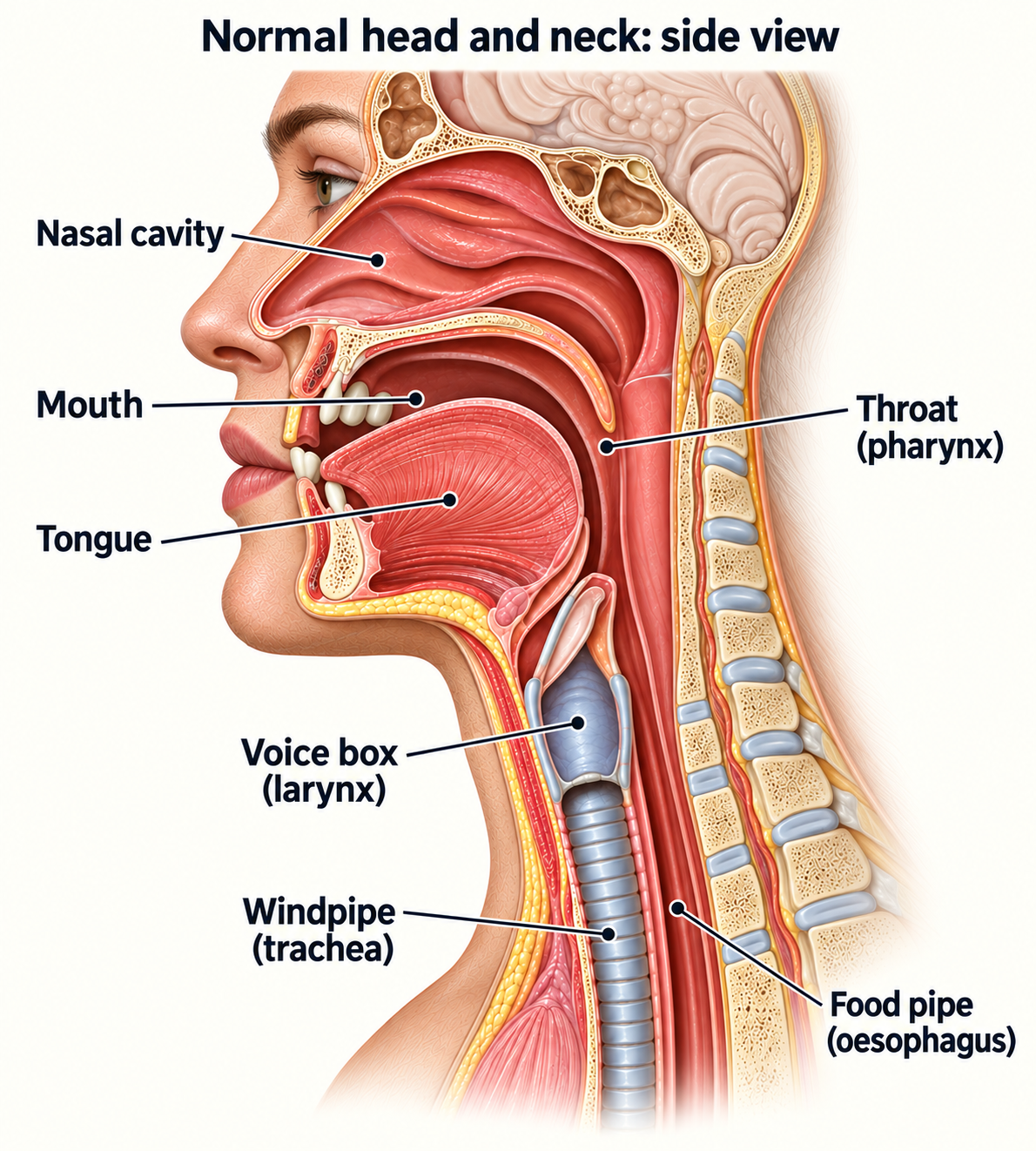
The larynx is the voice box. The trachea is the windpipe. The oesophagus is the food pipe. The hypopharynx is the lower part of the throat.
Ask your team to point to where your cancer began. Ask about treatment for that specific site, rather than assuming all head and neck cancers follow the same pathway.
Mouth and throat are different sites
Site | What it includes |
|---|---|
Oral cavity (mouth) | Lips, gums, inside of the cheeks, floor of the mouth, hard palate and the front two-thirds of the tongue. |
Oropharynx (middle throat) | Tonsils, base of the tongue, soft palate and the back and side walls of this part of the throat. |
Nasopharynx | Upper throat, behind the nose. |
Hypopharynx | Lower throat, behind and beside the voice box. |
A lump in the neck can be the first sign of a throat cancer even when the mouth looks normal. Sometimes tests are needed to find a small starting tumour that is not obvious on examination.
Risk factors and warning signs
Tobacco and alcohol are important causes of several head and neck cancers. Using both increases risk further. Smokeless tobacco, gutka and areca nut or betel quid, including products without tobacco, can cause oral cancer.
Human papillomavirus (HPV) causes many cancers of the tonsils and base of tongue. Epstein-Barr virus is linked to many nasopharyngeal cancers. Some people develop cancer without any obvious risk factor. Having cancer is not a reason for blame.
Symptoms that need assessment
- A mouth ulcer, red or white patch, or lump that does not heal.
- A persistent neck lump, unexplained hoarseness, or pain or difficulty when swallowing.
- One-sided ear pain without an obvious ear problem, persistent nasal blockage or recurrent nosebleeds.
- Unexplained weight loss, loose teeth or dentures that suddenly no longer fit.
These symptoms often have causes other than cancer. Arrange assessment if they persist for about three weeks; seek help sooner if they are worsening. A neck lump, swallowing difficulty or bleeding should not be ignored.
Stopping tobacco and areca nut use helps at any stage. Ask for practical support; dependence is treatable. Discuss alcohol reduction safely if you drink heavily.
HPV and Epstein-Barr virus
HPV-related throat cancer
Human papillomavirus, or HPV, is a common infection. Most infections clear without causing cancer. A persistent high-risk infection can lead to cancer many years later, usually in the tonsils or base of the tongue.
A positive result cannot tell when the infection happened or who it came from. It does not prove recent exposure or infidelity. You cannot catch someone's cancer through everyday contact, sharing meals or providing care.
HPV-related oropharyngeal cancers often respond well to treatment, but they still need appropriate cancer treatment and follow-up. HPV status alone is not a reason to reduce treatment outside a carefully selected, evidence-based plan or a clinical trial.
What the p16 test means
Testing tumour tissue for a protein called p16 often helps identify HPV-related oropharyngeal cancer. Sometimes a specific HPV test is also needed. A p16 result in a mouth or other head and neck cancer does not automatically have the same meaning.
Epstein-Barr virus and the nasopharynx
Epstein-Barr virus, or EBV, is linked to many nasopharyngeal cancers. Tests on tumour tissue, and sometimes blood tests for the virus’s genetic material (EBV DNA), can help with diagnosis and monitoring. The team interprets these results alongside scans and examination.
Tests and diagnosis
How cancer is diagnosed
An examination and biopsy are usually needed to confirm cancer. Your specialist checks the mouth and neck and may use a thin flexible camera through the nose to look at the throat and voice box.
Test | Why it may be needed |
|---|---|
Biopsy | A small tissue sample shows the type of cancer. A neck lump may be sampled using a fine needle or a core needle, often with ultrasound guidance. |
CT or MRI | Computed tomography (CT) and magnetic resonance imaging (MRI) show the tumour, nearby structures and neck lymph nodes. MRI can be especially useful for soft tissue, nerves or the base of the skull. |
PET-CT | Positron emission tomography combined with CT (PET-CT) may help assess more advanced disease, find an unknown starting site or check response after treatment. |
Examination under anaesthetic | Allows a closer look and biopsies when an awake examination does not provide enough information. |
Other checks before treatment
Blood tests assess blood counts and organ function. A chest scan, hearing test, dental review or heart assessment may be needed depending on the planned treatment. A swallowing assessment records your starting function.
Ask when results will be ready, who will explain them and whether your tissue needs specialist review. A scan alone cannot reliably replace a biopsy.
Understanding your pathology report
Most cancers of the mouth, throat and voice box are squamous cell carcinomas. They start in cells lining these surfaces. Salivary gland and some nasal or sinus cancers have different cell types and need separate advice.
Report term | What it tells the team |
|---|---|
Grade | How abnormal the cells look. Grade is different from stage. |
Depth of invasion | How deeply a mouth cancer has grown into nearby tissue. It can influence staging and neck treatment. |
Margins | Whether cancer reaches the edge of tissue removed at surgery. A positive margin may lead to further surgery or additional treatment. |
Extranodal extension | Cancer has grown through the outer covering of a lymph node. This can increase the need for treatment after surgery. |
Nerve or vessel invasion | Cancer cells are seen around nerves or in small blood or lymph vessels. These features can affect recurrence risk. |
Biomarkers that may change treatment
p16 or HPV testing matters particularly in oropharyngeal cancer. Testing for a protein called programmed death-ligand 1 (PD-L1) can help select immunotherapy. Its combined positive score, or CPS, counts staining in tumour and certain immune cells; it is not a percentage chance of benefit.
For some uncommon cancers, or cancer that returns (recurs) or spreads to distant parts of the body (metastasises), tests for gene or protein changes may help guide treatment. These are called molecular tests. A useful result must match the cancer type and the medicine's treatment conditions. An inconclusive result may require another sample.
Ask for a copy of the report and which findings actually change your treatment. Not every tumour needs every available test.
Planning your treatment
Understanding your stage
Staging depends on the exact head-and-neck site
Head-and-neck cancer is a group of different diseases. The starting site, cell type, HPV association and staging edition determine what a stage number means. The same finding in a neck lymph node can mean a different stage depending on the cancer type.
Lymph nodes are small immune-system structures. Regional nodes are those near or draining the cancer’s starting area; distant spread means cancer has reached a site outside that regional area. Stages describe findings, not a sequence that everyone will pass through.
- T (tumour): the size of the main tumour and how far it grows into nearby tissue. For mouth cancer, the depth of growth also matters.
- N (lymph nodes): whether cancer has reached lymph nodes in the neck. Their size, number, location and other features can affect the N category.
- M (distant spread): whether cancer has spread to a distant part of the body, such as the lungs.
Your team combines these findings using the rules for your specific cancer to determine the overall stage.
Mouth, voice-box and many HPV-negative throat cancers
These are broad patterns. Size, invasion depth, vocal-cord movement and node features matter differently by site.
Stage 1 (I)
A small, limited primary cancer without regional node or distant spread.
Stage 2 (II)
A larger or more locally involved primary cancer, still without regional node or distant spread.
Stage 3 (III)
More extensive growth near where the cancer started or a limited pattern of regional node involvement, without distant spread.
Stage 4 (IV)
IVA/IVB usually mean extensive local or regional disease, which can sometimes still be treated for cure. IVC means distant metastases.
HPV-associated oropharyngeal cancer
This includes HPV-associated cancers of the tonsils and base of tongue. Use the dedicated system, not the mouth-cancer stages.
Stage 1 (I)
A favourable combination of primary-tumour and regional-node findings. Neck nodes can be involved even at stage 1.
Stage 2 (II)
An intermediate combination of local tumour and node findings, without distant spread.
Stage 3 (III)
A more extensive local or regional combination, without distant metastases.
Stage 4 (IV)
Distant metastases. Exact assignment within stages 1–3 depends on the current clinical or pathological rules, including node features.
Nasopharyngeal cancer: version 9
This cancer begins behind the nose and uses its own system.
Stage 1 (I)
Limited local growth, with no nodes or a limited regional node pattern.
Stage 2 (II)
Greater local growth, such as specified bone involvement, or a more extensive regional node pattern.
Stage 3 (III)
Advanced local invasion or high-burden/adverse regional node findings, without distant spread.
Stage 4 (IV)
Distant metastases. Version 9 reserves stage 4 for metastatic disease; older stage IVA could mean local disease only.
Clinical staging uses examination, biopsy and scans. Staging after surgery can use different lymph-node rules. For HPV-associated throat and nasopharyngeal cancers, newer editions have changed some groupings; an older label does not necessarily mean the cancer was previously more extensive. Ask your team to explain the exact site, HPV/EBV findings where relevant, stage and treatment aim together.
Clinical stage comes from examination, biopsies and scans. Pathological stage can add information from surgery; a prefix such as yp means the tissue was assessed after treatment. A revised assessment does not necessarily mean the cancer grew while you were waiting. Grade describes the cells’ behaviour and is different from stage.
Talking about your outlook
The starting site, HPV status, stage, general health, tobacco exposure and response to treatment all matter. Statistics describe groups treated in the past; they cannot predict exactly what will happen to you.
Ask for the expected benefit of each option in absolute terms, for people with a similar diagnosis. You can choose how much detail you want and return to this conversation later.
How your treatment plan is chosen
A head and neck multidisciplinary team, or MDT, brings together specialists who consider both cancer control and function. Ask whether your diagnosis and treatment options have been discussed and who will coordinate the plan.
- A head and neck surgeon and reconstructive surgeon assess whether and how an operation can remove the cancer.
- A radiation oncologist plans radiotherapy; a medical oncologist advises on cancer medicines.
- A radiologist and pathologist review the scans and tissue.
- Dentists, specialist nurses, dietitians and speech and swallowing therapists help prevent and manage treatment effects. Physiotherapy, psychology and palliative care may also be involved.
Compare the whole pathway
An operation may still need to be followed by radiotherapy or chemoradiotherapy. A non-surgical plan can also have lasting effects on swallowing and voice. Ask about the likely total treatment, recovery time and long-term function, not just the first step.
Tell the team what matters to you, including work, caring responsibilities, travel and cost. A second opinion is reasonable. Ask how much time is safe for a decision without delaying necessary treatment.
Getting ready for treatment
Teeth and mouth
See a dentist familiar with head and neck radiotherapy before treatment when possible. Teeth at high risk of causing trouble may need treatment or removal with time to heal. Ask about fluoride protection, daily cleaning and lifelong follow-up if the jaw will receive radiation.
Eating and swallowing
A dietitian can help protect your weight and muscle. A speech and swallowing therapist can assess safe eating and teach exercises suited to your condition. Tell the team about coughing with meals, food sticking or a wet-sounding voice.
General health and practical planning
- Ask for help to stop tobacco and areca nut use. If alcohol dependence is possible, get medical advice before suddenly stopping.
- Discuss hearing, kidney function, diabetes, heart disease and all medicines. These can affect which cancer medicines are safe.
- Discuss pregnancy prevention, breastfeeding and fertility before treatment. Some medicines can harm an unborn baby.
- Plan transport, meals and support at home. Arrange a way to communicate if speaking will be difficult after surgery.
Keep moving within your ability, with light activity and adequate rest. Do not postpone reporting pain or poor intake while waiting for treatment to begin.
Treatment options
Topics in this section
- How the treatment pathways differ
- Surgery for mouth cancer
- Neck surgery and reconstruction
- Tonsil and base-of-tongue cancer
- Voice-box and lower-throat cancer
- Nasopharyngeal cancer
- Salivary gland and nasal cancers
- Radiotherapy
- Medicines alongside radiotherapy
- Immunotherapy around surgery
- If cancer returns or spreads
- Clinical trials
How the treatment pathways differ
The sections below first cover early and locally advanced cancers that have not spread to distant parts of the body. Treatment for cancer that returns or spreads is explained afterwards.
This is a map of common approaches, not a treatment prescription. Your exact site, stage, biopsy findings and fitness determine which pathway fits.
Situation | Common approach |
|---|---|
Small, localised cancer | One main treatment may be enough: surgery or radiotherapy, depending on the site. Neck lymph nodes may also need treatment. |
Operable, locally advanced mouth cancer | Usually surgery to the mouth and often the neck, with reconstruction if needed. Radiotherapy, sometimes with cisplatin, may follow. |
Selected operable, locally advanced squamous cancers | Pembrolizumab before and after surgery is now an option when PD-L1 CPS is at least 1. It is added to a surgical treatment pathway. |
Locally advanced throat or voice-box cancer | Chemoradiotherapy or surgery followed by additional treatment. The team considers both cancer control and how well the organ will function. |
Cancer that returns or spreads distantly | Some local recurrences can still be treated with the aim of cure. Otherwise, medicines and local treatments aim to control cancer and symptoms. |
Radiotherapy means radiation treatment. Chemoradiotherapy means chemotherapy given during radiotherapy. Treatment before surgery is neoadjuvant; treatment after surgery is adjuvant.
Surgery for mouth cancer
Surgery is the main treatment for many oral cavity cancers. The surgeon removes the tumour with a surrounding margin of tissue. The operation depends on the size, depth and position of the cancer.
What may be removed
A small cancer may be removed through the mouth. A larger tumour can require removal of part of the tongue, floor of the mouth, cheek, palate or jaw. The surgeon should explain the expected changes in eating, speech, appearance and dental function before you consent.
What happens to the neck
Cancer can reach neck lymph nodes before they become enlarged. Depending on risk, treatment may include removal of selected neck nodes. Sentinel lymph node biopsy is an option for some early mouth cancers in experienced centres; it is not suitable for everyone.
After the operation
- Pain relief, wound and drain care, nutrition and early rehabilitation are part of recovery.
- A temporary feeding tube or a breathing opening in the neck (tracheostomy) may be needed. One feeding-tube option is a percutaneous endoscopic gastrostomy (PEG), which passes through the abdomen into the stomach. Ask what would determine when the tube or breathing opening can be removed.
- The final pathology report determines whether more treatment is needed. Radiotherapy may be recommended for higher-risk features; a positive margin or extranodal extension may lead to cisplatin with radiotherapy if you are fit enough.
For eligible locally advanced disease, ask about the pre-surgery immunotherapy pathway before the operation is scheduled.
Neck surgery and reconstruction
Neck dissection
A neck dissection removes lymph nodes from selected areas of the neck. It may be on one or both sides. The surgeon aims to preserve important nerves, muscles and blood vessels whenever this is safe for cancer treatment.
Possible effects include numbness, neck tightness, shoulder weakness, swelling and a visible scar. The risks depend on the extent of surgery. Ask about early shoulder movement, physiotherapy and signs of a wound problem.
Rebuilding tissue
A flap is tissue moved to repair the area where cancer was removed. A free flap is moved from another part of the body with its blood supply reconnected under a microscope. Skin, muscle or bone may be used, depending on the defect.
There will also be a wound at the donor site, such as the arm, leg or chest. Ask about mobility, wound care and how long help at home may be needed. An artificial dental replacement (prosthesis) or a device that closes a gap in the roof of the mouth (obturator) may help after palate surgery.
Recovery is individual
- The team will check the flap and wounds closely after surgery. Follow their instructions on positioning, activity and mouth care.
- Swallowing and speech recovery may take weeks or months. Some changes can be permanent, but rehabilitation can make a substantial difference.
- Ask when dental restoration is possible and how radiotherapy might affect the plan.
Tonsil and base-of-tongue cancer
These cancers arise in the oropharynx. The treatment plan considers HPV status, tumour size, lymph nodes, swallowing function and whether surgery can remove the tumour without unacceptable harm.
Early disease
Options may include radiotherapy or surgery through the mouth, sometimes using laser or robotic techniques, with appropriate neck treatment. Robotic surgery is a way to perform an operation, not a guarantee of better results or less treatment afterwards.
Locally advanced disease
Radiotherapy with cisplatin is a common curative approach for suitable patients. Surgery followed by radiotherapy or chemoradiotherapy is appropriate in selected cases. Ask whether an operation is likely to lead to all three treatments and what that would mean for function.
If cisplatin is not suitable
Reduced kidney function, significant hearing loss, nerve problems or other health conditions can limit cisplatin use. The team may consider a different drug with radiotherapy, or radiotherapy alone. Alternatives have different evidence and are not automatically equivalent.
After chemoradiotherapy, examination and a response scan help decide whether more treatment is needed. PET-CT is commonly timed at about three months; scanning too early can be misleading because tissues are still inflamed.
Voice-box and lower-throat cancer
Early voice-box cancer
Small laryngeal cancers may be treated with radiotherapy or limited surgery, often through the mouth. The best choice depends on the exact part of the voice box involved and the expected voice and swallowing results.
Locally advanced disease
Some people can have chemoradiotherapy to preserve the larynx. Others need partial or total removal of the voice box, particularly when the tumour is extensive or the organ no longer works well. Additional radiotherapy, with or without chemotherapy, may be needed after surgery.
Keeping the organ does not always mean keeping normal function. Ask about the chance of useful speech, safe swallowing, long-term feeding-tube use and whether surgery could be needed later if the first treatment does not control the cancer.
Total laryngectomy
After the whole voice box is removed, the windpipe ends permanently at an opening in the neck called a stoma. Breathing no longer takes place through the mouth or nose. The team teaches stoma care and offers ways to communicate, including a voice prosthesis or an electronic speaking aid.
Hypopharyngeal cancer
Lower-throat cancers often need combined treatment. Surgery may remove part of the throat and sometimes the voice box, with reconstruction. Chemoradiotherapy is an alternative for selected people. Nutrition and swallowing support are particularly important.
Nasopharyngeal cancer
Nasopharyngeal carcinoma, or NPC, starts behind the nose. Its biology and treatment differ from mouth cancer. Tissue review and EBV testing can help guide care.
When treatment aims to cure
Radiotherapy is central. Early disease may need radiotherapy alone. More advanced disease is commonly treated with chemotherapy and radiotherapy; chemotherapy before radiotherapy may be recommended for higher-risk disease. Surgery is not usually the first treatment for the original tumour.
Read about treatment if nasopharyngeal cancer returns or spreads.
Salivary gland and nasal cancers
Salivary gland cancers
Salivary gland tumours can be benign (not cancer) or malignant (cancer). This section covers salivary gland cancers.
The major salivary glands lie near the ears and under the jaw; smaller glands are scattered in the mouth and throat. There are many cancer subtypes. A specialist pathology review is particularly valuable because treatment and behaviour can differ greatly.
Surgery is often the main treatment for a removable tumour. Radiotherapy may follow for higher-risk features. Ask about the facial nerve if the parotid gland is involved, and about the expected effects on facial movement, sensation and saliva.
Read about treatment if salivary gland cancer returns or spreads.
Nasal cavity and sinus cancers
Sinonasal cancer is a collective name for cancers of the nasal cavity (inside the nose) and paranasal sinuses (air-filled spaces around the nose). Nasal cavity cancer is one part of this group. Sinonasal carcinoma refers to cancers arising from lining or glandular cells in these areas.
Nasopharyngeal cancer starts farther back, behind the nose. It is a separate cancer site, covered in the section above.
These are uncommon and include several different cancer types. Treatment may involve surgery, radiotherapy and sometimes medicines. The position near the eyes, nerves and skull base makes experienced multidisciplinary planning important.
Ask how treatment could affect eyesight, smell, facial appearance, teeth and swallowing. Reconstruction or a prosthesis may be part of the plan. Specialist radiation techniques are chosen according to the tumour and nearby structures, not simply because a technology is newer.
This page is an overview. Your team should provide more information for the exact type of cancer identified under the microscope.
Radiotherapy
Radiotherapy uses carefully planned radiation to damage cancer cells. It may be the main treatment, follow surgery or relieve symptoms. Modern planning aims to protect normal tissues while adequately treating the cancer.
Planning and appointments
A planning scan and a fitted mask help keep your head and neck still. Tell the team early if enclosed spaces worry you; they can help you practise and manage anxiety. Treatment is commonly given on weekdays over several weeks, but the schedule depends on its purpose.
The treatment itself is painless. External-beam radiotherapy does not make you radioactive, and you can safely be near other people afterwards. Dental work, dietitian review and swallowing advice should be arranged before treatment when possible.
Effects during and after treatment
- A sore mouth or throat, painful swallowing, thick saliva, taste changes, fatigue and skin soreness can build up during treatment.
- Symptoms may continue to worsen for a short time after the last session before improving. Ask for a plan for pain relief, food, fluids and mouth care.
- Long-term effects can include dry mouth, dental decay, jaw stiffness, swallowing problems, neck stiffness or low thyroid function. The risks depend on the treated area.
Intensity-modulated radiotherapy (IMRT) shapes the radiation dose to the tumour while limiting exposure to nearby healthy tissue. Proton therapy or other specialised techniques are useful in selected situations, but are not necessary or superior for every patient.
Medicines alongside radiotherapy
Chemotherapy
Cisplatin is often given during radiotherapy to improve its effect. In selected situations, chemotherapy may be given before the main local treatment. The choice depends on the disease setting and your health.
Blood tests and, when needed, kidney and hearing checks guide safe treatment. Possible effects include nausea, tiredness, infection risk, mouth soreness, hearing changes and numbness in the hands or feet. Report problems early; the schedule or medicine may need adjustment.
Targeted treatment
Cetuximab blocks epidermal growth factor receptor (EGFR), a protein that helps cells grow. It is an option in selected head and neck cancer settings, but it is not automatically equivalent to cisplatin with curative radiotherapy. It can cause an acne-like rash, infusion reactions and low magnesium.
Keep the hospital's urgent number with you. Fever of 38°C (100.4°F) or more during chemotherapy, shaking chills or feeling suddenly very unwell needs immediate advice, even when you have no other symptoms.
Immunotherapy around surgery
Pembrolizumab helps the immune system recognise cancer. It is now an option for adults with resectable, locally advanced head and neck squamous cell carcinoma whose tumour has PD-L1 CPS of at least 1. ‘Resectable’ means the team believes it can be removed by surgery.
Step | The approved pathway |
|---|---|
Before surgery | Pembrolizumab alone, followed by the planned operation. |
After surgery | Pembrolizumab with radiotherapy, with or without cisplatin depending on the surgical findings and fitness. |
Continuing treatment | Pembrolizumab alone for the remainder of the planned course, if appropriate and tolerated. |
What the trial found
In KEYNOTE-689, about 58 out of 100 people with CPS at least 1 were alive without a study-defined event at three years with the pembrolizumab pathway, compared with about 45 out of 100 with surgery and usual postoperative treatment alone.
An event included cancer progression that prevented surgery, later progression or recurrence, or death. This is not the same as a proven improvement in overall survival or a personal chance of cure.
Organ inflammation can be serious or occasionally fatal.
Nivolumab after surgery: newer evidence
NIVOPOSTOP, a large phase III clinical trial published in The Lancet in 2026, studied adding nivolumab to cisplatin and radiotherapy after surgery for higher-risk, locally advanced squamous cancers. Adding nivolumab improved disease-free survival (time alive without the cancer returning), but increased severe treatment-related side effects.
This is evidence for multidisciplinary discussion. The exact postoperative regimen and its current guideline support should be reviewed. It should not be assumed interchangeable with the pembrolizumab pathway given before and after surgery.
If cancer returns or spreads
A recurrence may be near the original site, in the neck or in a distant organ. The team may repeat a biopsy and scans before recommending treatment. Some local recurrences can still be treated with surgery or carefully selected repeat radiotherapy.
Squamous cancers of the mouth, throat and voice box
For recurrent or metastatic squamous cancer that cannot be treated with curative local therapy, pembrolizumab alone is a first treatment option (first-line treatment) when PD-L1 CPS is at least 1. Pembrolizumab with platinum chemotherapy and fluorouracil (5-FU) is another established first-line option. Combination treatment may be preferred when a faster tumour response is important.
The established chemotherapy combination does not require a PD-L1 threshold. In selected patients, a taxane-based chemotherapy partner may be used on the basis of guideline-supported evidence, including KEYNOTE-B10, rather than the same phase III trial or identical labelled combination.
Options after previous treatment
Nivolumab is an option for recurrent or metastatic squamous cancer progressing on or after platinum treatment. Other options include selected chemotherapy, cetuximab or a clinical trial. Previous immunotherapy, the time since treatment and current fitness affect the next choice.
Medicines used for recurrent disease
Examples include platinum medicines, fluorouracil (5-FU) and taxanes. They may be used with immunotherapy or cetuximab. These drugs are not interchangeable in every setting. Your oncologist will explain the evidence for the proposed combination.
Nasopharyngeal cancer that returns or spreads
Selected local recurrences may be treated with specialist surgery or further radiation. For recurrent disease that cannot be treated locally, or metastatic disease, immunotherapy with chemotherapy is an important option.
- Toripalimab with gemcitabine and cisplatin is an option for specified first-line recurrent or metastatic NPC settings. The JUPITER-02 trial showed longer cancer control and survival than chemotherapy alone.
- Penpulimab with gemcitabine and cisplatin or carboplatin is an option for first-line treatment of recurrent or metastatic non-keratinising NPC, a subtype identified from the biopsy. This evidence should not be extended to all head and neck cancers.
Immunotherapy alone is also an option in specific settings after previous treatment. The required cancer subtype and prior treatments differ between medicines. Your oncologist should check the treatment-specific eligibility and safety requirements.
Salivary gland cancer that returns or spreads
For cancer that returns or spreads, tests may identify targets for treatment. These include human epidermal growth factor receptor 2 (HER2), a protein involved in cell growth; androgen receptors, which respond to hormones; and changes involving neurotrophic tyrosine receptor kinase (NTRK) genes. An NTRK gene fusion means one of these genes has joined abnormally to another gene.
Testing depends on the cancer subtype. A matched medicine may help selected patients. Not every positive test has an approved matching treatment.
Clinical trials
What trials may offer
Studies are testing better combinations, new targeted medicines, ways to reduce treatment safely and improved rehabilitation. A trial can be considered at diagnosis or later, not only after every standard treatment has been tried.
- Ask what is known, what remains uncertain, and whether you may be assigned to a comparison group.
- Check extra visits, tests, travel, costs, possible side effects and who pays for treatment-related problems.
- Ask about the standard treatment outside the trial and what happens if you withdraw. Taking part is voluntary.
Your treating team should confirm that the evidence and treatment setting apply to you.
Managing side effects
Mouth pain and dry mouth
A sore mouth or throat
Tell the team early about pain, ulcers, white patches or trouble taking fluids. Pain medicines work best when matched to the severity and timing of symptoms. Ask how to take them before meals, and how to prevent constipation if an opioid is prescribed.
- Use a soft toothbrush and follow the team's mouth-care and rinsing instructions. Avoid alcohol-containing mouthwash unless specifically advised.
- Choose soft, moist foods at a comfortable temperature. Acidic, spicy or rough foods may sting.
- Report white patches, increasing soreness or a bad taste. Infection can need treatment; do not assume all soreness is an expected side effect.
Dry mouth and thick saliva
Frequent small sips may help if swallowing is safe. Ask about saliva substitutes, humidification and suitable sugar-free products. Saliva-stimulating medicines help some people but are not suitable for everyone. Diet drinks and fruit juices can still damage teeth.
Protect your teeth for the long term
Reduced saliva increases decay risk. Follow your dentist's fluoride plan and keep regular dental visits. Before any extraction or implant, tell the dentist which part of your jaw received radiotherapy. Specialist planning may be needed because radiation can affect bone healing years later.
Eating and swallowing safely
Weight loss and reduced muscle can make treatment harder. A dietitian can suggest enough protein and energy using familiar foods, texture changes and supplements when needed. There is no special diet that cures head and neck cancer.
Make swallowing safe
Coughing, choking, food sticking, a wet voice or repeated chest infections can signal a swallowing problem. Food or drink can sometimes enter the lungs without a cough. A speech and swallowing therapist may recommend a camera or X-ray swallowing test.
Follow your individual texture, posture and exercise plan. Do not start thickened drinks, force food or practise difficult swallowing exercises without advice. Continue safe swallowing activity if your therapist recommends it, even if a tube supplies most nutrition.
When a tube can help
A nasogastric tube passes through the nose into the stomach. A gastrostomy tube enters the stomach through the abdominal wall. A tube may be planned before treatment or introduced if eating becomes unsafe or insufficient. Some people need it longer term.
- Ask how feeds, water and medicines will be given and who will teach you and your carer.
- Do not crush tablets into a tube without a pharmacist's advice. Some medicines cannot be given that way.
- Know whom to call for blockage, leakage, pain or a tube that comes out. Do not put it back yourself unless specifically trained.
Speech and movement after treatment
Communication
Speech can change after tongue, throat or voice-box treatment. A speech therapist can work with you on clarity, voice and practical communication. A phone, writing board or text-to-speech app may help while you recover.
After total laryngectomy, options include a voice prosthesis, an electrolarynx and, for some people, oesophageal speech. Training and follow-up matter. Report leakage through or around a voice prosthesis; do not remove or adjust it unless your team has taught you to do so.
Jaw, neck and shoulder movement
Surgery and radiotherapy can cause jaw tightness, neck stiffness or shoulder weakness. Ask for exercises tailored to your wounds and reconstruction. Start when your team advises, build up gradually and report increasing pain. Forcing the jaw open can cause injury.
Swelling and changes in appearance
Lymphoedema is swelling caused by reduced lymph drainage. It may affect the face, neck or tissues inside the throat. A trained therapist can advise on suitable treatment. Do not begin tight compression or vigorous massage without assessment.
Scars, a stoma or facial changes can affect confidence, relationships and work. Ask about counselling, camouflage advice, prosthetic rehabilitation or peer support. These concerns deserve the same attention as physical symptoms.
Breathing through a neck opening
Tracheostomy | Total laryngectomy |
|---|---|
An opening into the windpipe. The voice box may still be present, and connection to the mouth and nose may remain. | The voice box has been removed. The lungs are permanently separated from the mouth and nose. |
The airway and emergency plan depend on the tube and the reason for it. Never assume the upper airway is usable. | All breathing is through the neck stoma. Oxygen or rescue breaths delivered only to the face will not reach the lungs. |
Daily care needs hands-on teaching
Your specialist nurse or therapist should teach cleaning, humidification and, if needed, suction. Use only the devices, heat-and-moisture exchanger and techniques prescribed for you. Keep the planned emergency equipment available and practise the plan with your carer.
Protect the opening from water and small particles. Ask about a suitable shower guard; water must not enter the stoma. Swimming is unsafe without specialist assessment and equipment. Never cover the opening with an airtight material.
New breathing difficulty, a blocked tube or stoma, major bleeding, or a tube coming out can be an emergency. Call emergency services and follow the personalised plan you were taught. Do not attempt unfamiliar tube changes or deep suction.
Keep a written record of your exact airway type with your emergency details. A neck opening alone does not tell a bystander which operation you have had.
When to seek urgent help
Call emergency services now
- Severe or rapidly worsening breathing difficulty, noisy breathing, choking with inability to breathe, or a blocked neck airway.
- Heavy or persistent bleeding from the mouth, throat or stoma; coughing or vomiting a large amount of blood.
- Collapse, new confusion, severe chest pain, stroke-like symptoms or a severe allergic reaction.
Contact the 24-hour oncology team immediately
- A temperature of 38°C (100.4°F) or more during chemotherapy, shaking chills, or feeling very unwell even without a fever. Follow any lower threshold your hospital gives you.
- Inability to keep fluids down, very little urine, severe diarrhoea, uncontrolled pain or rapidly increasing swelling.
- A feeding tube that comes out, a new wound problem or suspected infection. Ask the team where to attend.
If you are receiving immunotherapy
New cough or breathlessness, persistent diarrhoea, blood in stools, jaundice, reduced urine, severe weakness, headache, vision change or a widespread rash may indicate immune-related inflammation. It can develop after treatment stops. Tell any clinician which immunotherapy you received and when.
Keep the treatment and emergency details with you. Tell emergency staff immediately if you have had a total laryngectomy.
Live well
Follow-up after treatment
Follow-up checks for recurrence, new cancers and treatment effects. Visits are usually more frequent in the first few years and become less frequent over time. Your schedule depends on the site, stage and treatment.
What may happen at a visit
The team asks about symptoms and examines the mouth, throat and neck, sometimes using a flexible camera. Scans are arranged according to your disease and symptoms. Blood tests may check thyroid function after neck radiotherapy. Dental, nutrition and swallowing reviews remain important.
Symptoms to report between appointments
- A new lump, persistent mouth ulcer, bleeding or unexplained pain.
- A new or worsening swallowing problem, hoarseness, ear pain, breathlessness or unplanned weight loss.
- Ongoing difficulty eating, jaw stiffness, neck swelling, hearing problems, numbness or unusual fatigue.
These symptoms do not always mean cancer has returned, but waiting for the next scheduled visit can delay useful care. Ask who will arrange urgent assessment and how scan results will be shared.
Keep a treatment record
Keep the operation and pathology reports, radiotherapy summary, medicine names, dates and important side effects. Future clinicians and dentists need to know about radiation to the jaw, any neck airway and previous immunotherapy.
Day-to-day life after cancer
Food, activity and rest
Return to a varied diet as swallowing allows. Keep dietitian support until your weight and intake are stable. Gentle activity and gradually increasing strength work can help recovery; ask what is safe after your operation. Balance activity with rest rather than pushing through severe fatigue.
Tobacco, areca nut and alcohol
Stopping tobacco and areca nut use reduces the risk of further harm and another cancer. Medicines and behavioural support can make quitting more achievable. Discuss avoiding alcohol with your team, particularly while your mouth is sore or you are taking medicines that interact with it.
Work, relationships and intimacy
A phased return to work may help if speech, stamina or eating have changed. Ask about information you can share with your employer, suitable breaks and practical adjustments. Talk openly with your partner about fatigue, dryness, appearance and worries about intimacy. A counsellor can help.
Emotional health
Worry before scans and sadness about changes are common. Seek help if anxiety, low mood or sleep problems persist or interfere with daily life. Psychological care and peer support can be part of cancer care, not something you have to arrange alone.
For travel, carry a treatment summary, medicines and airway or feeding equipment. Ask the team about fitness to travel, infection precautions and insurance.
Support for patients and carers
Supportive and palliative care
Palliative care focuses on symptoms, daily function and what matters to you. It can be provided alongside treatment intended to cure cancer, as well as when the aim is control or comfort. It does not mean that the team has stopped caring or that all cancer treatment must stop.
Ask for help with pain, nausea, breathlessness, constipation, sleep, anxiety and difficult family conversations. If cancer is not curable, discuss the benefits and burdens of treatment and how to arrange care at home when possible.
For family members and friends
- Ask the patient how they want you involved. Attend appointments with permission and keep an agreed list of questions.
- Learn feeding-tube or stoma care directly from the clinical team, with easy-to-follow guidance and a chance to practise.
- Help with transport, shopping or meals, but avoid pressuring someone to eat when swallowing is unsafe or painful.
- Share tasks and arrange breaks. Tell the team if caring responsibilities are becoming unmanageable.
Planning ahead
Discuss whom the team should contact, who can help with decisions if you become too unwell, and your preferences for future care. These conversations can be revisited. You do not need to wait for a crisis to ask about home nursing, social work or symptom support.
Sources and further reading
For more information, explore these resources from the National Cancer Institute (NCI) and other medical organisations. The linked organisations have not reviewed or endorsed this CTI guide. Your care team can explain how the information applies to you.
- NCI: Head and Neck Cancer—Patient Version
- Cancer Council Australia: head and neck cancer
- Macmillan: head and neck cancer
- Macmillan: laryngeal cancer
- NCI: Understanding the TNM staging system
- NCI: Lip and oral cavity cancer staging
- Cancer Research UK: feeding tubes and tracheostomy
- NCI: salivary gland cancer
- American Cancer Society: nasal cavity and paranasal sinus cancers
Staging and risk-group references
The edition depends on the site: Version 9 for nasopharynx (2025), HPV-associated oropharynx and salivary glands (2026); 8th edition remains current for several other sites.
Medicine approval and prescribing references
These official records describe licensed uses and prescribing information for the medicines named in this guide. Approval depends on the cancer type, biomarkers, previous treatment, combination and formulation. Some uses discussed in the guide are off-label: outside the medicine’s licence, with evidence from clinical guidelines or studies. FDA or EMA approval does not establish approval or availability in India.
- Carboplatin — FDA prescribing information · Approval history
- Cetuximab — FDA prescribing information · Approval history
- Cisplatin — FDA prescribing information · Approval history
- Fluorouracil — FDA prescribing information · Approval history
- Gemcitabine — FDA prescribing information · Approval history
- Nivolumab — FDA prescribing information · Approval history
- Pembrolizumab — FDA prescribing information · Approval history
- Penpulimab — FDA prescribing information · Approval history
- Toripalimab — FDA prescribing information · Approval history
Additional medicine approval notices
These records explain the specific medicine uses and eligibility requirements discussed in this guide.
Related care
Meet our doctors



Where to get care




