Share
Start here
GIST at a glance
A gastrointestinal stromal tumour (GIST) is a rare cancer that develops in the wall of the digestive tract. It belongs to a group of cancers called soft-tissue sarcomas, which arise in the body’s supporting tissues. Most begin in the stomach or small bowel, but they can arise elsewhere. A GIST in the stomach is different from the usual type of stomach cancer, and a GIST in the bowel is different from colon cancer. The medicines and surgical approach are therefore different too.
GISTs vary widely. Some small tumours grow very slowly, while others have a substantial risk of returning or spreading. The plan depends on where the tumour started, its size, the rate at which its cells divide, whether it has ruptured (broken open), whether it has spread and the results of gene and protein tests, also called molecular tests. Understanding these findings together helps explain why treatment plans differ.
Surgery can be sufficient for some localised GISTs, meaning tumours that have not spread. Others benefit from targeted medicine, which blocks particular growth signals in tumour cells, before or after surgery. When GIST has spread or cannot be removed safely, targeted medicines are usually the main treatment. Many are tablets taken over a long period, with regular checks to make sure they are helping and that side effects remain manageable.
The first things to clarify
- Diagnosis: Has a pathologist with GIST experience confirmed the tumour type? This doctor examines cells and tissue to establish the diagnosis.
- Extent: Is it confined to its original site or present elsewhere, particularly in the liver or abdominal lining?
- Gene tests: What do tests of KIT and platelet-derived growth factor receptor alpha (PDGFRA) show? These genes help control cell growth.
- Risk: After surgery, what is the estimated chance of GIST returning, called recurrence, and which findings affect it?
- Plan: Is the next step surveillance (regular checks), surgery, medicine to make surgery safer, or long-term treatment?
A multidisciplinary team (MDT), with specialists from different areas of care, can be especially helpful before an operation that might remove a large amount of stomach or bowel. In selected cases, an appropriate targeted therapy, such as imatinib, can shrink the tumour first. This requires a confirmed diagnosis and a mutation (gene change) that makes the treatment likely to work; not every GIST responds to imatinib.
When to seek urgent help
Vomiting blood, black tar-like stools, fresh bleeding with dizziness, fainting or sudden severe abdominal pain needs urgent assessment. A GIST can bleed into the digestive tract or abdomen. Persistent vomiting, increasing abdominal swelling or inability to pass stool or gas may signal a blocked bowel (obstruction). Severe pain, collapse or major bleeding requires emergency care rather than waiting for the next oncology appointment.
Making this information useful to you
A cancer diagnosis can arrive before you have had time to understand the tests. You do not need to learn every treatment name at once. Begin with the exact diagnosis, where the cancer is, and what the team recommends next. A relative or friend can join the appointment if you would find that helpful. Ask for an interpreter when language makes a discussion harder; important decisions should not depend on guessing unfamiliar words.
This guide explains treatment possibilities. Your tissue-test results, scans, general health, previous treatment and priorities determine which options apply to you. Two people with the same cancer name may appropriately receive different treatment. If a recommendation differs from something you have read, ask the team to explain the reason and the evidence behind it.
Understand
Where GIST develops
The digestive tract moves food using coordinated muscle activity. GIST arises from cells related to the specialised cells that help regulate this movement, rather than the surface lining where most digestive cancers begin. A tumour may grow into the space inside the bowel, outward into the abdomen, or both. A sizeable outward-growing GIST can therefore be present before obvious symptoms develop.
The stomach is the most common site, followed by the small intestine. Less common sites include the rectum (the last part of the bowel) and oesophagus (food pipe). Site affects both surgical planning and recurrence risk. For example, two tumours of the same size and cell-division rate may carry different risks if one starts in the stomach and the other in the small bowel.
Symptoms and how GIST is found
Possible symptoms include abdominal discomfort, a feeling of fullness after small meals, bloating, a lump, nausea and tiredness. Slow bleeding may cause anaemia, a shortage of healthy red blood cells, because iron is lost. There may be no visible blood. Some GISTs are found during a scan, endoscopy (an examination with a thin camera tube) or operation for another reason. These symptoms are not specific to GIST and need investigation rather than self-diagnosis.
The liver and the peritoneum, the lining of the abdominal cavity, are common sites of spread. Spread to lymph nodes, small structures that help the body fight infection, is uncommon in most adult GISTs. It matters more in certain unusual subtypes, including GIST with loss of succinate dehydrogenase (SDH), a group of proteins involved in how cells use energy. GIST in the liver is still GIST and is treated according to that diagnosis, rather than as a new cancer that started in the liver.
Why gene changes matter
Many GISTs have an acquired change in KIT or PDGFRA, genes involved in growth signalling. A targeted medicine can block some of these abnormal signals. Different changes within the same gene can respond differently.
The report may name an exon, a numbered section of a gene, and a variant, the exact gene change. Keeping the exact result is more useful than only knowing that the test was positive.
Most of these changes occur in the tumour during life and are not inherited. A smaller group of GISTs is associated with an inherited condition or a different biological pathway. There is no established lifestyle change that reliably prevents GIST, and patients should not blame a particular food, stress or personal action for the diagnosis.
Understanding recurrence risk
A risk assessment after removal estimates how likely the tumour is to return. It usually includes size, site, rupture and mitotic rate, the number of dividing tumour cells seen in a defined area under the microscope. It is not the same as a blood-test result. The modern report may describe the count per 5 square millimetres; numbers reported over different areas should not be compared without interpretation.
Tumour rupture can release cells into the abdomen and substantially increase risk. It is different from a microscopic positive margin, which means cancer cells are seen at the cut edge of the removed tissue under a microscope. Ask the surgeon and pathologist to explain whether rupture occurred, whether it happened before or during the procedure, and what it means for the treatment plan. Risk estimates are guides for decisions, not a prediction of exactly what will happen to you.
Tests and diagnosis
Imaging the tumour
Computed tomography (CT) uses X-rays to make detailed images. A contrast dye helps show the tumour and organs more clearly. CT of the abdomen and pelvis commonly assesses the original tumour, liver and abdominal lining.
Magnetic resonance imaging (MRI) uses magnets and radio waves. It may help with a rectal GIST, liver findings or situations where it is preferable to CT. Chest imaging may be included in staging. Tell the team about kidney problems, previous contrast reactions, pregnancy or implanted devices so the scan can be planned safely.
Positron emission tomography combined with CT (PET-CT) can sometimes be used to stage GIST when the cancer is suspected to have spread.
Obtaining the right tissue sample
A biopsy, in which a small tissue sample is taken for examination, is usually needed before starting drug treatment. Endoscopic ultrasound uses an ultrasound probe on a thin tube inside the digestive tract. It can guide a needle into the tumour through the wall.
At other sites, a scan may guide a needle that takes a small cylinder of tissue, called a core biopsy. The route should be chosen by a team familiar with GIST to obtain useful tissue while reducing the risk of bleeding, rupture or spreading tumour cells into surrounding areas.
If a tumour appears straightforward to remove and surgery is the appropriate first treatment, the specialist team may sometimes proceed without a biopsy beforehand. This is an individual decision, not a rule to avoid all biopsies. An endoscopy sample taken only from the surface may miss a tumour deeper in the wall. If the sample does not establish a diagnosis, it does not necessarily rule out GIST.
Understanding your pathology report
The pathologist assesses how the cells look and uses stains to look for particular proteins. Common markers include the KIT protein, also called CD117, and DOG1, another protein that helps identify GIST. These help distinguish GIST from other tumours. Protein staining checks for proteins; gene sequencing checks the genetic instructions in the tumour. A tumour can stain for KIT without having a KIT mutation. A small number of GISTs do not show the usual staining pattern, making expert review and molecular testing particularly useful.
After an operation, important findings include tumour size and site, mitotic rate, the cut edges (margins) and any evidence of rupture. Treatment before surgery can alter the appearance and division rate, so the original scans and the tissue sample taken before treatment help the team interpret risk. A small biopsy may not represent the most active part of a large tumour; the final risk assessment may change after all the removed tumour tissue is examined.
Mutation testing before medicine
KIT and PDGFRA testing should guide medicine choice, especially before treatment given before surgery (neoadjuvant) or after surgery (adjuvant). Broader testing of many genes, called next-generation sequencing, may help when the first tests do not explain the tumour. Ask whether the report includes the precise variant and whether it is known to respond to the proposed medicine. Starting with the correct treatment can avoid months on a drug unlikely to help.
- KIT: GISTs with KIT exon 11 or exon 9 mutations can respond to imatinib. Exons are sections of a gene; the exact mutation helps guide treatment.
- PDGFRA: Whether treatment is likely to work depends on the exact variant. A change called D842V does not respond to imatinib. Avapritinib is an option for this variant when GIST cannot be removed or has spread.
- No KIT or PDGFRA mutation found: This is sometimes called wild-type GIST. Further testing helps identify the underlying type; these tumours are not all the same.
- SDH and other findings: Staining for SDHB, one component of the SDH protein group, and additional tests can identify SDH-deficient GIST. Neurofibromatosis type 1 (NF1), a genetic condition that can cause tumours, may also be relevant. Tests may look for changes in the BRAF gene or rare gene fusions, in which parts of different genes become joined.
Not every molecular finding points to an established treatment. Some results are uncertain or have evidence only from clinical trials. An MDT meeting can help when the result is rare, conflicting or would lead to a treatment not usually used for GIST. A blood-based tumour test may occasionally provide useful information. It does not replace tissue diagnosis and can miss gene changes when little tumour DNA, the genetic material, enters the blood.
When genetic counselling helps
SDH-deficient GIST needs assessment for an inherited condition that may increase the chance of developing tumours. Young age, multiple GISTs, a family history, or features suggesting NF1 may also prompt referral. Genetic counselling explains the difference between testing the tumour and testing for a gene change present from birth, and whether relatives need assessment. Some syndromes involve other tumour types, so the recommended follow-up may extend beyond the digestive tract.
An inherited result does not mean that every relative has the condition or will develop cancer. Testing should be planned with appropriate advice, consent and interpretation. Family testing is based on a confirmed relevant finding and the family circumstances, not simply on the fact that someone has GIST.
Preparing for your appointment
Keep a list of medicines, allergies and other health conditions, including non-prescription products, vitamins and herbal remedies. Tell the team about previous cancer treatment, pregnancy or breastfeeding, and anything that could affect attending appointments. Do not stop an established medicine without advice. Bring your questions in the order that matters most to you, so that the most important concern is discussed first.
For your consultation or a second opinion, bring a compact disc (CD) containing your scan images in Digital Imaging and Communications in Medicine (DICOM) format and the software needed to view them, along with the written scan reports. Bring your biopsy report. Ask whether the laboratory’s glass slides or preserved tissue blocks are needed for specialist review or additional tests. Keep originals safe and agree how borrowed material will be returned. Having the actual images allows the team to compare changes and plan treatment accurately.
A repeat test is sometimes needed because an earlier sample was too small, a scan did not cover the necessary area, or a new result will change treatment. Ask what question the test will answer, how it may affect the plan, and when you should expect the result. A result described as uncertain does not automatically mean the cancer is worse. Sometimes the scan specialist, pathologist and treating doctors can resolve the uncertainty together without another procedure.
Before a scan or procedure, also mention diabetes medicines and blood-thinning medicines. Remind the team about kidney problems, contrast reactions, implanted devices or possible pregnancy. Follow the testing centre's instructions about food, drink and medicines. If you have not received those instructions, contact the centre rather than making changes yourself.
Planning your treatment
Understanding your stage
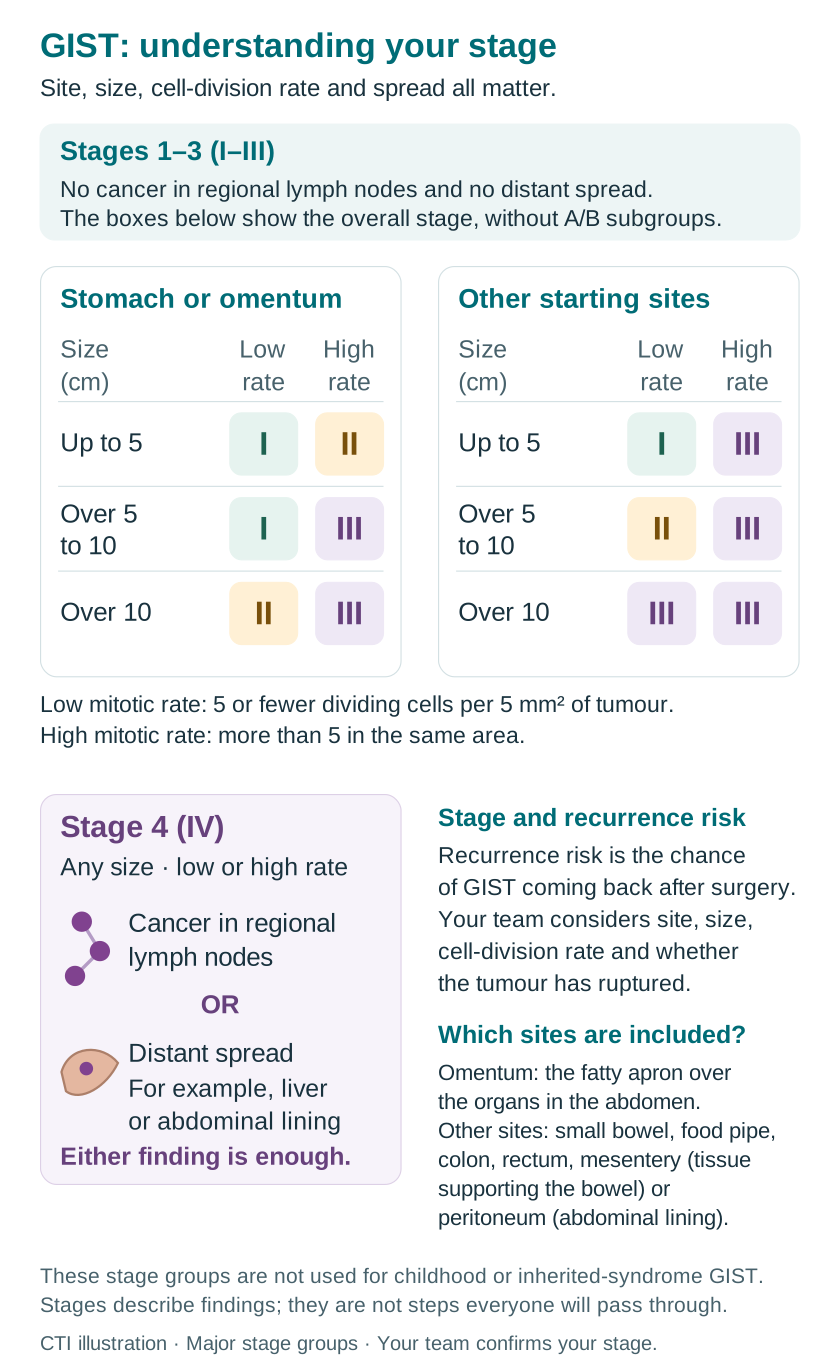
GIST stage describes the size and spread of the tumour. Its starting site and cell-division rate (mitotic rate) also affect the stage.
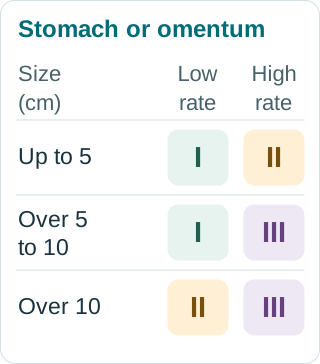
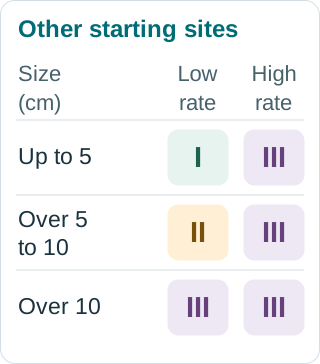
For stages 1–3, there is no spread to nearby (regional) lymph nodes or distant sites. Use the card for the tumour’s starting site, find its size and read across to the low or high rate column.
A low mitotic rate means 5 or fewer dividing cells per 5 square millimetres of tumour tissue. A high rate means more than 5 in that area.
The omentum is the fatty apron over the organs in the abdomen. Other starting sites here means the small bowel, food pipe (oesophagus), colon, rectum, the tissue supporting the bowel (mesentery) or the abdominal lining (peritoneum).
CTI illustration. Enlarge the staging overview.
Read the stage descriptions
The cards show the major stage groups. Your report may also include an A or B subgroup. Stages describe the findings; they are not steps that everyone will pass through.
Stage 1 (I)
Low-mitotic-rate GIST without nodes or distant spread: up to 10 cm in the stomach/omentum, or up to 5 cm at the other sites covered by this system.
Stage 2 (II)
For stomach/omentum GIST: a tumour over 10 cm with a low mitotic rate, or up to 5 cm with a high rate. At other sites: over 5 cm up to 10 cm with a low rate. No nodes or distant spread.
Stage 3 (III)
For stomach/omentum GIST: over 5 cm with a high mitotic rate. At other sites: any high-rate tumour, or a low-rate tumour over 10 cm. No nodes or distant spread.
Stage 4 (IV)
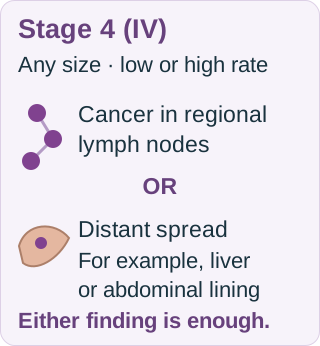
Regional node involvement or distant spread, often to liver or the abdominal lining. Node involvement is uncommon in most adult GIST.
These stage groups are not used for childhood or inherited-syndrome GIST. Mutation testing helps choose medicines; it does not determine the stage.
Your care team
Your team may include a medical oncologist experienced in GIST who plans cancer medicines, a surgeon who operates on the digestive tract, a radiologist who interprets scans and a pathologist who examines tissue. A digestive-disease specialist, genetic counsellor, nurses, pharmacist, dietitian and supportive-care professionals may also be involved. These specialists plan care together because GIST treatment differs from treatment for common bowel cancers and many other soft-tissue sarcomas. Ask whether your diagnosis and treatment options have been discussed before a major operation or a change in medicine.
The team should consider both cancer control and the function of the affected organ. Removing a small piece of stomach is different from removing most of it; a rectal operation may affect bowel function or require a stoma, an opening on the abdomen through which stool passes into a bag. When appropriate, treatment before surgery may reduce the extent of the operation. The possibility should be discussed before a major operation is agreed.
How your treatment plan is chosen
A very small stomach tumour without concerning features may be monitored with endoscopy or scans rather than removed immediately. The team considers how certain the diagnosis is, any growth or symptoms and whether regular follow-up is practical for you. Small does not always mean harmless, and a surveillance approach for a stomach GIST should not automatically be applied to a similar-sized tumour in the small bowel or rectum.
For a localised, safely removable GIST, surgery is usually the main treatment. If an operation would be difficult or damaging, a medicine chosen for the tumour’s gene change may be given first. After removal, recurrence risk and the likelihood that imatinib will work help determine whether it is likely to benefit you. If disease has spread, treatment usually centres on long-term targeted medicine, with surgery or other local procedures reserved for selected purposes.
Goals and timing
Neoadjuvant treatment means medicine before surgery, often to make the operation safer or preserve more normal tissue. Adjuvant treatment means medicine after removal to reduce recurrence risk. Treatment for metastatic disease, meaning cancer that has spread to distant parts of the body, aims to control known cancer and is generally continued while it helps and its side effects remain manageable. These are different situations; a planned stopping date after curative surgery should not be applied to metastatic disease.
Before starting, agree how response will be checked, what side effects to report, and when a surgeon will reassess the tumour if an operation is planned. Shrinkage can take time, but early assessment is important to avoid continuing an ineffective drug. A second opinion is reasonable when the pathology is unusual, a major operation is proposed or the molecular result does not seem to fit the recommendation.
Questions to ask your care team
- What is the exact cancer type and stage, and are any important results still pending?
- Is the aim to cure the cancer, reduce the chance of recurrence, control it, or relieve a particular symptom?
- What benefit do you expect from this option, and what are the reasonable alternatives for me?
- How will treatment affect everyday activities, fertility (the ability to have children), sexual health and the things I most value?
- How will we know whether it is working, and when will we review the plan?
- Who should I contact between visits, including at night or over a weekend?
Clinical trials and newer treatments
A clinical trial can be worth considering at diagnosis or when treatment needs to change. Trials ask a defined question; some compare established treatments and others study a newer approach. Eligibility depends on the cancer, previous treatment, test results and health. Taking part is voluntary, and choosing not to participate does not remove your right to standard care. Ask about extra visits, possible randomisation (allocation to a treatment group by chance), costs, travel, side effects and what happens when the study ends.
Newer treatments are considered using the clinical evidence, recognised guidelines and the exact cancer type, gene or protein test results and previous treatment. For some options, there is less information about long-term benefits and harms than for established treatments. Ask what is known, what remains uncertain and whether a clinical trial would be appropriate.
Your priorities and supportive care
Tell the team what you are hoping treatment will make possible: returning to work, caring for family, keeping independence, reducing pain or attending an important event. These priorities can influence a choice between reasonable options. If the likely benefit is small and the burden is substantial, discussing a less intensive approach is appropriate. Decisions can be revisited when your health or circumstances change.
Supportive and palliative care help with symptoms, sleep, mood, family concerns and planning. They can be provided alongside treatment intended to cure or control cancer. A referral does not mean that active treatment is ending. If the cancer cannot be cured, ask what treatments may help you live longer or more comfortably and how their burdens compare with their likely benefits.
Treatment options
Monitoring selected small stomach GISTs
For selected stomach GISTs under 2 centimetres without high-risk features, surveillance can be considered. Growth, symptoms, an open sore over the tumour (ulceration) or concerning findings on endoscopic ultrasound may favour removal. A specialist should explain the uncertainty, how often checks are needed and what changes would make treatment advisable. Monitoring is an active plan with scheduled assessments, not simply ignoring the lesion.
Removal may also be appropriate when diagnosis remains uncertain or reliable follow-up is difficult. Endoscopic and surgical techniques have different risks, including a hole in the digestive tract wall (perforation) and tumour rupture, so the method should be chosen by an experienced team. A small tumour at a difficult anatomical site may require more planning than its size suggests.
Surgery for localised disease
The aim is complete removal with the tumour intact and no cancer at the cut edge, while preserving as much normal organ function as possible. GISTs can be fragile. Avoiding rupture is a central part of planning and handling the tumour. The surgeon may remove a small wedge-shaped piece of stomach or a section of bowel, depending on location and attachment to surrounding structures.
Removing many lymph nodes is usually unnecessary for typical adult GIST because spread to nodes is uncommon. Suspicious nodes or an unusual subtype may change this approach. Minimally invasive surgery through small cuts is suitable for selected tumours. Open surgery through a larger cut may be safer when the tumour’s size, location or fragility makes rupture more likely. The goal is complete, safe removal while preserving as much normal function as possible.
A microscopic positive margin does not automatically mean another major operation is required. The team considers rupture, recurrence risk, the feasibility and consequences of further surgery, and the role of drug treatment. If visible tumour remains, that is a different situation and needs a specific plan. Ask for the operation and pathology findings to be explained together.
Medicine before surgery
Imatinib is commonly used before surgery for a GIST with an imatinib-sensitive mutation when shrinkage could make the operation safer or less extensive. Biopsy and molecular testing are important before this approach. Scans check that treatment is helping. Surgery is planned when the response and the tumour’s position make the timing appropriate, often after several months rather than after a fixed number of tablets.
If the gene change predicts that imatinib will not work, as with PDGFRA D842V, the specialist may consider a different matched treatment or a clinical trial. Evidence and suitability differ between subtypes. A result that predicts resistance should not be overlooked simply because imatinib is the most familiar GIST medicine. Discuss how treatment will be paused and restarted around surgery; do not make these changes yourself.
Imatinib after surgery
Imatinib after surgery is recommended for many patients at high risk of recurrence whose GIST has a gene change that is sensitive to it. Low-risk GIST may be managed with regular checks alone. Imatinib is not useful as routine adjuvant treatment for PDGFRA D842V disease or other biologically resistant GISTs. A positive KIT stain alone is not enough to establish drug sensitivity.
For intermediate-risk GIST, the options may include surveillance (regular checks) or adjuvant imatinib after an MDT discussion. Your treating oncologist will review the expected benefit, possible side effects, your general health and your preferences, taking into account the tumour’s size, starting site, cell-division rate and specific gene changes that affect recurrence risk and whether imatinib is likely to work.
Three years is an established course of imatinib after surgery for high-risk GIST that is sensitive to the medicine.
Newer randomised evidence from IMADGIST supports discussing extension to six years in selected patients who remain at substantial risk after three years. The improvement was in disease-free survival, meaning time alive without the cancer returning. The initial analysis did not establish that people lived longer overall. The duration depends on recurrence risk, side effects and an informed discussion with your oncologist; six years is not automatically appropriate for everyone.
Ruptured GIST carries a particularly high risk and may lead to a recommendation for much longer treatment. Ask the team to explain the reasons and when the plan will be reviewed. Other GIST medicines are not automatically interchangeable with imatinib for preventing recurrence after complete removal. In particular, activity against advanced disease does not establish an adjuvant benefit for every targeted drug.
Use the GIST recurrence risk calculator with your pathology report and discuss the result with your treating oncologist.
First treatment for advanced GIST
For most GISTs that cannot be removed safely (unresectable) or have spread (metastatic), imatinib is the usual first medicine when the KIT or PDGFRA mutation is sensitive to it. It blocks growth signals and may shrink the tumour or keep it from growing. The exact mutation can influence dosing, including consideration of a higher dose for KIT exon 9 advanced GIST. Dose changes require supervision because tolerance, interactions and organ function matter.
Avapritinib is a key option when GIST with PDGFRA D842V cannot be removed or has spread. This mutation does not respond to imatinib. Other PDGFRA exon 18 variants require interpretation of their specific sensitivity. This should not be simplified to saying that all PDGFRA mutations need the same medicine. The molecular report guides the discussion.
When advanced GIST is controlled, treatment is usually continued. Even when scans show a very good response, stopping an effective drug can allow the cancer to grow again. This remains relevant if visible metastatic deposits have been removed surgically. If side effects are difficult, contact the team about safe adjustments instead of taking an unplanned break.
If GIST grows during treatment
The team first checks whether the cancer is truly growing or spreading, called progression. They review scans, whether doses have been taken as prescribed, interactions with other medicines, the dose and symptoms. A treated GIST can become less dense or change internally before it becomes smaller. Size alone may therefore mislead. Conversely, a new growing area inside a treated tumour can matter even if its overall size changes little.
If GIST stops responding to imatinib, or its side effects cannot be managed, the usual sequence for common advanced GIST is sunitinib, followed by regorafenib and then ripretinib.
Individual circumstances can alter the plan, and an imatinib dose increase may be considered in selected cases, such as GIST with a KIT exon 9 mutation. These drugs have different schedules, interactions and monitoring requirements. They should not be swapped or combined without specialist advice.
Ripretinib is an established later-line option after at least three previous kinase inhibitors, including imatinib. Kinase inhibitors are targeted medicines that block proteins involved in cell-growth signals. A trial may be appropriate earlier or later, particularly when a resistance mutation offers a specific research opportunity. A repeat biopsy or molecular assessment is sometimes useful, but a single sample may not show all the changes causing resistance in different parts of the cancer.
Uncommon molecular subtypes
SDH-deficient and NF1-associated GIST often respond poorly to imatinib and need specialist planning. Selected medicines that also affect blood-vessel signalling or a clinical trial may be considered, depending on the subtype and situation. Some SDH-deficient tumours grow slowly even when they have spread, so treatment decisions should incorporate symptoms and the actual pace of disease.
A rare confirmed neurotrophic tyrosine receptor kinase (NTRK) gene fusion, or a specific BRAF gene change called V600E, may allow a matched treatment in suitable advanced disease.
This is different from detecting any change in the NTRK or BRAF gene. The laboratory result, prior treatment and evidence need review. A molecular alteration does not by itself prove that a particular medicine will work or that it should be used after curative surgery.
Surgery and other local treatments in advanced disease
Surgery, ablation (destroying tumour tissue, for example with heat) or selected treatments directed at the liver may help when one area is growing while the rest remains controlled. They may also help with bleeding, a blocked bowel or pain. These are individual multidisciplinary decisions. Routine surgery to remove widespread progressing disease is generally not helpful, and an operation should not be presented as a substitute for an effective medicine that treats cancer throughout the body.
Conventional chemotherapy usually has little effect on typical GIST, even though it is used for many other sarcomas. Radiotherapy can still be useful for selected symptoms or local problems even though it is not the main treatment for most GISTs. Decisions about a procedure should include its expected benefit, recovery time and effect on continuing drug treatment.
Managing side effects
Taking targeted tablets safely
Ask for clear instructions about food, timing, missed doses and vomiting after a dose, because the instructions differ between drugs. Do not double the next dose unless specifically told to do so. Keep medicines in their original packaging and check with the pharmacist before crushing or dissolving a tablet. If swallowing is difficult or your body is not absorbing the medicine properly, the team can advise on a suitable form of the medicine or way to take it.
Prescription medicines, herbal products and supplements can change the amount of targeted medicine in your body. Provide an up-to-date list whenever a new medicine is prescribed, including antibiotics or antifungals from another doctor. Grapefruit and St John’s wort are examples of products that may interact with several of these treatments. Check the instructions for your specific drug rather than assuming all foods or supplements are safe.
Regular blood tests may assess blood counts, liver and kidney function. Blood-pressure checks, thyroid tests or heart assessment may also be needed depending on the medicine. Keep the monitoring appointments even when you feel well; some effects are easier to manage before symptoms develop. Tell the team about planned operations or dental procedures because some medicines affect wound healing.
Common effects and practical help
Imatinib can cause puffiness around the eyes, fluid retention (swelling), cramps, nausea, diarrhoea, rash and fatigue (persistent tiredness). Take it according to the prescribed food and fluid instructions. Report rapid weight gain, worsening swelling or breathlessness promptly. New severe symptoms should not automatically be attributed to a familiar drug without checking for other causes.
Sunitinib and regorafenib can cause high blood pressure, diarrhoea, fatigue and painful skin changes on the hands and feet. Early skin care, comfortable footwear and reporting soreness before walking becomes difficult can help. Avoid cutting thickened skin yourself. A severe headache, chest pain, significant bleeding or feeling unwell with very high blood pressure needs urgent assessment.
Ripretinib can also cause soreness or skin changes on the hands and feet, hair loss, muscle pain and tiredness. Skin examinations help identify new lesions that need assessment. Any new or changing skin growth should be shown to the team. Monitoring and dose adjustment are part of treatment and do not mean that you have done something wrong.
Avapritinib and changes in thinking
Avapritinib can affect memory, attention, speech or awareness of where you are and what is happening. Tell the team promptly about new confusion or difficulty with familiar tasks, and invite a trusted person to help notice changes if you wish. The drug also carries a risk of bleeding inside the skull. Sudden severe headache, weakness, new vision changes, a seizure or reduced alertness needs emergency care.
The team may pause treatment or reduce the dose for side effects and will assess the cause. Do not drive if thinking, vision or alertness is affected. Mention blood-thinning medicines and any history of bleeding before treatment. Written drug instructions and an agreed contact plan are particularly useful when a medicine has effects that can interfere with remembering doses.
Recovering from an operation
The effect on eating and bowel function depends on how much stomach or intestine was removed. Smaller meals, temporary changes in food texture or support with diarrhoea may be needed. After substantial stomach or bowel surgery, the team may check whether you are short of iron, vitamin B12 or other nutrients. The correct advice depends on your operation rather than the cancer name alone.
Follow the surgeon’s advice on wound care, activity and lifting. Fever, increasing wound redness, persistent vomiting, inability to drink or worsening abdominal pain needs prompt assessment. Discuss when targeted treatment should restart after healing. If a stoma is needed, a stoma nurse can help with equipment, skin care, confidence and return to daily activities.
Keeping treatment manageable
Keep the team's contact details available and know where to go outside clinic hours. Report side effects early rather than waiting until the next appointment. A short record of symptoms, temperature, fluid intake and medicines can help the team decide what is needed. Do not change cancer medicine doses, restart a stopped treatment, or use leftover antibiotics without instructions. A planned delay or dose adjustment can be an important part of safe treatment.
If you receive treatment that can lower infection-fighting white blood cells, a temperature of 38°C (100.4°F) or higher needs urgent advice. Follow any lower threshold or additional instructions your team gives you. Chills, sudden weakness, confusion or feeling very unwell also need urgent assessment, even without a fever. Do not wait for a blood test appointment or try to hide the fever with medicine before speaking to the team.
Severe breathlessness, chest pain, a new seizure, sudden weakness, heavy bleeding or collapse require emergency care. New severe back pain with leg weakness, numbness around the bottom, or loss of bladder or bowel control also needs immediate assessment. Contact the nearest emergency service when necessary; do not wait for a reply through a website contact form or routine messaging service.
Eating, drinking and energy
Treatment may change appetite, taste, bowel habits and energy. Small, frequent meals and foods containing protein can be easier than large meals. Ask for dietitian support if weight is falling, swallowing is difficult, or you are avoiding many foods. There is no single diet that treats cancer, and severe restriction or prolonged fasting can make it harder to tolerate treatment. Check supplements with your team because some interact with medicines.
Take anti-sickness medicine as prescribed. Report vomiting that prevents you from keeping down fluids or essential medicines. Seek advice for persistent diarrhoea, dizziness, very little urine or increasing weakness. Fluid recommendations may need adjustment if you have heart or kidney disease. Mouth ulcers, pain or infection that interferes with eating should be treated promptly rather than accepted as unavoidable.
Gentle movement, short walks and planned rest may help fatigue, but activity should match your condition and any surgical or bone-safety restrictions. Fatigue can also reflect anaemia, infection, hormone changes, pain, poor sleep or low mood. Let the team assess a marked or persistent change. Accepting help with shopping, transport or meals can conserve energy for the activities that matter to you.
Live well
Follow-up after treatment
Follow-up usually focuses on symptoms and imaging of the abdomen and pelvis, where recurrence most often appears. The schedule is adapted to recurrence risk, operation, molecular subtype and whether you are taking adjuvant treatment. Lower-risk disease may need fewer scans, while high-risk disease often needs closer monitoring. Endoscopy alone cannot assess all the areas where GIST may recur.
Checks may become more frequent after imatinib given following surgery is stopped, because recurrence risk can change then. Agree when the next scan will be before completing treatment and know whom to contact between appointments. Long-term follow-up may be appropriate even after several years. Report new bleeding, persistent abdominal pain, fullness, a lump or unexplained weight loss rather than waiting for the next scheduled visit.
Living with long-term treatment
Stable scans are a meaningful treatment benefit even when the tumour has not disappeared. A regular routine, reminders and planning prescription renewals can make daily treatment easier. Keep appointments for blood tests and scans while travelling or working; ask the team how to manage interruptions before they occur. Ongoing fatigue or side effects deserve review rather than being accepted indefinitely.
It can be difficult to live with uncertainty while otherwise feeling well. Ask the team to explain scan findings in ordinary language and how they compare with earlier images. A change in wording on a radiology report is not always a change in disease. Agreeing when results will be discussed can help reduce anxiety around each scan.
If the plan needs to change
GIST can develop resistance after a period of benefit. This does not mean that taking the medicine was pointless; controlling disease during that time is valuable. Ask whether growth is confined to one area or is more widespread, whether another medicine or a trial is suitable, and how symptoms will be managed during the transition. Avoid stopping treatment while awaiting the next plan unless the team advises it.
If further cancer-directed treatment is unlikely to help enough, care can focus on comfort, function and your priorities. Symptom relief, psychological support and practical help remain active treatment. These conversations can take place alongside discussions of targeted medicines, and you can revisit your preferences as circumstances change.
Emotional and practical support
Feeling frightened, angry, sad or uncertain is understandable. You do not have to appear positive all the time. Ask about counselling, support groups, a social worker or psycho-oncology (psychological support for people with cancer) if worry is affecting sleep, relationships or daily life. Persistent depression, panic or thoughts of self-harm need prompt professional help.
Caregivers may need their own support and breaks; one person should not have to manage every appointment and household task alone.
Agree what help would be useful, such as transport, meals, taking notes or keeping track of medicines. It can also help to agree who will update relatives and how much information you want shared. Children usually benefit from honest, age-appropriate explanations and reassurance about who will care for them. Ask permission before discussing private medical information with others. If concentration or memory is difficult, use reminders, a calendar and a trusted companion at important consultations.
Relationships, fertility and sexual health
Cancer and treatment can affect desire, comfort, fertility, body image and confidence. These are valid medical concerns. Raise fertility questions before treatment when possible, because some protective options need to be arranged early. The right approach depends on age, the treatment and how urgently it must start. Do not assume that absent periods or reduced fertility means pregnancy is impossible. Ask about contraception and the safe timing of pregnancy for your specific medicines.
Explain any pain, dryness, erection difficulties or changes in intimacy to the team. Appropriate treatments, rehabilitation and counselling can help. You can choose how much to involve a partner. Advice about hormone-containing treatments needs to take the cancer type and treatment into account; do not start them without discussing suitability.
Planning ahead while living well
Ask for a clear follow-up plan and know which symptoms should be reported between visits. Continue care for other conditions and discuss vaccinations with your cancer care team. Live vaccines contain a weakened living germ, and their timing and suitability can change during treatment. Avoid tobacco and ask for practical cessation support if needed. Activity, food and sleep plans should be realistic for your health rather than another source of pressure.
If treatment is long term, arrange periodic discussions about what is helping, what is difficult and what you want next. Planning for future care can protect your preferences and reduce uncertainty for family. You can discuss who should help with decisions if you become too unwell to speak for yourself, while continuing treatment and everyday life now.
Sources and further reading
For more information, explore these resources from the National Cancer Institute (NCI) and other medical organisations. The linked organisations have not reviewed or endorsed this CTI guide. Your care team can explain how the information applies to you.
- NCI: Gastrointestinal Stromal Tumors Treatment (Adult) (PDQ®)–Patient Version
- ESMO–EURACAN–GENTURIS GIST guideline (2022)
- GEIS GIST guideline (2023)
- IMADGIST randomised trial: six versus three years of adjuvant imatinib (2024)
- Avapritinib prescribing and safety information
- Ripretinib medicine information
Staging and risk-group references
AJCC 8th edition staging, with a separate assessment of recurrence risk.
Medicine approval and prescribing references
These official records describe licensed uses and prescribing information for the medicines named in this guide. Approval depends on the cancer type, biomarkers, previous treatment, combination and formulation. Some uses discussed in the guide are off-label: outside the medicine’s licence, with evidence from clinical guidelines or studies. FDA or EMA approval does not establish approval or availability in India.
Additional medicine approval notices
These records explain the specific medicine uses and eligibility requirements discussed in this guide.
Related care
Meet our doctors



Where to get care